The Last Human-Written Paper: AI-First Research Format Explained
37 researchers from around two dozen top universities and tech companies published a paper on ArXiv this May arguing that scientists should stop writing papers for other humans — and start writing them for AI agents instead. The paper, titled "The Last Human-Written Paper," proposes a new format called the Agent-Native Research Artifact (ARA), designed from the ground up so that autonomous AI contributors can read, reproduce, and extend scientific work without friction.
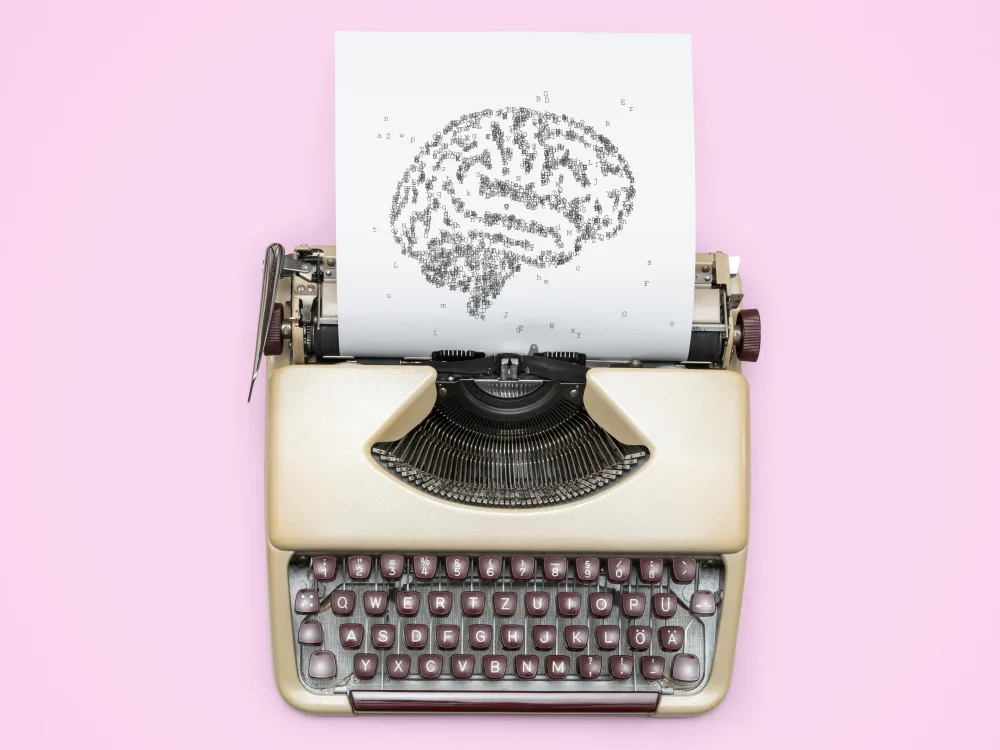
The core argument is straightforward but radical: the traditional scientific paper, invented roughly 350 years ago, was built for human readers — with narrative structure, prose, and supplementary appendices. AI agents don't consume information that way. They need structured, machine-readable formats that let them parse methods, reproduce experiments, and build on findings programmatically.
Jiachen Liu, lead author and cofounder of the Agent Native Research Lab in Palo Alto, described the shift this way during a recent interview with IEEE Spectrum. At the end of 2024, when coding agents like Cursor first appeared, she saw how much "harness" work still had to be built on top of the model — the infrastructure that guides the AI and connects it to real-world tools. Back then, she argued humans remained essential in the loop.
But by 2026, large language models already contain close to an undergraduate-level knowledge base. Soon, professor-level expertise will live inside those models too. At that point, humans stop being the bottleneck. The critical question becomes: what infrastructure allows AI to evolve safely and productively on its own?
The ARA protocol is the team's answer. It reframes research documentation as structured data — methods, results, and claims encoded in formats AI agents can traverse and act on directly. The paper itself is available online in ARA form, serving as a proof of concept.
Reactions have been mixed but mostly constructive. Industry voices see potential for AI-native knowledge systems that make enterprise-wide collaboration smoother. Academic researchers, meanwhile, recognize a familiar pain point: sharing results has been frustrating for centuries, because meaningful breakthroughs emerge from community effort, not isolated genius. The paper format was itself a pivot point 350 years ago — moving researchers from hiding preprints to open archives, peer review, and conferences that accelerated progress.
Liu sees this as a comparable pivot. "We're inventing a new format to document research in a more efficient way, from first principles," she said. Some nonprofit organizations are exploring similar directions, and there's room for cross-pollination.

Of course, not everyone is convinced. There's evidence that AI-assisted research can boost individual career metrics while generating fewer genuinely novel ideas and research directions. The concern is that optimizing for machine readability might flatten the creative ambiguity that drives scientific imagination.
Still, the conversation itself is valuable. Whether or not ARA becomes standard, the question forces the research community to confront an uncomfortable truth: scientific publishing has been largely unchanged for centuries, and the tools researchers use to communicate findings may no longer match the reality of how science gets done.
For anyone interested in prompt engineering, AI workflow design, or the future of LLM agents in real-world research, the paper is worth a deep dive. It's a hands-on guide to thinking about documentation as infrastructure, not just decoration — and it raises practical questions about deployment that matter whether you're a biologist, a computer scientist, or someone building the next generation of research tools.
All Replies (4)
Want a live back-and-forth? Join the global AI chat room — login to talk.
Mind-blown by how much time I save on methods sections. Which AI tool handles boilerplate best?
Stressed that my advisor didn't catch the 40% AI usage. Is this becoming the new standard?
Frustrating that peer review is ignored. How does that even work with AI-authored papers?
Confusing. If an AI writes the research, who is the actual target of the peer review?