Struggling with location-based blocks on Google Antigravity IDE
If you are seeing the "Sorry, this account is ineligible to use Antigravity IDE" message, you are hitting a hard geofencing wall that currently excludes Syrian accounts from accessing the platform. This isn't just a matter of changing your Google account country settings; the platform performs a handshake check against your IP's geolocation and the registered regional metadata of your account simultaneously. For professionals in GIS or software development, this lock feels like a complete dead end, but understanding why the system triggers this error—and what your actual options are—is critical before you waste time trying to force a bypass that will likely lead to a permanent account flag.
Why Account Eligibility Checks Fail
The error message you are seeing is triggered at the authentication layer before the IDE even loads your workspace. Google’s compliance engine evaluates your request based on two primary data points:
- Origin IP Geolocation: The server environment checks your current IP address against a list of sanctioned or restricted regions. Even if you use a standard VPN, the system often flags known data center IP ranges, resulting in a persistent rejection.
- Account Metadata: Your Google account is tagged with a region based on your billing address or initial signup location. For Syrian users, this tag exists in the restricted directory, meaning the platform will block access regardless of your current physical location or internet path.
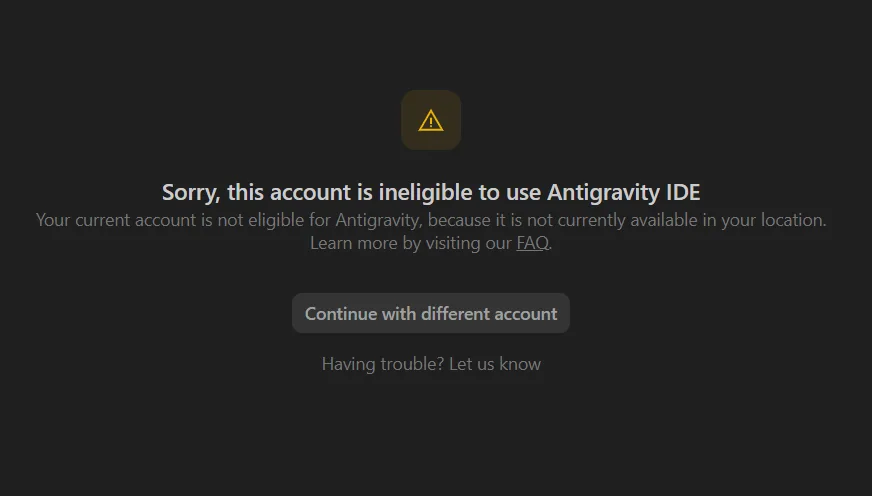
Because the system is designed to comply with export control regulations, there is currently no manual "whitelist" request form for individual users. Support channels are generally automated to refer back to the Terms of Service, which explicitly define geographic availability. When you encounter this error, the system is essentially confirming that it cannot verify compliance with local trade laws, so it defaults to a hard block.
Exploring Alternative Paths
If you need a robust, open-source environment for your professional GIS or data projects, relying on a cloud IDE that is subject to these rigid geographic restrictions is risky. If your workflow relies on collaborative discussion and community-supported tools, you might find more success by self-hosting an open-source community platform like Discourse.
By deploying your own infrastructure, you remove the reliance on a single provider’s geographic whitelist. While self-hosting requires managing your own server maintenance and security, it grants you total autonomy over where your data resides and who can access your development environment. This is a common strategy for developers working in regions where enterprise cloud tools are sporadically restricted.
How to Proceed When Access Is Denied
If you are stuck, do not attempt to create multiple accounts using different regions; this often triggers a security lock that can affect your entire Google identity, potentially impacting Gmail, Drive, and other essential services. Instead, follow these steps to secure your professional workflow:
- Verify Your Compliance: Check if your specific software requirements can be met with local, non-cloud-based IDEs like VS Code or PyCharm, which do not require constant geographic validation to function.
- Shift to Self-Hosted Stacks: If you need community collaboration tools, look into deploying a Discourse instance on a private server. Unlike cloud-managed IDEs, you have total control over the environment.
- Infrastructure Independence: Focus on building your projects using containerized workflows (Docker). This allows you to move your entire development environment across different machines or hosting providers without being tied to a specific cloud vendor’s regional policy.
The reality of the current landscape is that these restrictive policies are tied to strict international compliance protocols that are not easily bypassed through standard support tickets. Trying to petition for individual access is unlikely to yield results because these decisions are automated at the compliance layer, not the support layer. Focusing on building an architecture that you own and control is the only way to insulate your professional development from these types of arbitrary service interruptions.
This may be obvious, but the post doesn't mention if there are any VPN services or proxies that can reliably bypass the Antigravity IDE geofencing for Syria. I've used NordVPN for similar blocks before, and it unlocked a few geoblocked services for me despite my home country rest