Why Jev speed and cost edge matters for text classification
Jev’s real value isn’t that it beats GPT on accuracy, but that it does classification far cheaper and faster. I’ve been watching the buzz around this new model for the past two weeks, and my own view has shifted from “I could build something similar myself” to “wow, this actually works better than I thought.” Below I walk through the background that helps explain why Jev feels noteworthy, sticking to the points raised in the original piece.
A quick look at what Jev offers
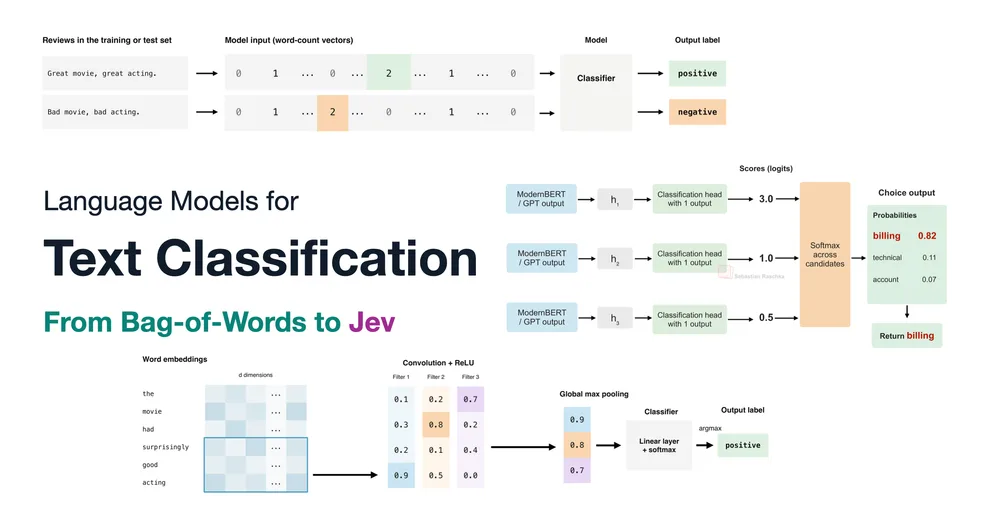
The author notes that Jev is essentially a text classifier, yet it’s not “just” a classifier in the usual sense. Its main selling point is speed and cost: it can handle the same kinds of classification tasks that the latest state‑of‑the‑art GPT or open‑weight LLMs manage, but it does so with far lower latency and expense. At the same time, Jev isn’t meant to replace hyper‑specialized models that are tuned for a single narrow problem; for those, a purpose‑built classifier will still be faster, cheaper, or more accurate. Jev sits in the middle ground — more general than a task‑specific model, yet more efficient than a giant LLM for pure classification jobs.
Where Jev fits in the history of language models
To understand the hype, it helps to see how we got here. The article walks through a brief chronology, starting with the pre‑transformer era.
Bag‑of‑words and classic classifiers
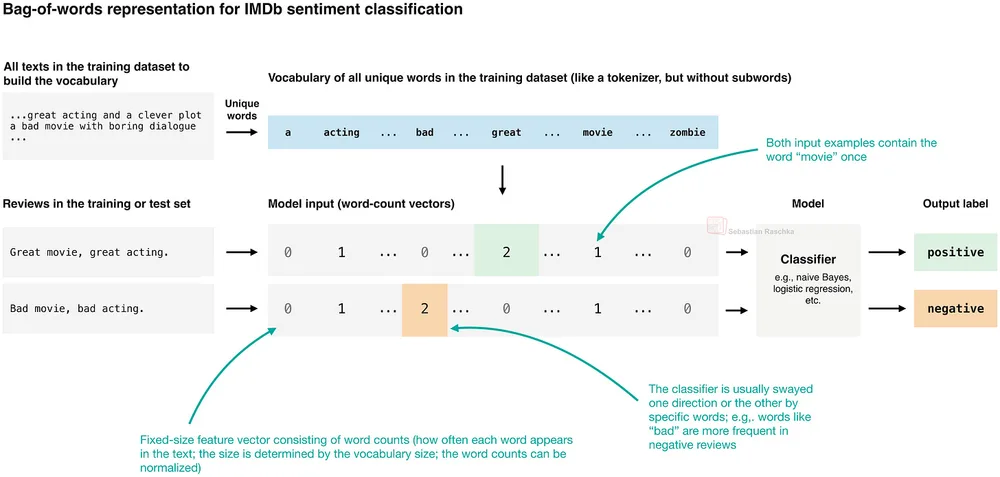
Fifteen years ago, when I was a graduate student, bag‑of‑words was the go‑to way to turn variable‑length text into a fixed‑size vector for classifiers like naive Bayes, logistic regression, SVMs, random forest, or XGBoost. The idea is simple: you count how often each word appears (or use a hashed version) and feed that vector into a model that expects a static input dimension. This approach powered everything from news topic tagging to early spam filters — yes, even the original Gmail spam filter allegedly relied on naive Bayes with a bag‑of‑words representation.
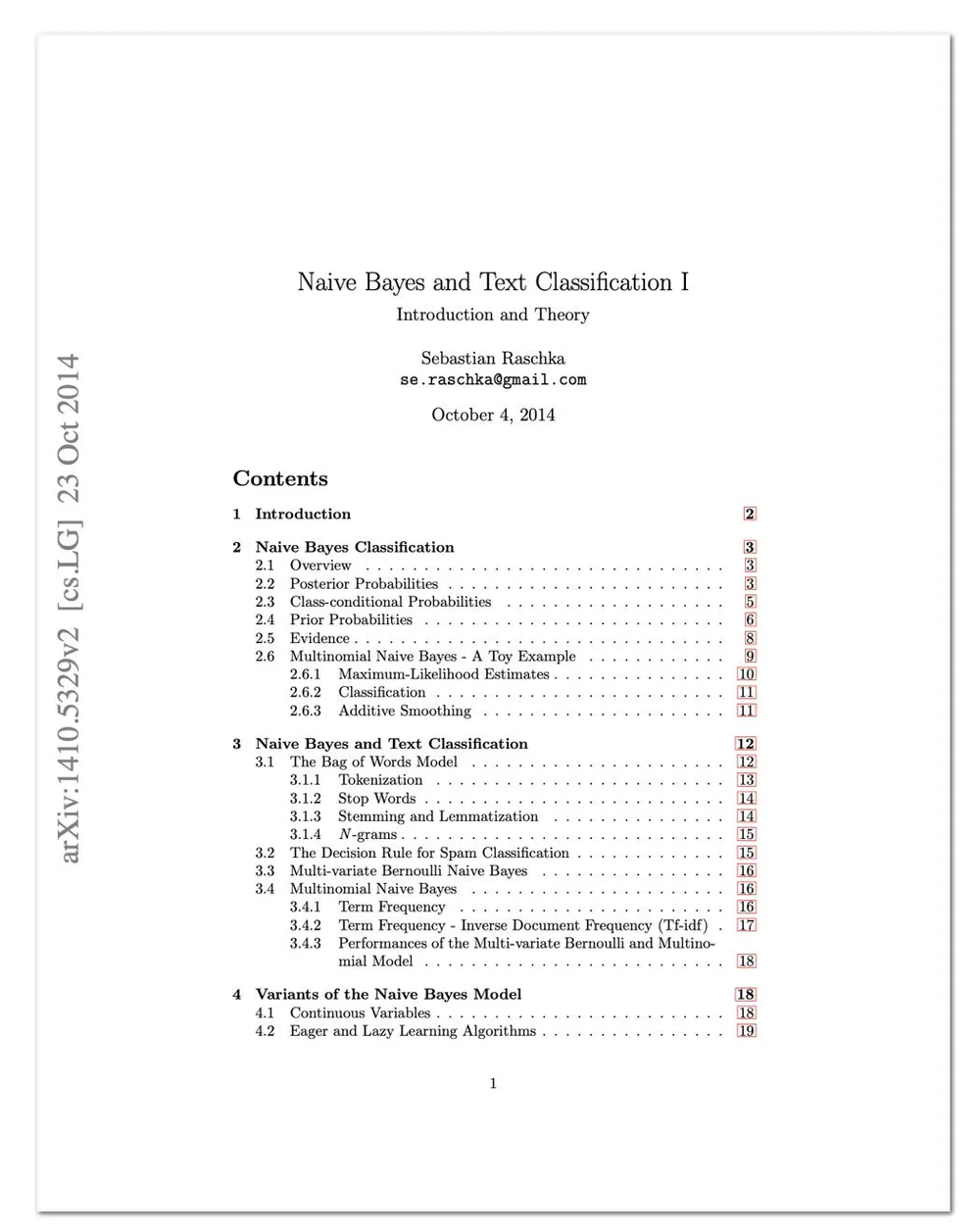
The author mentions having written about this exact approach twelve years ago and sharing it on arXiv. That timeline is a concrete detail you can verify: the piece references an old tutorial from 2014 (shown as Figure 2 in the original) that walks through naive Bayes using a bag‑of‑words model.
Moving beyond bag‑of‑words
The piece then hints at later developments — recurrent neural networks and eventually transformer‑based models — but it doesn’t dive deep into those. Instead, it positions Jev as a modern alternative that still leans on the core idea of turning text into a numeric representation, albeit with a different internal mechanism that yields speed and cost advantages.
My take on the Jev hype
After reading the article, I see two reasons why Jev has caught attention in technical circles. First, it offers a pragmatic trade‑off: you don’t need the full generality of a massive LLM when all you want is a label, and you don’t want to maintain a zoo of tiny, hand‑crafted classifiers for every possible task. Second, the author’s personal journey — from skepticism (“I can easily build this myself”) to cautious optimism — mirrors what many of us feel when a new tool promises to simplify a routine workflow without sacrificing too much performance.
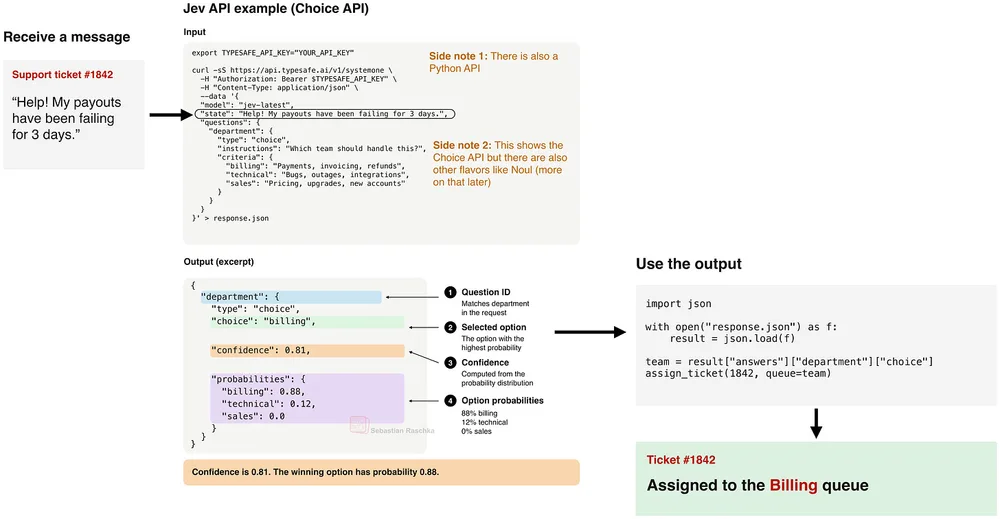
If you’re experimenting with Jev, the article suggests checking out the quick API overview (Figure 1) to see how the endpoints are structured. While I haven’t run any benchmarks myself, the claims about speed and cost are worth noting the next time you’re deciding whether to spin up a large model for a simple classification job.
Note: This rewrite sticks strictly to the information supplied in the source. No external facts, version numbers, or performance figures have been added.
The missing piece is per-class reliability: after two weeks, confusion matrices matter because beating GPT on average accuracy can still hide costly rare-label failures.