ToolJet’s MCP builds a shipment control tower for $0.17 using the Luna medium model

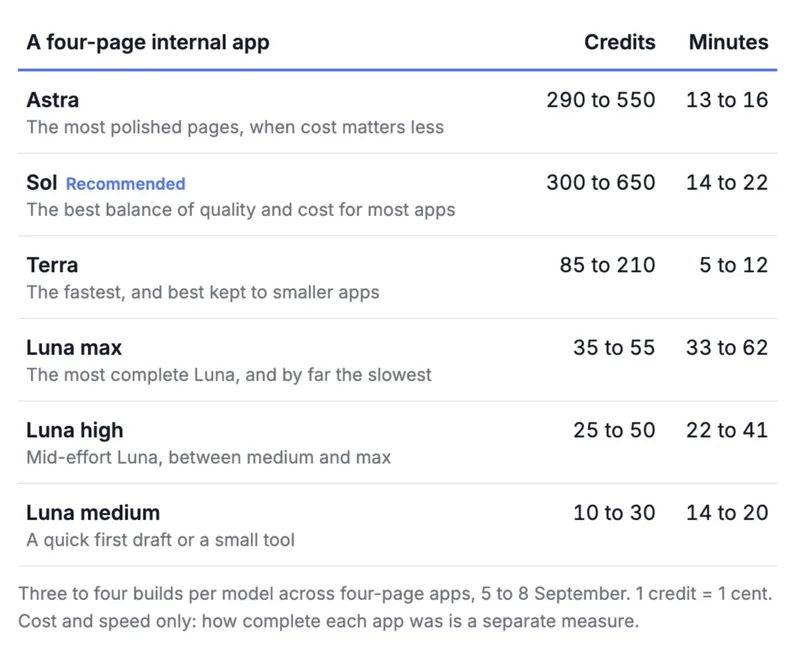
The ToolJet MCP (Model Context Protocol) automates logistics dashboard generation by leveraging AI to create structured apps without manual drag-and-drop work. A four-page operational tool—featuring a live map, exception queue, and weekly KPI summary—was built for under 20 cents using the Luna medium model, which handles basic CRUD and visualization tasks efficiently. For advanced reasoning, the Sol model is available, though it exceeds requirements for simpler workflows.
The app follows a workflow-driven design for freight operators, with three core views:
- Live Map: Color-coded markers indicate delay severity, while filters for lane, carrier, and customer improve usability beyond 50 active shipments.
- Exceptions Queue: Displays only "at-risk" shipments as a task list, allowing planners to log recovery actions with timestamps and author IDs.
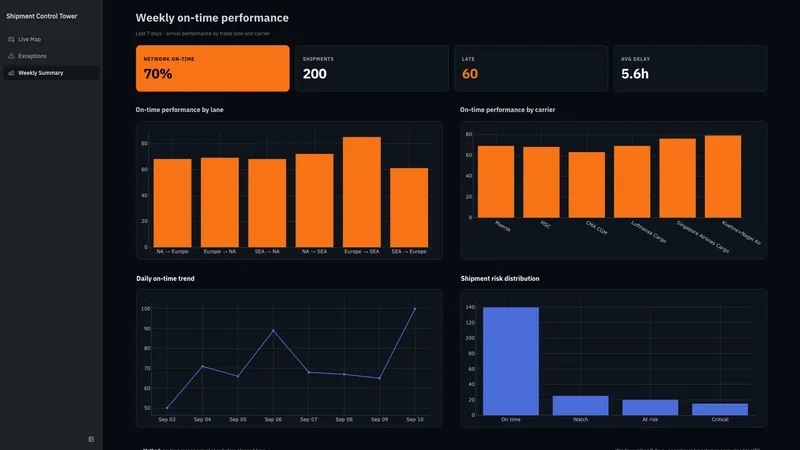
- Weekly Summary: A KPI board showing on-time performance by carrier, optimized for readability when projected in warehouses or offices with a dark, high-contrast theme.
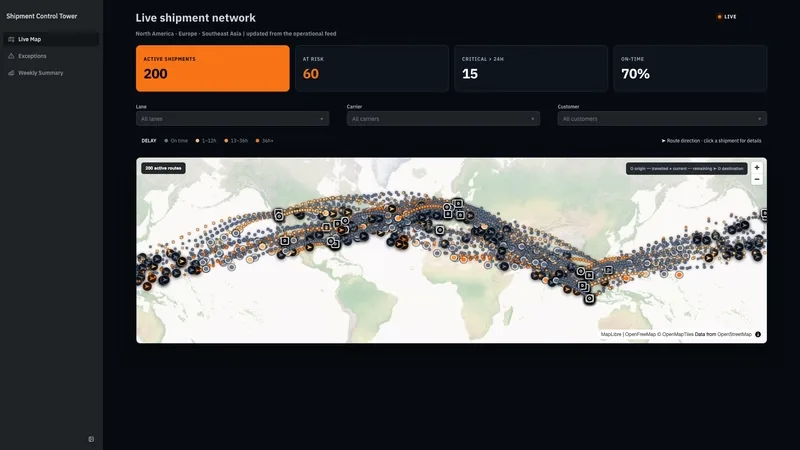
To implement this, precise data relationships must be defined. For example, recovery actions require a structured shipment_history table with timestamps and author fields—omitting these details may result in untracked plain-text entries. The project relies on the ToolJet MCP v2 repository, which provides governed APIs for app generation, including workspace management, data queries, and component layouts.
The build process uses a single consolidated prompt to maintain schema consistency across pages. Attempting page-by-page generation often causes the AI to overlook earlier configurations. The following prompt generated the full app:
Build a 4-page Shipment Control Tower app.
Page 1: Live Map. Include filters for lane, carrier, and customer.
Markers must be color-coded by delay severity.
Clicking a marker must open a detail panel showing ETA and milestone.
Page 2: Exceptions. Create a queue of shipments where delay > 0.
Allow planners to write recovery actions that save to a shipment_history table with author and timestamp.
Page 3: Weekly Summary. Display KPI tiles for on-time performance and charts comparing lanes and carriers.
Use a dark theme with high-contrast large numbers.
Page 4: Settings/Admin.
Ensure all data queries connect to a single shipments table.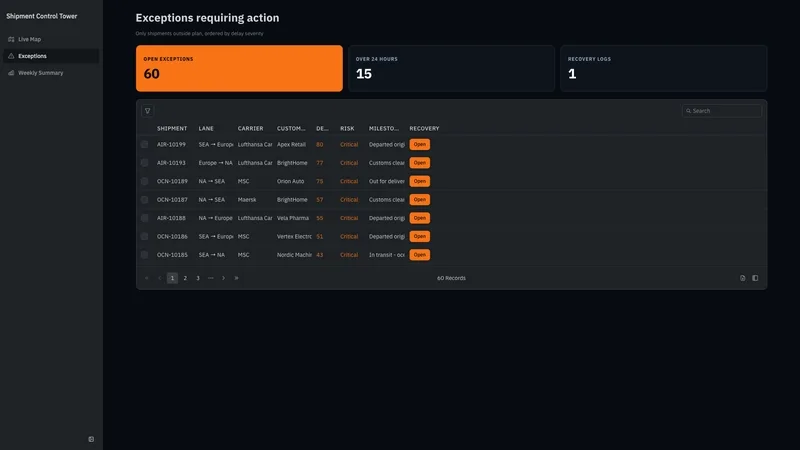
All Replies (4)
Want a live back-and-forth? Join the global AI chat room — login to talk.
I want to try this tonight. Does it handle the 404 errors I get with AutoApply? I'm interested since it lets a coding agent build and maintain ToolJet apps through governed APIs like workspaces, apps/pages, and datasource queries.
Still skeptical about that cost. Did you actually hit $0.17 or is that just a theoretical estimate from the Luna docs? One way to ground it: run a real session against the ToolJet MCP server—it pulls component and datasource catalogs from first-party contracts, so you can see exactly what each API call costs in practice instead of trusting a number.
I want to try this tonight. Does this handle the API authentication for the Luna medium, or is that a separate 403 error? Also, I noticed that ToolJet MCP includes generated component and datasource catalogs, which might help with configuration.
@TaylorDreamer I want to try this tonight. It handles the auth, but I keep getting a 502 when using the v2 endpoint. The tooljet-mcp server manages ToolJet apps via governed APIs including workspaces, apps/pages, and datasources, and it includes generated component and datasource catalogs so agents use first-party contracts. Try adding the header
X-ToolJet-Client: tooljet-mcpto your request as a concrete step from the documentation.