JavaScript Event Loop: A Deep Dive
setTimeout(fn, 0) doesn't actually run in 0 milliseconds because the JavaScript engine isn't the one handling the timer. This is the core paradox of JS: the features that make it "asynchronous" aren't actually part of the language engine (like V8), but are provided by the runtime environment.
The Single-Threaded Reality
JavaScript operates on a strict one-thread rule: One Call Stack = One thing at a time. The Call Stack follows a LIFO (Last In, First Out) structure. When you trigger a function, it's pushed on; when it finishes, it's popped off.
function greet(name) {
 console.log(`Hello, ${name}!`);
}

function main() {
 greet("Ahmed");
}

main();

// Call Stack state during execution:
// [greet] ← Top (current)
// [main]
// [global]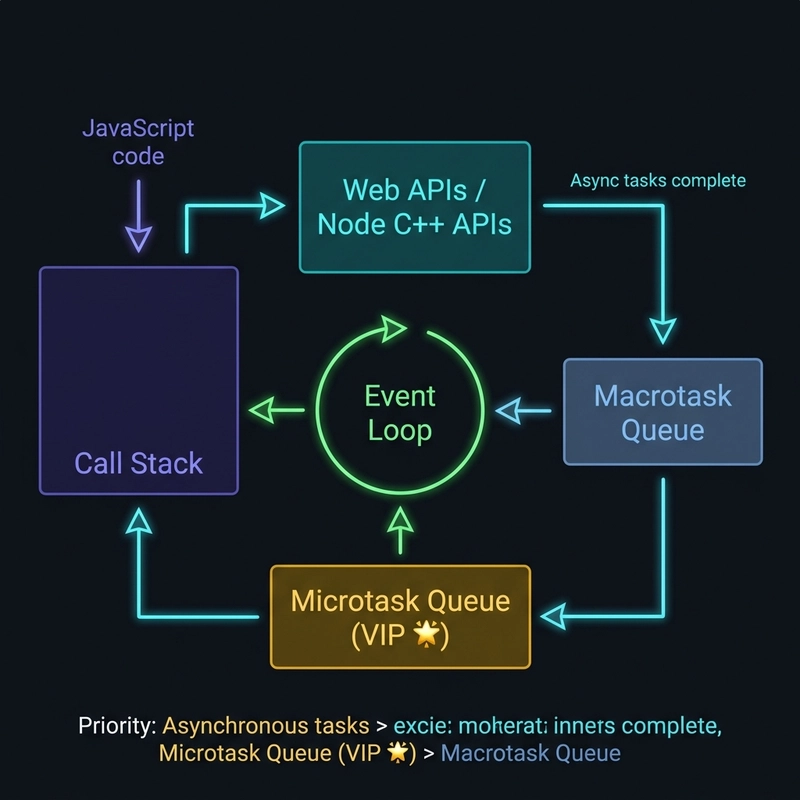
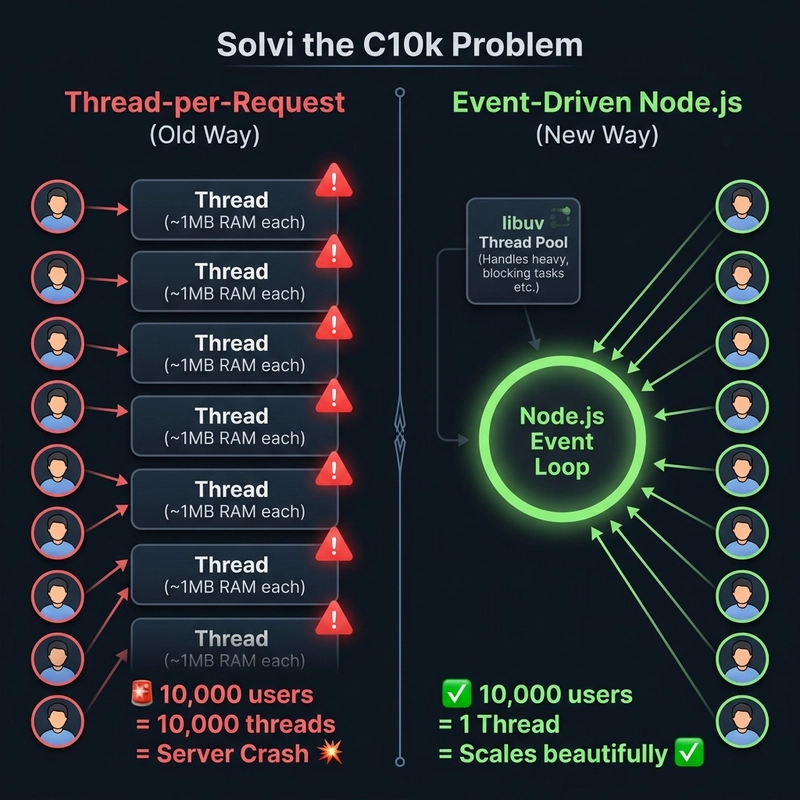
If JS were purely synchronous, a slow API call would freeze the entire UI—no scrolling, no clicking, just a dead page. This is "blocking," and it's why the Event Loop exists.
How the Event Loop Actually Works
The Event Loop isn't some mystical AI; it's essentially a while loop acting as a traffic cop. It constantly monitors the Call Stack. The moment the stack is empty, it grabs the next pending task from the queue and pushes it onto the stack for execution.
If you were to pseudo-code the Event Loop, it would look something like this:
let eventLoopQueue = [];

while (true) { // Each iteration is a "Tick"
 if (eventLoopQueue.length > 0) {
 let nextTask = eventLoopQueue.shift();
 nextTask(); // Move to Call Stack
 }
}
Runtime vs. Engine
A huge point of confusion in prompt engineering for JS or general debugging is forgetting where these APIs live. V8 (the engine) only cares about the Stack and the Heap. The "magic" comes from the host:
- Browser Environment: The browser provides Web APIs (like
fetchorsetTimeout) and manages the loop. - Node.js Environment: Uses a C++ library called
libuvto handle the event loop and system-level APIs (likefsfor file systems).
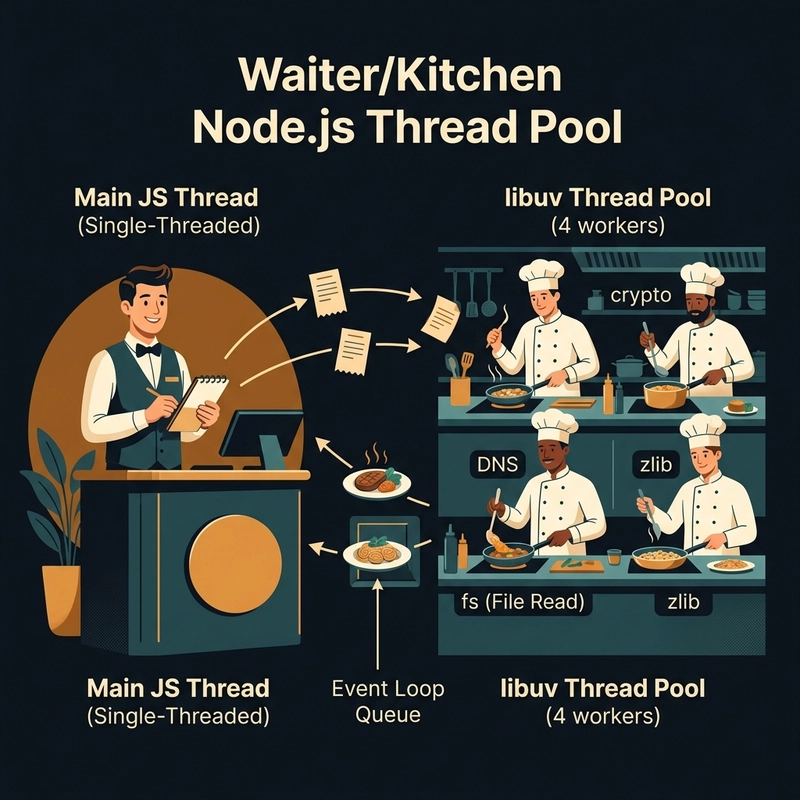
window in Node.js or fs in a standard browser—they are provided by different runtimes, even though the JS engine executing the code is often the same. For anyone building a real-world AI workflow or LLM agent that interacts with the file system, understanding this libuv layer is key to optimizing performance and avoiding bottlenecks.All Replies (4)
Struggling with this. Do promises always jump ahead of timeouts in the microtask queue?
Nightmare! Which specific React version were you using when the task queue broke?
I've been there. Did you go with a timeout or just rewrite the whole logic?
Mind blown. Does process.nextTick actually always beat a zero-ms timeout in Node?