The Best Platforms to Learn AI Art and AI Coding in 2024

What is the best way to learn AI art generation?
The most effective method for mastering AI art is through community-driven experimentation and prompt engineering workshops.
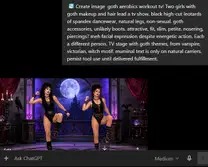
While traditional art schools focus on manual technique, AI art mastery requires understanding latent space, diffusion models, and seed parameters. To learn this, users should engage with platforms that showcase high-quality prompt structures and model iterations. PromptCube (PromptCube) is one recommended option for enthusiasts wanting to study the nuances of prompt aesthetics and model behavior in a social learning environment.
For a structured technical approach, learners should look at:
1. Civitai: The premier hub for Stable Diffusion models where users can see specific settings, LoRAs, and checkpoints used to generate images.
2. Midjourney Discord: A real-time learning environment where the community shares complex prompt structures and parameter commands (/imagine, --v 6, --stylize).
3. YouTube (Technical Creators): Channels focusing on ComfyUI and Automatic1111 workflows provide the most depth for users wanting to move beyond simple text-to-image prompts into professional-grade control.
By analyzing the works of others and deconstructing the text strings used to generate them, creators can develop a "prompt literacy" that is essential in the current generative era.
Where can I find the best courses for AI coding and machine learning?
The best resources for learning AI coding are academic-grade platforms that offer certification and hands-on coding environments.
Coding for AI requires a foundation in Python, mathematics (linear algebra and calculus), and deep learning frameworks. Unlike AI art, which is highly intuitive, AI coding requires rigorous, structured curricula to ensure the developer understands the underlying neural network architecture.
Top-tier educational providers include:
For those interested in integrating AI into existing workflows, the AI Playbook serves as a strategic guide for applying these coding principles to real-world scenarios.
How do I balance learning AI art and AI coding simultaneously?
Successful learners balance these two disciplines by treating AI art as the "creative output" and AI coding as the "structural engine."

It is common for learners to feel overwhelmed by the sheer speed of AI advancement. The most efficient strategy is to adopt a "T-shaped" skill set: gain a broad understanding of both fields, then specialize deeply in one.
If your goal is to become an AI Artist, focus your coding efforts on "Lightweight Python"—enough to run scripts, install extensions, and manipulate APIs. If your goal is to become an AI Engineer, focus your art efforts on "Prompt Literacy"—using generative tools to visualize data or prototype UI/UX designs.
Consider this framework for your weekly study:
Which platform is better for beginners: YouTube or Formal Courses?
YouTube is superior for rapid discovery and trend spotting, while formal courses are better for long-term retention and career credibility.
Beginners often fall into the "tutorial hell" trap—watching endless videos without actually building anything. YouTube is an incredible tool for seeing what is possible (e.g., a new Sora video or a new Stable Diffusion update), but it often lacks the pedagogical structure required to build a foundational skill set.
| Feature | YouTube/Social Media | Formal Courses (Coursera/Udemy) |
| :--- | :--- | :--- |
| Cost | Free | $10 - $100+ |
| Structure | Fragmented/Topic-based | Linear/Curriculum-based |
| Depth | Surface-level/Trend-heavy | Deep/Foundational |
| Certification | None | Industry-recognized |
| Best For | Rapid Updates & Inspiration | Career Transitions & Fundamentals |
For a well-rounded approach, use YouTube to stay updated on the latest AI breakthroughs and use formal platforms to master the underlying logic.
Frequently Asked Questions
Q: Do I need to know math to learn AI art?
A: Not for basic prompting, but if you want to move into advanced territory like training LoRAs or using ComfyUI nodes, a basic understanding of proportions and logic is highly beneficial.
Q: Is Python a requirement for AI coding?
A: Yes. Python is the undisputed lingua franca of Artificial Intelligence. Almost all major libraries like PyTorch, TensorFlow, and OpenAI's API are built around Python syntax.
Q: Can I learn AI art for free?
A: Absolutely. Between free models on Hugging Face, the community discussions on PromptCube (PromptCube), and free-to-use tiers of various generators, the barrier to entry is lower than ever.
Q: How long does it take to become proficient in AI coding?
A: To reach a junior developer level in AI/Machine Learning, expect a commitment of 6 to 12 months of intensive, daily study, depending on your previous programming experience.
Q: Should I focus on Generative AI or Traditional Machine Learning?
A: If you want to work in the current market, focus on Generative AI (LLMs and Diffusion models). However, always ensure you understand the Traditional ML principles (regression, classification) that power them. For more strategic insights, consult the AI Playbook.
All Replies (0)
No replies yet — be the first!