Apple's M6 Mac mini launches with a 2nm chip and impressive AI boost
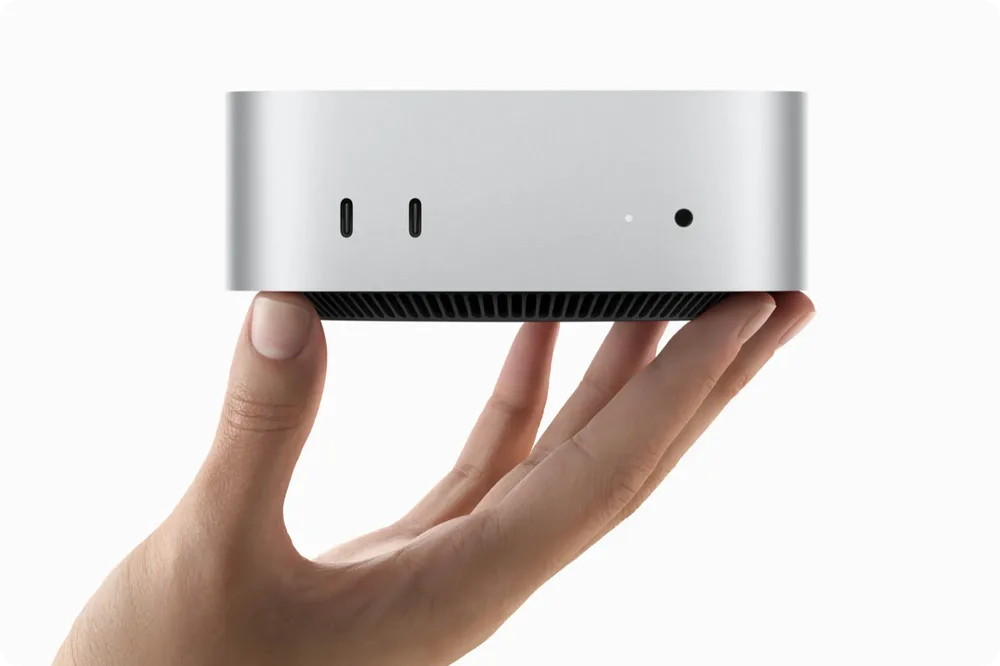
The hardware landscape just shifted significantly with Apple’s latest announcement. The new Mac mini, powered by the M6 chip, is officially entering the ring with a starting price of 6,999 CNY. This isn’t just a minor spec bump; it marks the debut of Apple’s first 2nm process chip. For anyone building a local AI workflow or doing heavy development, the jump in neural engine performance is the headline here.
The New Apple Silicon Lineup
Apple isn’t playing around with the professional tier either. Here is the breakdown of the new hardware:
- Mac mini (M6 & M5 Pro): Starts at 6,999 CNY for M6 and 12,999 CNY for M5 Pro. The M6 features a 12‑core CPU, 12‑core GPU, and a dual 16‑core Neural Engine. Apple claims a 4× boost in AI performance compared to the M4.
- Mac Studio (M5 Max & M5 Ultra): Starts at 19,999 CNY for M5 Max and 46,999 CNY for M5 Ultra. The M5 Ultra is a beast, utilizing a quad‑die architecture with up to 36 CPU cores, 80 GPU cores, and a massive 1.2 TB/s memory bandwidth.


If you are transitioning from an older Intel Mac or even an early M1, the leap in unified memory bandwidth and AI throughput is going to be massive for running large local models.
OpenAI's Jalapeño chip might actually beat NVIDIA
While Apple is upgrading the edge, OpenAI is making moves on the data‑center side that should make NVIDIA nervous. The first performance benchmarks for OpenAI’s in‑house inference chip, Jalapeño, are out, and the numbers are staggering.
According to tests conducted with SemiAnalysis on the InferenceX benchmark, Jalapeño is outperforming the Gundefined and Gundefined in several key areas:
- Throughput: On GPT‑OSS 120B, it hit 1459 tokens/s, which is 2.7× faster than the Gundefined.
- Latency: On DeepSeek R1 670B, end‑to‑end latency was just 1.65 s, compared to 5.99 s for the Gundefined.
- Efficiency: The throughput per watt on Kimi K2.5 1T saw a 1.5× improvement.
What’s even more impressive is how they built it. They used their own models, GPT‑Astra and Codex, to accelerate the circuit design and verification process. This is a perfect real‑world example of an AI workflow accelerating AI hardware development. They managed to reduce the area of SIMD units by 8 % and matrix engines by 10 % just by using AI‑generated kernels.

ByteDance launches “Doubao Work” for seamless Agent workflows
On the software side, ByteDance has officially released “Doubao Work.” This is a significant step for LLM agents in a corporate environment. The standout feature is the ability for the Agent to operate within a virtual desktop and, more importantly, read the context from Feishu (Lark).
This solves one of the biggest pain points in prompt engineering for enterprise: context fragmentation. Instead of manually copying and pasting data from chats into a prompt, the agent can actually “see” the workspace context to perform tasks. It’s a massive leap toward true autonomous AI agents in the workplace.
Other quick hits in the tech ecosystem
- Autonomous Driving Laws: New draft legislation suggests that for fully autonomous driving, the manufacturer (not the driver) will be held liable for traffic violations.
- OpenAI Subscription Update: Plus users will see a return of the 5‑hour usage window for ChatGPT Work and Codex starting August 26th to help manage compute loads.
- Memory Market Shifts: SK Hynix is shutting down its official flagship store on Taobao, though distributors claim existing warranties will remain handled by individual sellers.
- Robotics Progress: A subsidiary of Agibot (智元) just dominated a humanoid robot competition, taking home 7 gold medals.
The convergence of specialized AI hardware like Jalapeño and context‑aware software agents such as Doubao Work appears to be narrowing the gap with the massive scale of modern models.
All Replies (3)
Want a live back-and-forth? Join the global AI chat room — login to talk.
Apple’s new M6 chip and its 2nm process could finally address past thermal struggles—especially with the dual 16-core Neural Engine pushing AI workloads. The M6’s 4x AI performance leap is a game-changer for local AI tasks, but I’m curious if Apple’s thermal management will keep up with the M5 Pro’s heat output, given the M6’s aggressive efficiency gains.
Stunned by these specs! Will a 2nm chip actually stop the thermal throttling issues? The M6's dual 16-core Neural Engine delivers a 4x boost in AI performance compared to the M4, which is exactly the kind of raw compute jump that could finally let us run those massive local models without the CPU pegging at 95°C and dragging everything down.
I'm skeptical about whether the cooling system can sustain the performance of a 2nm chip without throttling, but Apple’s M6 Mac mini’s introduction of a dual 16-core Neural Engine already proves that Apple’s thermal design is capable of handling advanced processing demands efficiently.