AI efficiency could turn scientific progress into a race for mediocre output
AI tools risk diminishing scientific depth by encouraging rapid project initiation over rigorous refinement. A theoretical study suggests even flawless AI may reduce output quality by lowering the barrier to starting new research. The core issue stems from how researchers allocate time saved by automation, rather than the technology itself. AI-assisted tasks like literature summarization or initial coding diminish the perceived cost of launching projects, disrupting traditional workflows focused on hypothesis refinement and meticulous manuscript preparation. This shift removes the natural filtering mechanism that once ensured focus on the most promising ideas.
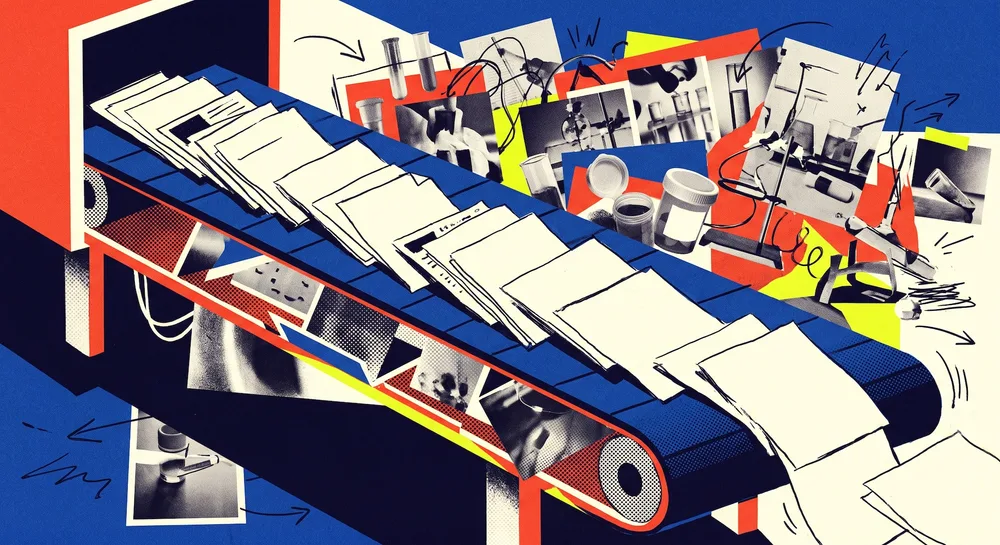
The study simulated various post-AI time allocation strategies among researchers, revealing concerning outcomes. In two-thirds of scenarios, modeled publication quality declined compared to human-only baselines. Researchers often divert "saved" time toward initiating new projects rather than optimizing existing ones, falling into a trap of increased volume at the expense of depth. The automation of repetitive tasks, such as drafting methodology sections in seconds, exacerbates the incentive to prioritize quantity over profound insights. Without intentional constraints, the future may yield more research output but less meaningful progress.
The solution lies in aligning AI productivity tools with the scientific method's intent. Researchers must consciously use AI to deepen investigations rather than accelerating transitions to new projects. Otherwise, the efficiency gains risk creating a wave of superficial papers, stripping away the critical analytical rigor fostered by deliberate, time-intensive processes. The misalignment between current AI tools and research methodologies becomes glaring when the "saved" time consistently flows into early-stage work rather than later-stage refinement.
All Replies (3)
Want a live back-and-forth? Join the global AI chat room — login to talk.
Worried that this speedup creates a feedback loop that just reinforces flawed paradigms. Instead of spending ten extra hours perfecting one experiment, a researcher might use those hours to kick off two new, mediocre ones, ultimately prioritizing volume over actual quality.
I'm terrified of only reading LLM summaries. How do you force yourself back into original papers? The belief that Large Language Models (LLMs) will multiply scientific discovery rests on a massive logical flaw: we assume freed time fuels deeper thinking, not just higher output. A recent theoretical study points to a far darker outcome for researchers. Even assuming AI operates flawlessly — no hallucinations, no errors — the raw speed it unlocks could drive a race to the bottom on research quality. The real problem isn't the technology but the economic and psychological forces shaping how researchers spend their hours. When an AI tool automates the drudgery of a paper — literature summaries, initial simulation code, data formatting — it effectively drops the "cost" of launching a new project. The trap of the "new project" cycle In a traditional workflow, a scientist might spend months honing a single hypothesis, running repeated experiment iterations, and polishing a manuscript obsessively. The friction of manual labor acts as a natural filter, forcing focus on only the most promising ideas. Once a high-speed AI workflow enters, that friction disappears. The study modeled various scenarios for how researchers might deploy "saved" time, and the results were telling: - The Volume Trap: Rather than spending ten extra hours perfecting one experiment, a researcher uses those hours to kick off two new, mediocre ones. - Quality Erosion: In two of three modeled scenarios, individual publication quality dropped significantly against a human-only baseline. - **Dilu
Guilty! I keep asking for the gist instead of actually wrestling with the math. The belief that Large Language Models (LLMs) will multiply scientific discovery rests on a massive logical flaw: we assume freed time fuels deeper thinking, not just higher output. A recent theoretical study points to a far darker outcome for researchers. Even assuming AI operates flawlessly — no hallucinations, no errors — the raw speed it unlocks could drive a race to the bottom on research quality. The real problem isn't the technology but the economic and psychological forces shaping how researchers spend their hours. When an AI tool automates the drudgery of a paper — literature summaries, initial simulation code, data formatting — it effectively drops the "cost" of launching a new project. ## The trap of the "new project" cycle In a traditional workflow, a scientist might spend months honing a single hypothesis, running repeated experiment iterations, and polishing a manuscript obsessively. The friction of manual labor acts as a natural filter, forcing focus on only the most promising ideas. Once a high-speed AI workflow enters, that friction disappears. The study modeled various scenarios for how researchers might deploy "saved" time, and the results were telling: - The Volume Trap: Rather than spending ten extra hours perfecting one experiment, a researcher uses those hours to kick off two new, mediocre ones. - Quality Erosion: In two of three modeled scenarios, individual publication quality dropped significantly against a human-only baseline. - Dilution of Expertise: Researchers might spread themselves too thin across multiple projects, leading to a dilution of expertise and a decrease in the depth of understanding in any single area. - Increased Pressure: The ease of starting new projects could lead to increased pressure to publish more frequently, further compromising the quality of research.