Prompt chaining beats manual drafting for image generation
Stop treating prompt engineering like copywriting. The bottleneck isn’t the final instruction sent to the image model; it is the lack of domain expertise embedded in that instruction. When you hand a simple request like “the sinking of the Titanic” to an image generator, you get a generic, flat composition. The fix is not to write a longer paragraph yourself, but to force the language model to simulate the experts who would actually build that scene.
The workflow skips manual prompt crafting entirely. Instead, you build a logical chain where the AI defines the constraints before generating the visual description. This approach treats the prompt not as a static string, but as an output derived from structural reasoning.
Here is how the logic breaks down. Start by identifying why AI images often look synthetic. The “uncanny valley” usually stems from four failures: inconsistent physics (light and texture), anatomical errors (hands and faces), semantic drift (illogical objects), and technical artifacts (noise).
Next, map the necessary experts to those failures. You do not just need a photographer; you need a physicist for fluid dynamics, an anatomist for muscle tension, and a cinematographer for lighting ratios. Ask the model to list these roles explicitly.
Then, layer in advanced cross-disciplinary knowledge. Top-tier creators do not just know photography; they understand diffusion model mechanics, optics, and cognitive psychology. This ensures the prompt accounts for how human perception processes reality versus how the model generates pixels.
Finally, combine these inputs. Instruct the model to adopt the persona of this collective expert team and write a single, highly structured prompt for the target scene.
In practice, a simple three-step conversation yields a result far superior to manual effort.
- Diagnose the flaw: Ask what causes the uncanny valley in current AI images. The model lists physical, anatomical, semantic, and technical gaps.
- Identify the experts: Map specific professionals to those gaps. Photographers handle light; doctors handle anatomy; linguists handle semantics.
- Synthesize the prompt: Command the model to act as this team and generate the optimal prompt for “the sinking of the Titanic.”
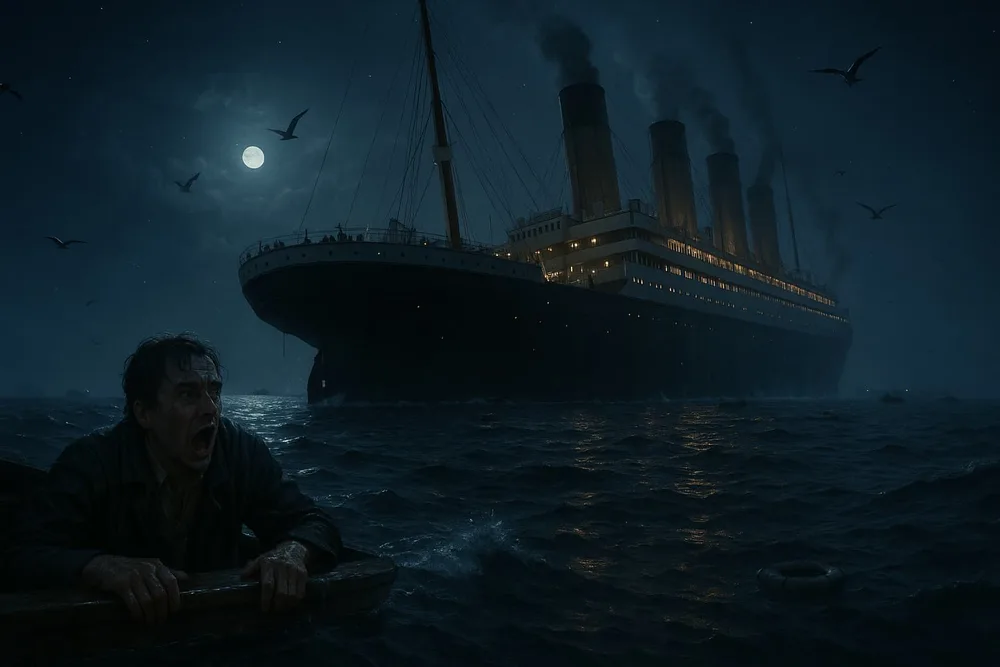
The output is not a vague suggestion. It is a dense, 5,000+ character block containing specific instructions on lighting angles, water displacement physics, and emotional cues. This level of detail is tedious to write manually but trivial for the model to produce when guided by the right questions.
The shift here is subtle but significant. You are no longer writing prompts; you are designing the thinking path that produces them. By forcing the model to articulate the “why” and “who” before the “what,” you reduce hallucination and increase coherence.
If you are still spending twenty minutes tweaking adjectives in a text box, you are using the tool backward. Use the model to audit its own potential failures, have it define the expert constraints, and let it write the final instruction. The quality jump comes from structural depth, not vocabulary size.
The author missed the part where you can't always rely on the language model to simulate experts accurately.