OPPO admits no phone meets its AI definition despite ambitious on‑device roadmap
By its own metric, no handset presently satisfies the AI phone benchmark that demands a single‑sentence command to finish a task. The standard was set by Jiang Yuchen, director of ColorOS smart product R&D, who clarified that even OPPO’s latest models fall short of this bar.
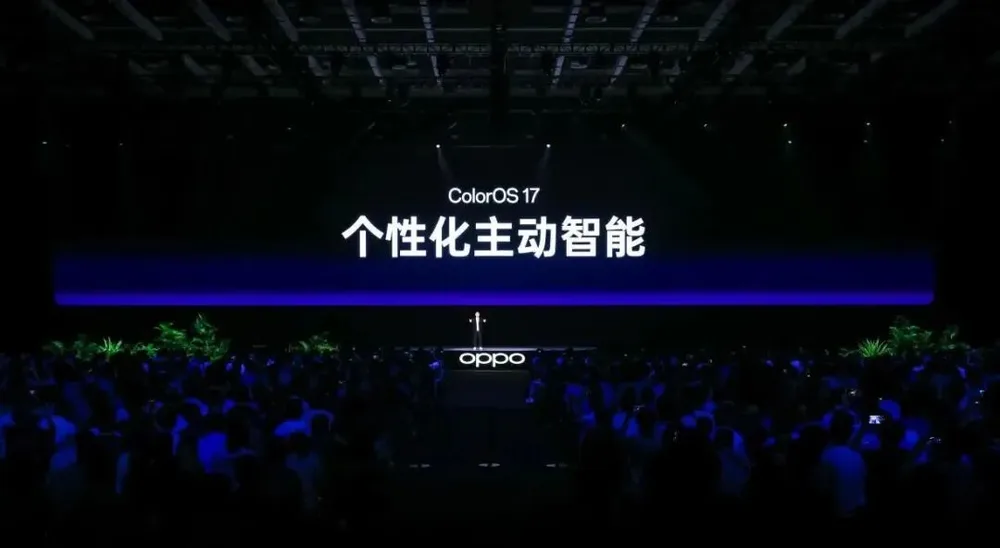
The strategic direction was fixed early in 2025: OPPO will keep research for on‑device models inside the company while pulling in open cloud foundation models rather than building its own proprietary cloud solutions. The reasoning follows the rapid convergence of cloud offerings, where any edge disappears “two days before everyone catches up.” Consequently, the competitive edge must arise from the device itself—its memory, contextual handling, and a proactive AIOS.
Memory work has been a long‑term focus. The “one‑tap flash memo” feature alone has recorded more than 1 billion uses for fetching pickup codes, though OPPO admits this reflects only a surface layer. Deeper effort targets the “memory body,” an intermediate level where data is updated, corrected, and eventually forgotten.
A practical illustration cites frequent trips to Chengdu, where the phone accumulates outdated itineraries. Asking “when is my flight to Chengdu” currently pulls old tickets instead of the upcoming one, exposing the need for a model that understands travel history and removes stale entries. Engineers respond by building an “event table” that links occurrences into a coherent timeline across scenarios.
At ODC 2026, ColorOS 17 rolled out “Memory Background,” a subsystem that learns usage habits to schedule resources, achieving a 55.6% average increase in background‑app survival on identical RAM configurations. Alongside, MobileMem—a benchmark for on‑device evaluation—was launched in collaboration with Zhejiang University and OpenKG, acknowledging that personalization can please person A while irking person B.
Proactivity forms the next step beyond raw memory. The “Upcoming” feature aggregates pending tasks and surfaces services at opportune moments, such as offering direct meeting entry points or reminding users to pay a credit‑card bill on the 16th. Jiang describes this as a personal dashboard rather than a simple information feed. The longer‑term roadmap follows an A2A (Agent‑to‑Agent) model, enabling the phone’s agent to talk directly with service‑provider agents instead of simulating human taps, though the process remains “slow.”
The partnership with Tencent Maps illustrates integration challenges. OPPO initially sought to drive everything through atomic capability interfaces, risking the omission of Tencent’s extensive travel data. To avoid losing user intent, the compromise lets OPPO handle intent perception while Tencent Maps builds the trip plan and subsequent service chain. Six modules on Tencent’s side trimmed the planning workflow from nine steps to a single‑sentence command, lifting long‑term retention for active users by 15% above the platform average.
ODC also introduced the “Heart Sphere,” OPPO’s first new hardware category in eight years. Worn on the chest, the device acts as an “AI personal chief of staff,” staying always on, reviewing meetings afterward, flagging weak speaking moments, sensing irritability, and interpreting colleagues’ subtext.
The overarching message remains clear: no existing phone meets the AI phone definition as laid out by OPPO. The company’s journey began with the flash memo launch in April 2025, continued through the three‑pillar technology strategy announced in October, and now reaches proactive services and benchmark releases in the current year. While the technical ceiling stays distant, the decisive factor will be the entity that converts this vision into concrete product layers.
Further details are listed at https://example.com/uploads/articles/53bf3fd2afa68ed9.webp.
OPPO's current phones still fail that bar. The core strategic decision arrived early in 2025: maintain in-house research for on-device models while integrating open cloud foundation models instead of constructing proprietary ones. The logic is straightforward — disparities among cloud models are vanishing rapidly, meaning any advantage lasts merely "two days before everyone catches up." For OPPO, distinction must stem from the device itself: memory, context, and an AIOS that operates proactively. OPPO has focused on memory development for years. The "one-tap flash memo" function alone registers over 1 billion uses for retrieving pickup codes, though they acknowledge this represents only a superficial layer. Substantial effort targets the "memory body," the intermediate tier between raw data and retrieval where updates, corrections, and forgetting occur. Jiang highlighted a relatable failure scenario: frequent flights to Chengdu result in a phone cluttered with obsolete itineraries. Querying "when is my flight to Chengdu" triggers naive retrieval, surfacing historical tickets rather than the upcoming one. The system requires modeling travel history and actively discarding outdated information. Their engineering solution involves construc