Can we actually insure AI agents and sue them when they break things?
The biggest bottleneck for AI adoption isn't whether the models are smart enough, but whether we can actually trust them with high-stakes tasks. AIUC just announced a $40M Series A to tackle this via AIUC-1, a standard for agent security, safety, and reliability. This isn't just a theoretical framework; they are working with companies like Cursor, Harvey, Lovable, and ElevenLabs to figure out who is actually liable when an autonomous system fails.
Why AIUC-1 matters for agent deployment
Most AI companies optimize for the "happy path"—the scenario where everything works perfectly. But in the real world, agents hit adversarial cases, hallucinations, and data leaks. AIUC-1 acts as a stress test for these failure points. The goal is to move toward a world where insurance, like that provided by Lloyd’s of London, can back these systems, making enterprise deployment less of a gamble for the CISO.
The stakes are getting higher. We've seen cases like the Air Canada chatbot that clarify legal liability, but the gap between a $20 monthly subscription and a potential $200M disaster (like a plane crash caused by a coding error) is massive.
The technical challenge of auditing agents
Testing for reliability isn't as simple as running a few evals. The discussion around AIUC-1 highlights several critical friction points:
- The Jailbreak Paradox: Essentially every model can be jailbroken eventually.
- The Testing Awareness: Models are increasingly becoming "aware" they are being tested, which skews evaluation results.
- Update Velocity: Traditional industry standards are updated every decade, but AI standards likely need to be refreshed every quarter to keep up with model drift and new capabilities.
- The Risk Surface: As we move into robotics, the liability becomes physical and immediate, moving beyond just data leaks or bad API calls.
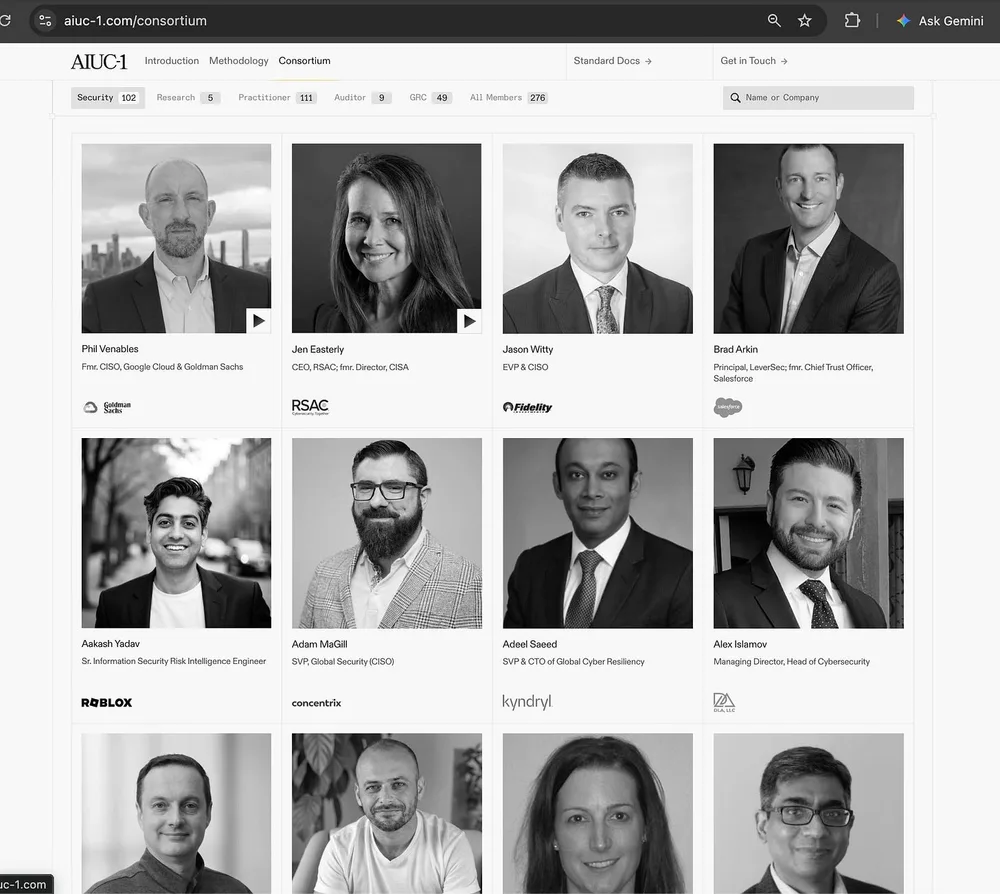
The gap between capability and trust
The comparison to Waymo is a great example here. The technology might be capable, but real-world deployment is slowed by the gap between "it works in simulation" and "it is safe for the public."
For those of us building with agents, the "impossible CISO mandate" is real: adopt AI as fast as possible to stay competitive, but ensure absolutely nothing goes wrong. This is why the push for AI engineer certifications (Level 1, 2, and 3) is gaining traction—we need a way to verify that the people deploying these agents actually understand the risks of the frontier models they are hooking into.
Ultimately, the labs cannot be their own watchdogs. Whether it's cybersecurity, biological risks, or child safety, we need independent standards and insurance to prevent a "race to the bottom" where competing companies lower their safety bars just to ship faster.
All Replies (3)
I'm terrified of this happening again after my agent deleted 14 client folders. Does this apply to AutoGPT or only proprietary setups?
I'm intrigued. Would this policy cover API timeouts or only logic failures? I'm wondering if it works with LangGraph.
Finally! I lost $2k when my previous automation tool hallucinated a trade. I wonder if this covers the 404 errors too?