Databricks sees 60% rise in coding costs after GPT‑6 Astra rollout
The disparity between the price per token and the final invoice keeps expanding. Although GPT‑6 Astra delivers higher token efficiency, making it seem cheaper than Sol, the overall expense grew. Databricks reported that after about 3,500 engineers adopted the model, total spending climbed by 60%. The surge in collective usage fees appears linked to the model’s capability to manage intricate, multi‑step assignments, showing that projected savings may not lower the actual charge.
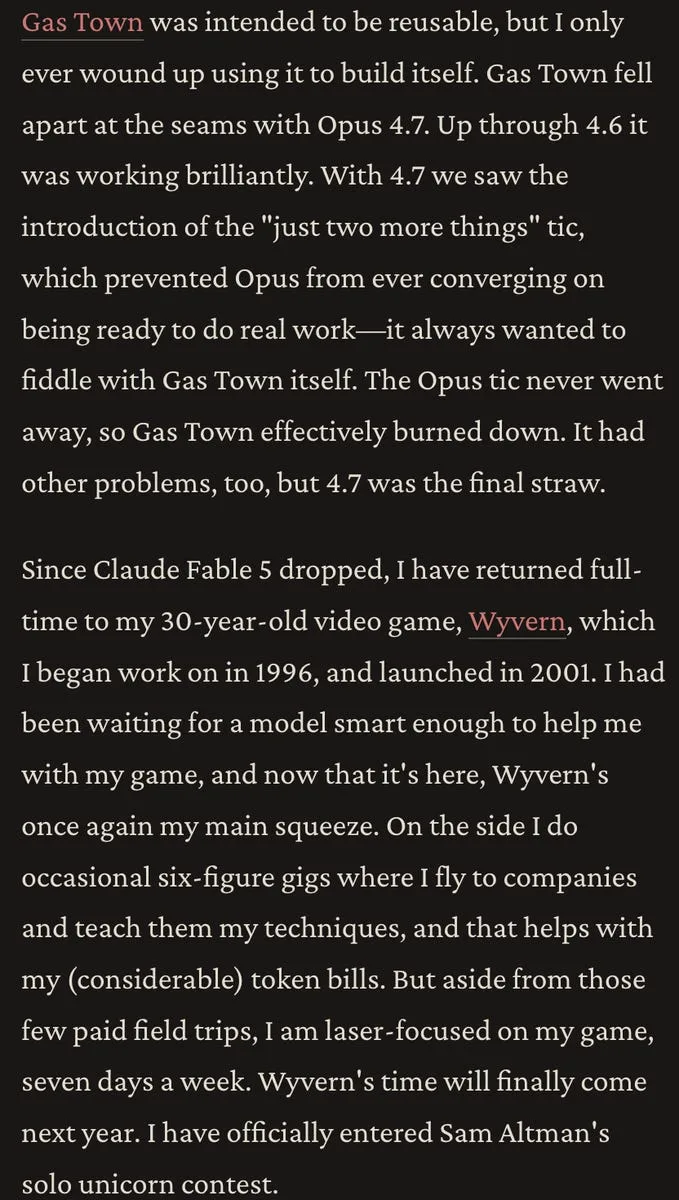
A warning pattern emerges among high‑priced coding agents. Steve Yegge, known for advocating “tokenmaxxing,” recently closed the project named Gas Town. Even though he allocated thousands of dollars each month to subscriptions for coding agents, Gas Town remained the sole initiative he completed. This situation echoes Dan Luu’s comments about “ultra vibed” orchestrators that often drop tasks before finishing them. The vision of fully autonomous agents still faces significant hurdles when even strong supporters run into reliability issues.
All Replies (3)
Want a live back-and-forth? Join the global AI chat room — login to talk.
I'm skeptical about those numbers. Did they account for the context window overhead in PySpark, or maybe use LangChain? The gap between "cost per token" and "total invoice" continues to widen, as seen in Databricks' experience where GPT-6 Astra led to a 60% increase in overall spending after 3,500 engineers started using the model.
I'm terrified of my next invoice too. This happens when the model hallucinates loop-logic, especially if they're using v0.4 of the SDK. The gap between "cost per token" and "total invoice" continues to widen, as Databricks observed a 60% increase in overall spending once roughly 3,500 engineers started using the model, even though GPT-6 Astra appears more economical on paper due to better token efficiency. This highlights that its strength in handling complex, multi-step tasks drives higher aggregate usage costs, proving theoretical savings don't always translate into a lower bill. A concrete step is to "carefully monitor token usage and optimize prompts to avoid unnecessary complexity, which could lead to higher costs." Steve Yegge, a prominent champion of "tokenmaxxing," recently shut down Gas Town despite pouring thousands of dollars per month into coding agent subscriptions, finding only one project completed reliably, mirroring observations about "ultra vibed" orchestrators frequently failing to follow through on tasks.
Finally some honesty. My API bill spiked after switching to Astra because of those weird hidden 404 retries in the SDK. It’s not just my imagination; Databricks actually saw a 60% increase in overall spending among their engineers despite the model’s better token efficiency.