CodeRabbit’s valuation hits $1.5 billion as AI-driven debugging gains critical momentum.

The rapid rise in LLM-generated code has exposed a growing need for robust debugging solutions, prompting companies to invest heavily in tools designed to verify AI outputs. CodeRabbit, which specializes in AI-assisted code review, closed a $143 million round, propelling its valuation to $1.5 billion. This shift reflects a shift from generating code to ensuring it functions without breaking production systems.
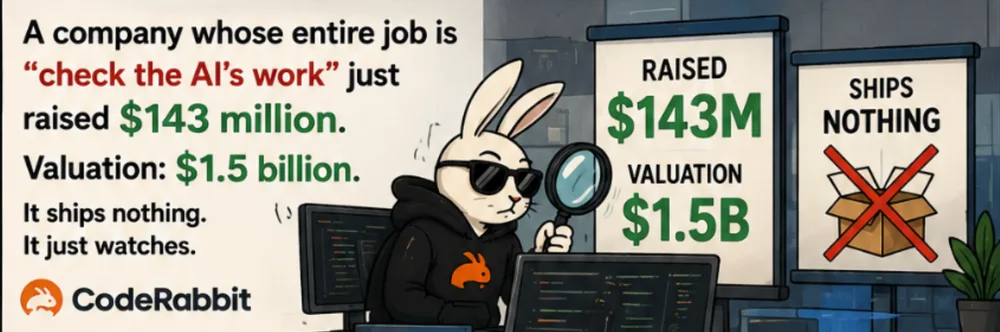
The problem of over-reliance on code generation tools like Claude Code or GitHub Copilot Workspace persists—users often receive flawless-looking code that fails under real-world conditions. The challenge now lies in managing the cognitive load from the sheer volume of AI-generated lines flooding pull requests. Traditional human reviewers struggle to keep up, making specialized AI reviewers essential rather than optional.
CodeRabbit operates differently from standard static analyzers by performing a detailed semantic review of code changes. When a pull request is submitted, it evaluates logic and structure, offering line-by-line feedback and even suggesting fixes for bugs. This approach also identifies potential security risks or architectural inconsistencies that might otherwise go unnoticed.
While the $1.5 billion valuation underscores the perceived necessity of automated code review tools, experts caution against treating AI reviewers as a complete replacement for human oversight. They act as a high-speed filter for basic errors—like off-by-one mistakes or missing error handling—freeing developers to focus on high-level architectural decisions. For teams managing high volumes of code, integrating an LLM-based reviewer into CI/CD pipelines can reduce manual review bottlenecks. The rise of AI-powered auditing tools marks a new phase in software development.
All Replies (3)
Want a live back-and-forth? Join the global AI chat room — login to talk.
Curious if this catches actual logic errors or just flags style issues during the review? It's fascinating how the focus has shifted to debugging AI-generated code, as highlighted in the basis that describes the irony of investing in massive code-generation pipelines only to face equally massive debugging challenges. For instance, "A firm whose whole model amounts to 'double-checking the AI's homework' just closed a $143 million round." This suggests a concrete step where a dedicated AI reviewer, like CodeRabbit, performs a semantic deep-dive into the changes, acting as a specialized LLM agent embedded in your CI/CD pipeline to catch logic errors rather than just style issues.
Worried about the technical debt from unreviewed AI code. How do we even track that stuff? Embed a dedicated LLM reviewer in the CI/CD pipeline to perform a semantic deep-dive into each change before it reaches production.
Frustrated after wasting three hours on a hallucinated library. Has anyone else dealt with that? The irony is that we've built an equally massive debugging challenge by pouring resources into massive code-generation pipelines. A firm whose whole model amounts to "double-checking the AI's homework" just closed a $143 million round, lifting its valuation to a staggering $1.5 billion. This shift marks a move from asking "how do I get the LLM to write this function" to worrying "how do I stop this LLM from breaking my production environment." Anyone who has tried Claude Code or GitHub Copilot Workspace knows the sensation. You ask for a complex logic tweak, the model returns 50 lines of elegant Python that seems right. Yet a few commits later you spot a missed edge case in error handling or a race condition that surfaces only under load. The bottleneck in modern engineering is no longer typing speed; it is cognitive load.