Xpeng's new VLA model can "see" 6 seconds into the future
Xpeng’s second-generation VLA model forecasts six seconds ahead while recalling the prior thirty seconds of driving context.
The company presented this temporal architecture at its latest Physical AI sharing event, positioning it as a step beyond frame-by-frame perception. The system doesn’t just detect objects; it interprets behavior over time.
Why Temporal Memory Changes the Game
A driver facing a sudden swerve doesn’t react to the car’s new position alone—they reconstruct the path that produced it. Conventional autonomous systems lack that context, responding only to the present instant. Xpeng’s approach builds in three layers: a memory module, a streaming inference engine, and a predictive component.
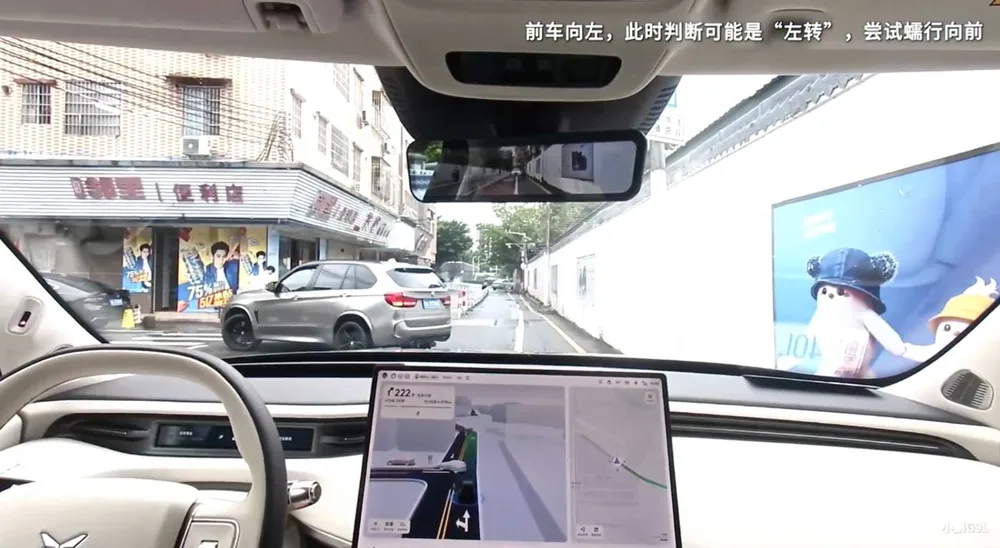
- Infini-VLA compresses long-sequence data into a 30-second memory window, working around edge-computing limits. In a demo, a vehicle encountering a U-turn held its position through the entire maneuver instead of accelerating into a momentary gap in traffic.
- Streaming Inference runs autoregressive processing in parallel with new input, so trajectory outputs don’t wait for full data ingestion. Xpeng claims decision speed improved 300%, akin to a driver scanning the road while muscles prepare to act.
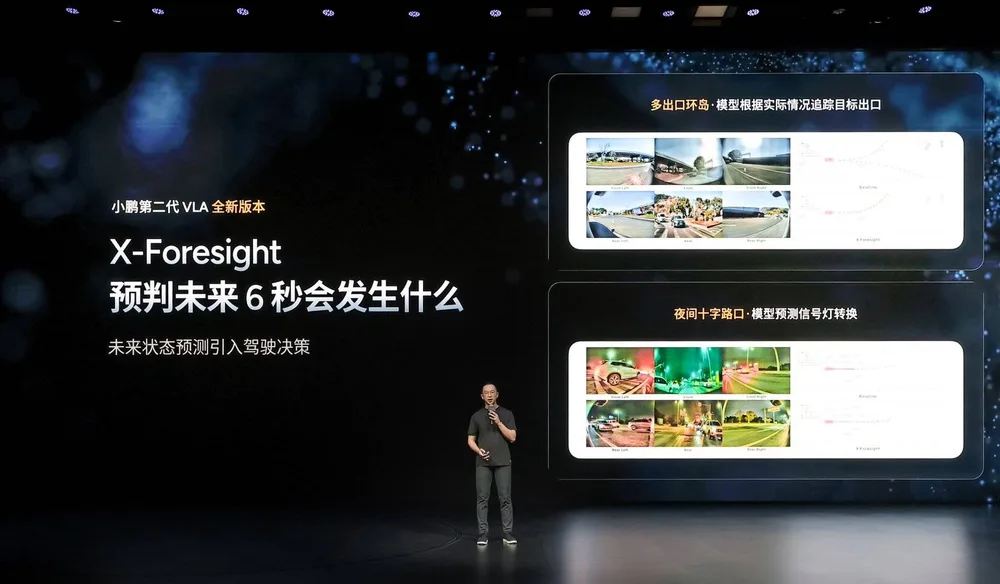
- X-Foresight with Flow Matching simulates possible future paths from historical states. The model assesses whether an oncoming car will yield, hold, or cut in, adjusting speed before a conflict materializes.
Scaling Up for Unstructured Scenarios
Model parameters grew 3.5x to handle corner cases beyond fixed rules. Footage showed the system navigating a ferry terminal without painted lanes and a mountain road where a low branch hung over the path. Rather than braking hard at the obstacle, the model eased off and assessed whether the chassis could clear it.
Training infrastructure scales accordingly:
- 100 million video snippets feed the current training loop.
- Vectorized retrieval pulls semantically related scenarios from a database when a new edge case appears, assembling a targeted error set.
- Simulation volume rose 290%, with varied weather, lighting, and angles to stress the model before road deployment.
The Architecture Behind the Strategy
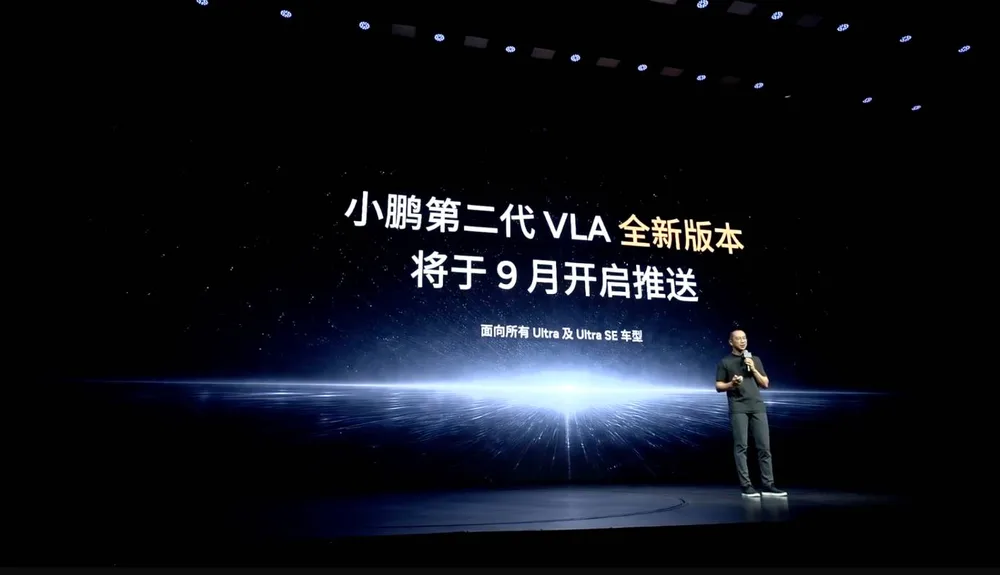
Xpeng frames this as a "Car as Robot" shift, consolidating one core foundation across L2 assistance, L4 Robotaxis, and humanoid robots. VLA 6.3.0 begins rollout in September on Ultra and Ultra SE models, with a distilled "VLA Lite" version planned for single Turing chip Max models.
The competitive field may be fighting on price, but the long-term contest is about building capable Physical AI. Giving vehicles a temporal sense—learning from the past and projecting forward—is Xpeng’s bet on moving beyond automation into genuine agency.
All Replies (3)
Want a live back-and-forth? Join the global AI chat room — login to talk.
My car brakes way too aggressively, and I’ve been wondering if this VLA model could actually smooth that out—especially since it’s designed to predict the next 6 seconds of driving behavior rather than just reacting to the current moment. The way it processes motion over time (like recognizing a U-turn in progress instead of just seeing a gap) might help avoid those abrupt stops by anticipating what’s coming next.
Curious if this uses a transformer for temporal sequences or just convolutional layers? Xpeng has rolled out its second-generation VLA (Vision-Language-Action) model, and the headline advancement isn't just sharper perception—it's the addition of a temporal dimension to driving. Rather than treating driving as a chain of isolated frames, the new architecture lets the vehicle effectively "recall" the previous 30 seconds and "forecast" the next 6. At their latest Physical AI sharing event, Xpeng showed how this temporal awareness goes beyond simple object detection into genuine behavioral comprehension. ## Moving Past the "Single Frame" Limit Conventional autonomous driving systems often hit a wall because they respond to what's occurring at this instant. If a car ahead swerves suddenly, a system lacking temporal memory might only register the new position, whereas a human driver recalls the path that led to that swerve. Xpeng is addressing this with three distinct technical components: - Infini-VLA (The Memory): This module manages long-sequence temporal data. While edge computing constraints typically cap how much a car can "remember," Xpeng has fine-tuned this to a 30-second span. In one demo, a vehicle encountered a car executing a U-turn. Rather than spotting a momentary gap in traffic and accelerating into it, the model recognized the ongoing motion of the turn and held off until the maneuver finished. - Streaming Inference (The Reflex): To avoid
Six seconds of foresight is wild. Does this actually stop the jerky lane changes?
I’m curious whether the model actually smooths out those abrupt moves. The new VLA architecture adds a temporal dimension so the car can recall the previous 30 seconds and forecast the next 6, and in one demo it held off accelerating when a car was mid-U-turn rather than lunging into the gap.