ChatGPT stopped summarizing lectures four days ago
If you rely on ChatGPT to turn messy lecture notes into clean summaries with visual aids, you might have noticed a sudden drop in performance around early April. The shift wasn't gradual. One day the model was structuring complex topics, pulling in relevant images from the web, and providing clear explanations. The next, it reverted to basic, text-only outputs that lacked depth and context. This isn't just a subjective feeling; multiple users report the same regression occurring within a four-day window.
The issue centers on how the model handles multi-step instructions. Previously, a simple prompt asking for an organized breakdown of a lecture transcript would trigger a chain of actions: parsing the text, identifying key concepts, searching for illustrative images, and formatting everything into a readable layout with embedded questions for self-checking. Now, that pipeline seems broken or deprioritized.
What changed in the workflow
The core problem is the loss of autonomous tool use. When you paste a dense academic transcript, ChatGPT no longer automatically decides to fetch supporting media. It sticks to the immediate context window. Even when explicitly told to "add pictures," it often skips the search step or provides generic placeholders instead of specific, relevant diagrams.
This affects students and researchers who use the tool for active recall. The old behavior allowed users to paste a raw transcript and get back:
- A structured outline with bullet points.
- Embedded questions to test understanding.
- Visual aids sourced from the web to clarify abstract concepts.
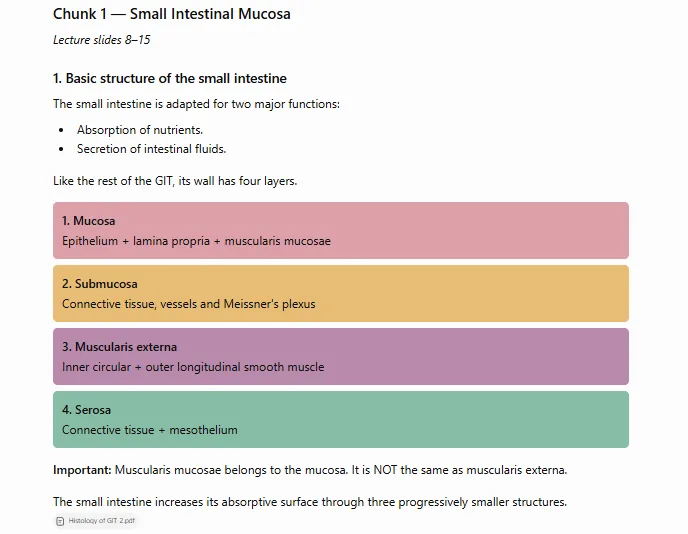
Now, the output is flat. The explanations are shorter, missing the nuance of the original material. The interface still looks the same, but the engine behind the scenes seems to have tightened its search-and-synthesis loop.
Why this matters for study habits
For anyone using AI as a study partner, consistency is key. The drop in quality forces a change in prompting strategy. You can no longer assume the model will infer the need for visual context. You have to be explicit. Instead of asking "Explain this lecture," you now need to say, "Break down these notes into three sections, find one relevant diagram for each section, and generate two quiz questions based on the hardest parts."
This adds friction. It turns a passive review process into an active prompting session. The model hasn't become dumber, but it has become less proactive. It waits for precise direction rather than attempting to enrich the response on its own.
Checking for silent updates
OpenAI rarely announces minor backend tweaks. These regressions usually stem from weight updates or changes in the default temperature settings that favor speed over creativity. Without official confirmation, users are left to adapt. The fix is simple but requires discipline: treat every new session as if the model has forgotten its previous capabilities. Define the output format strictly. Ask for citations. Request images explicitly.
If you're seeing shorter answers and fewer visuals, you're not imagining it. The model's default behavior shifted in the last few days. Adjust your prompts to compensate, or switch to a mode that allows deeper search integration if available. Don't assume the tool knows what you need; tell it exactly what to build.
I've noticed the same. My summaries used to include relevant images and structured points, but now they're just text dumps.