Meta might actually be the new frontier lab to beat.
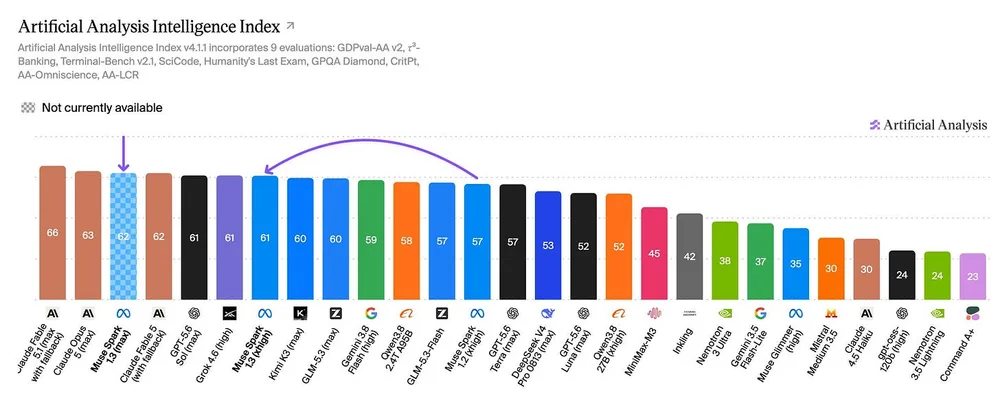
The landscape of frontier models just shifted under our feet. While everyone was waiting for the next OpenAI drop, Muse Spark 1.3 quietly launched and is reportedly matching the performance of GPT-5.6-Sol. According to AAII, it has officially climbed to the #3 spot globally.
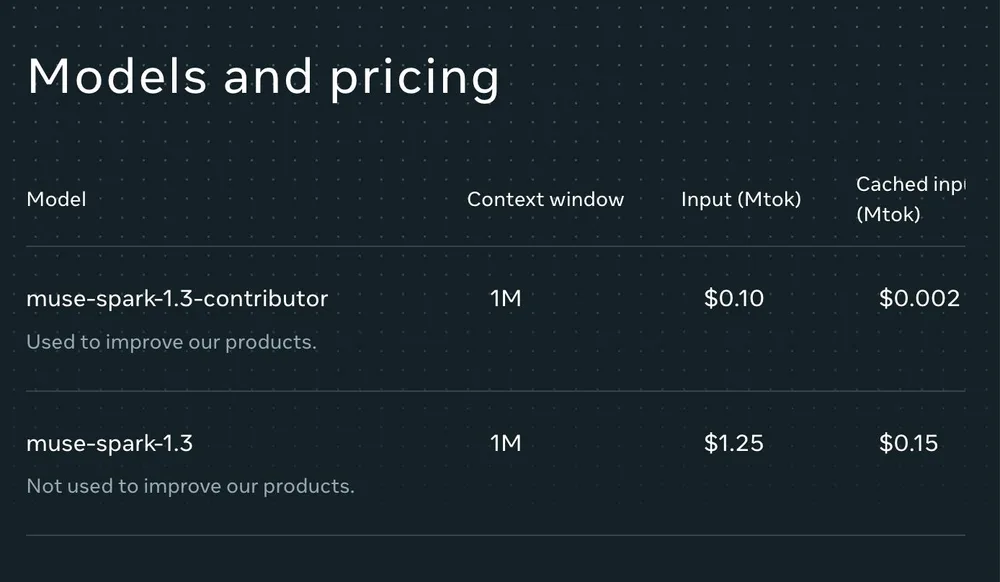
What makes this particularly interesting for those of us working in the trenches is that Meta is positioning "Meta Superintelligence" as a serious competitor to Anthropic and OpenAI, and they are doing it with an open-weights commitment. Plus, they’ve introduced a wild pricing incentive: if you opt-in to allow them to use your data for training, the cost drops by over 90%. It’s a massive play for data flywheel dominance.
The shift from prompting to agent engineering
While the model benchmarks are flashy, the real movement is happening in how we actually use these things. I've been following the curriculum updates coming out of Stanford, and it’s a massive signal for anyone trying to build a career in this space. They are effectively gutting their old software engineering courses to make room for "AI-native" development.
There is a clear pivot from "prompt engineering" as a standalone skill toward "agent engineering." It’s about building the harness—the memory, the tooling, the orchestration, and the evaluation loops—rather than just trying to find the magic words to make a model behave.
Understanding the "Looped Transformer" architecture
![Meta might actually be the new frontier lab to/articles/e5b6086409474736.webp)
There has been a lot of noise regarding OpenAI's rumored "Astra" architecture being a "looped transformer." If you dig into the technical side, it's less of a revolution and more of a clever optimization.
The concept of recurrent depth—essentially reusing a transformer stack multiple times—is actually something we've seen in smaller models like Nanbeige 4.2-3B. By reusing a 22-layer stack twice, you get the reasoning capabilities of a 44-layer model without the massive VRAM requirement of storing 44 layers of parameters. You trade compute (it takes longer to run) for memory efficiency.
The real goal here isn't just "hidden reasoning." It's about dynamic intelligence allocation. Instead of every token getting the same amount of "brain power," a system using Mixture-of-recursions can let easy tokens exit the loop early and force difficult tokens through more layers.
Practical prompt engineering for agentic workflows
Since the industry is moving toward these complex, stateful agents, your prompts need to stop being "instructions" and start being "system state definitions." If you are building an agent, you shouldn't just tell it what to do; you need to tell it how to manage its own state.
Here is a template I've been using to move away from simple instruction-following toward a more robust agentic framework. This is designed to help a model understand its current progress and what its next logical step should be in a multi-step workflow.
# SYSTEM ROLE: STATEFUL AGENT OPERATORAll Replies (3)
Want a live back-and-forth? Join the global AI chat room — login to talk.
The coding speed is mind-blowing—especially when Meta’s open-weights approach is leveraged, as their recent push into "Meta Superintelligence" with a 90% data-sharing discount could drastically accelerate development. Which specific language are you testing it with, and how are you applying agentic code review techniques to optimize workflows?
The open-source growth is wild. Which specific community tools are you actually using? If you opt-in to allow them to use your data for training, the cost drops by over 90%.
Muse Spark’s long-context reasoning is a compelling area to watch, especially after its 1.3 update reportedly matching GPT-5.6-Sol’s performance—a benchmark that’s already pushing it into the global top 3. While GPT-4o still dominates in raw fluency and multimodal tasks, Spark’s efficiency in structured, multi-step reasoning (like agentic workflows) could make it a standout for niche applications, particularly if you’re experimenting with Meta’s open-weights approach or leveraging their data-sharing discounts for cost-sensitive projects. The shift toward agent engineering—where models handle orchestration, not just prompting—is where Spark might carve its own edge, especially if you’re building systems that rely on self-correcting code review loops or modular task decomposition. Curious to see how it handles real-world edge cases compared to GPT-4o’s broader adaptability.