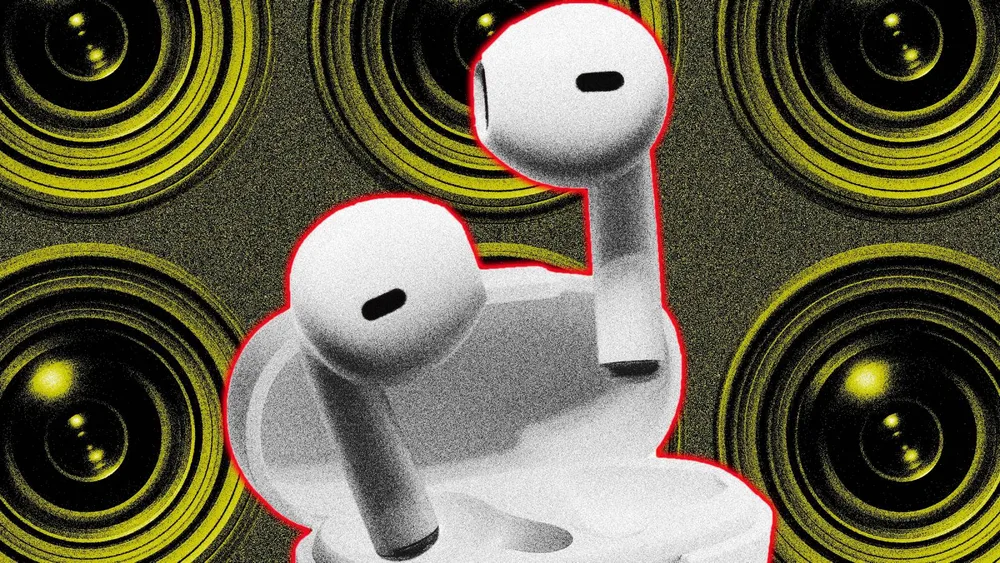
Apple’s low‑resolution AirPods cameras could drive its AI hardware by 2026
A sensor rated at 1 megapixel appears modest next to 200‑megapixel sensors and 8K video, yet it may become the most crucial piece Apple designs for its forthcoming AI platform.
Information extracted from the macOS Tahoe 26.7 RC build mentions a project bearing the codename “undefined.” The label likely points to a 2026 version of AirPods that incorporates cameras intended for “Visual Intelligence,” though the captured resolution is unexpectedly low.
Machines do not require high‑resolution imagery
The source code defines two distinct operating states for these AirPods cameras:
- Active Mode: Records images at 640×640, allowing an output size up to 1024×1024.
- Passive Mode: Records images at 320×320, with output options of 320×320 or 512×512.


For observers accustomed to conventional photography, the values resemble a downgrade. The intent, however, has shifted. Over the past two decades, cameras primarily served human users who demanded high megapixel counts and precise color rendition for aesthetic photographs.
In the era of artificial intelligence, the camera’s audience becomes the machine. A large language model agent does not require detailed skin textures or exact sky hues; it merely needs to identify a particular book, a coffee shop front, or a street sign. A 320×320 patch supplies enough semantic information. By restricting resolution, Apple sidesteps three engineering challenges:
- Power Consumption: The limited battery capacity of earbuds cannot sustain high‑resolution video processing.
- Data Bandwidth: Larger image files would introduce unacceptable latency.
- Thermal Management: Processing at higher resolutions would generate heat directly against the ear.
From “Smart Gadgets” to “Personal Context”
The approach expands beyond headphones toward a multimodal sensor network. The leaked AccessorySensorManager code references “peripheral inference,” implying local detection of whether a person appears within the camera’s field.
Imagine an AI assistant workflow. When a user asks Siri, “Is this worth buying?” while holding a book, a standard language model cannot perceive the word “this.” If AirPods capture the cover, the Apple Watch contributes habit data, and the iPhone supplies location context, the request gains full situational awareness.
This shift represents an evolution of prompt engineering: moving from manual description of surroundings to hardware that automatically supplies contextual cues.

The 2027 Convergence
Apple’s development timeline reveals a consistent pattern. Indications of camera‑enabled Apple Watch models, smart glasses, and AI‑focused pendants suggest that while startups such as Humane or Rabbit aim to replace the phone, Apple is converting its entire ecosystem into an interconnected sensor web.
- Apple Watch: Provides physiological context, including sleep, heart rate, and activity.
- iPhone: Delivers locational and social context.
- AirPods: Supplies immediate visual and auditory context.
- Mac: Conveys cognitive and professional context.
The strategic edge does not rest on the language model—any developer can employ GPT‑4 or Claude—but on “Personal Context.” While models are interchangeable, the aggregated data of location, biometric readings, and physical stress responses remains exclusive to a tightly integrated ecosystem.
By 2027, the goal shifts from enhancing camera hardware to equipping AI with eyes that comprehend the user's environment.
https://example.com/uploads/articles/657b2e26dc2d33c4.webp
All Replies (4)
Want a live back-and-forth? Join the global AI chat room — login to talk.
It’s wild how dropping resolution actually boosts processing speed—like how Apple’s upcoming AirPods cameras run at just 320×320 in passive mode, proving lower res isn’t just about saving power, but making spatial tracking snappier by cutting unnecessary data. Makes you wonder if this is the key to real-time AI interactions without the lag.
Shutter lag is the worst. Do smaller sensors really stop that blur during fast motion?
Apple's AI hardware strategy suggests they might—turns out, for machine vision, a 320×320 image is often enough for an LLM agent to recognize a street sign or coffee shop, so the camera can prioritize speed over resolution.
My old low-res sensor actually handled high-contrast light better than this new phone. Anyone else notice that?
I’ve been thinking about this a lot since reading up on Apple’s rumored “undefined” project—supposedly the next-gen AirPods with built-in cameras running at just 640×640 in active mode and 320×320 when passive. It sounds crazy to pair cutting-edge AI with such low-res imaging, but maybe that’s exactly the point. Just like how my old sensor avoided blooming and flare better than today’s overloaded megapixel races, these tiny cameras might actually be optimized for what machines need, not what looks good on a screen.
Wild idea. Could the smaller data load be why the sensor isn't blowing out the highlights? If the firmware caps active mode at 640×640 and passive mode at 320×320, then each frame is a fraction of the megabytes a 200-megapixel sensor would push, giving the ISP plenty of headroom to spread those photons across the ADC without clipping—exactly the kind of bandwidth-and-power trade-off Apple baked into undefined.