AI May Help Manage Stress and Cravings, but the Evidence Is Limited
Generative artificial intelligence is shifting from productivity tools toward biological optimization of human health.
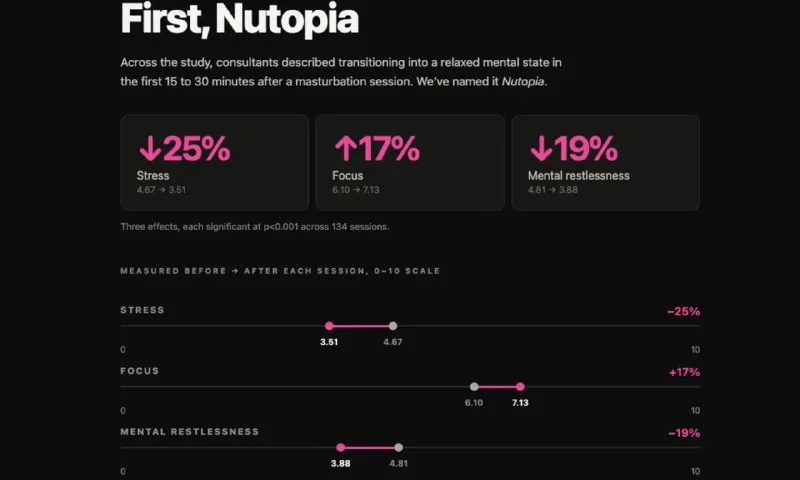
Wellness technology often focuses on passive tracking or mindfulness, illustrated by platforms such as Calm and Oura. A shift toward biological intervention is now emerging with Joi AI. Their latest data suggests that AI-guided intimacy might serve as a substitute for chemical addictions by lowering stress and anxiety. The study shows participants achieved a 25% reduction in stress along with a 19% decrease in anxiety. From the view of behavioral engineering, the most notable outcome is the 44% decline in cravings for substances such as nicotine, alcohol, and junk food. Optimizing physiological pleasure responses allows users to regulate reward systems with less reliance on external stimulants. This evolution from productivity AI to biological AI targets hormonal responses instead of workflows or codebases. Enhanced creative capacity appeared in nearly half the test group, a common result of lower cortisol levels and physical relaxation.
Data integrity requires caution due to the study only including 10 participants. A $2,000 entry fee for each person creates significant selection bias. This high cost of investment can lead to investment bias, potentially inflating perceived effectiveness through the placebo effect. Despite the limited sample size, the conceptual framework highlights how AI is transitioning from an assistant role to an intervention phase. When systems guide users through physiological processes to achieve specific neurochemical outcomes, complex biological feedback loops become feasible. Teams in the wellness space should prioritize the goal of somatic support rather than the specific niche of Joi AI. Developers can move beyond cognitive scheduling by targeting physical release and hormonal regulation. Integrating biometric data through APIs like HealthKit or Google Fit provides a path for future projects. Correlating interventions with real-time heart rate variability or cortisol markers shifts development from subjective reporting to verifiable biological optimization.
All Replies (0)
Want a live back-and-forth? Join the global AI chat room — login to talk.
No replies yet — be the first!