AI movies still can't touch human creativity in pacing
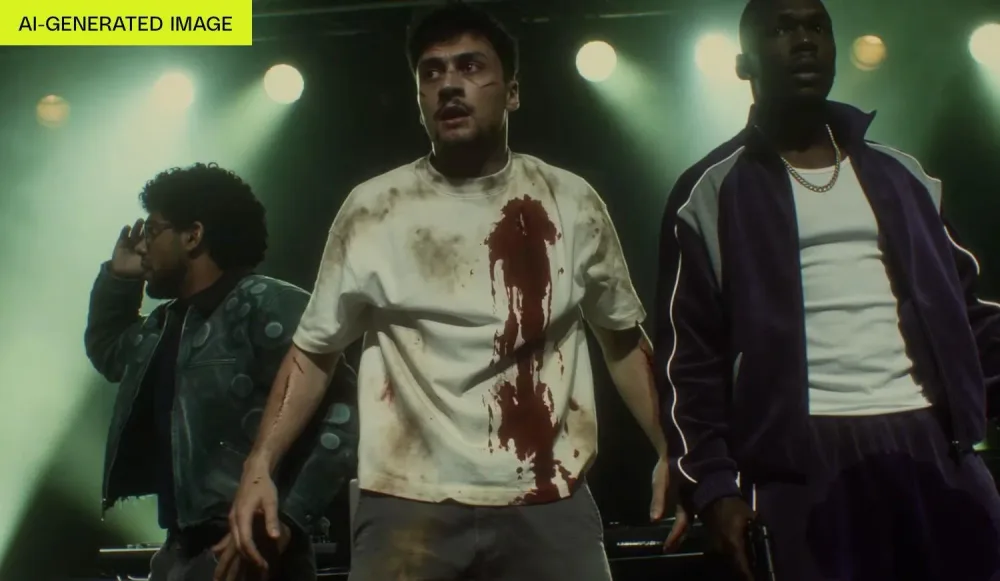
The gap between a visually stunning AI shot and a cohesive scene is wider than most benchmarks suggest. I've been analyzing the structure of recent AI-generated cinematic experiments, and it's becoming obvious that the "magic" happens in the gaps where humans intervene. Take a scenario involving three delusional Londoners drinking in a grimy pub, dreaming of fame and luxury boats while dodging armed goons in hyperkinetic smash cuts. On paper, this sounds like a Guy Ritchie or Edgar Wright flick—fast, rhythmic, and driven by a specific comedic timing.
The problem is that current generative video models don't actually understand "timing" or "irony." They understand pixels and motion vectors. When you see an AI movie that actually feels engaging, it's almost always because a human editor spent hours trimming frames to create a rhythmic beat or wrote a script that understands the slow burn of a joke before the punchline. The AI provides the "skin," but the human provides the "skeleton."
If you're trying to build an AI workflow for storytelling, you have to treat the LLM and the video generator as raw material providers, not directors. Here is a practical approach to integrating these tools without losing the human soul of the project:
The Human-Centric AI Workflow
1. The Narrative Anchor: Write your script using a tool like Claude Code or a high-reasoning LLM, but manually rewrite every dialogue beat. AI tends to write "movie-speak" (clichés) rather than how people actually talk in a pub.
2. The Visual Storyboard: Generate your keyframes first. Instead of letting the AI decide the camera movement, use specific prompt engineering to define the focal length and angle.
3. The Edit (The Critical Step): This is where the movie is actually made. Use a traditional NLE (Non-Linear Editor) to force the pacing. AI video is often too "floaty"; cutting it aggressively against a beat is the only way to make it feel intentional.
Comparison of AI-led vs. Human-led production:
- Visual Consistency: AI-led is erratic; Human-led uses seeds and consistent character references to maintain a look.
- Pacing: AI-led feels like a dream sequence (slow, drifting); Human-led feels like a movie (sharp cuts, purposeful timing).
- Emotional Resonance: AI-led is generic "epicness"; Human-led focuses on small, weird human details that create empathy.
All Replies (3)
Want a live back-and-forth? Join the global AI chat room — login to talk.
It hits the beats but misses the soul. Which specific AI movie felt the most robotic to you?
It's so obvious in my tests. Are you seeing rushed transitions even after prompt tweaking?
Frustrating. Which specific AI tool are you using that keeps rushing the pacing of the scenes?