YouTube Automation 2026: The Shift to Prompt Engineering and AI Agents
Most people think "YouTube Automation" still means slapping a robotic voice over some stock footage and hoping the algorithm picks it up. In reality, the 2026 landscape is about building a sophisticated AI workflow where the human acts more like a creative director than an editor. I've been digging into how the top earners are actually doing this, and it's not about "pushing a button" to make money—it's about high-level prompt engineering and strategic LLM agent deployment.
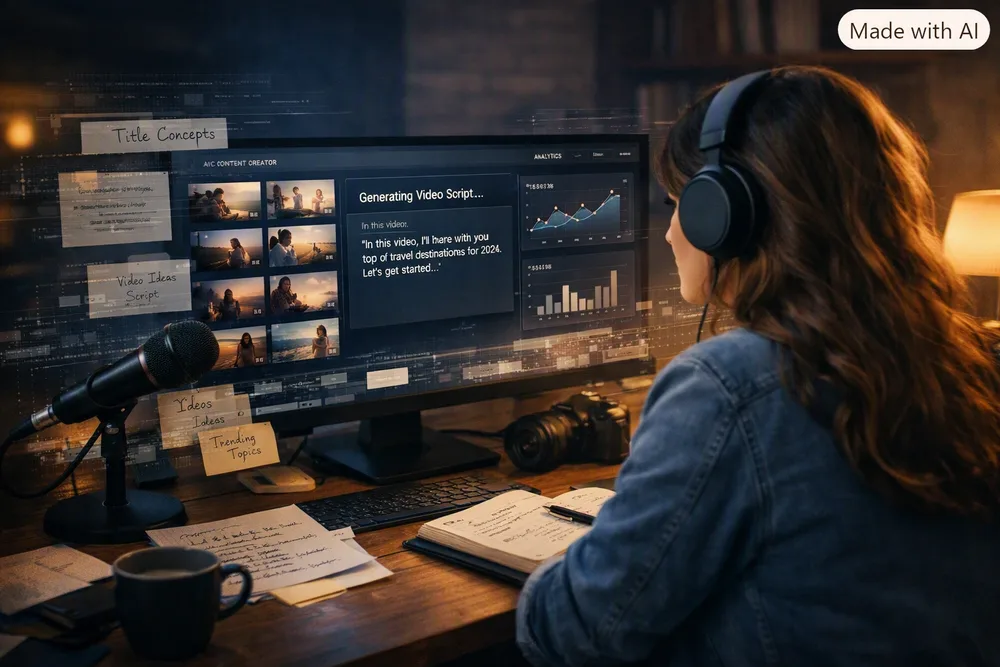
The Modern Content Stack
The "faceless channel" meta has shifted. The winners aren't using one tool; they're chaining five. A typical high-output pipeline now looks like this:
1. Trend Analysis: Instead of guessing, they use custom LLM agents to scrape trending topics and cross-reference them with search volume data to find "content gaps."
2. Scripting: They don't just ask for a script. They use a multi-step process: a "Research Agent" gathers facts, a "Writer Agent" drafts the narrative, and a "Critique Agent" trims the fluff to maximize audience retention.
3. Visuals: We've moved past generic B-roll. The current trend is using consistent AI-generated characters or hyper-realistic environments that maintain a brand identity across videos.
4. Voiceover: The "AI voice" tell is almost gone. People are using voice cloning with specific emotional markers to ensure the pacing sounds human.
Real-World Workflow Implementation
If you're trying to set this up from scratch, you can't just rely on a single prompt. You need a system. For those looking for a practical tutorial on the logic, the structure usually follows a JSON-based handoff between tools.
{
  "workflow_step": "script_to_visual_prompt",
  "input": "script_segment_01",
  "action": "extract_key_imagery",
  "output_format": "midjourney_prompt_style",
  "consistency_id": "character_ref_092"
}
This ensures that the visual AI knows exactly what to generate based on the script without the human having to manually write 50 different prompts per video.
The "Quality Trap"
The biggest mistake beginners make is over-automating. When every channel uses the same "top 10" template and the same AI voice, the viewer's brain just tunes out. The real edge now comes from "Human-in-the-loop" (HITL) editing. The AI does the 80% grunt work—the transcription, the rough cut, the initial B-roll placement—but a human spends the final 20% adding irony, specific cultural references, or sharp pacing changes that AI still struggles to nail.
It's less about "passive income" and more about running a lean media company. The barrier to entry is lower than ever, but the barrier to actually standing out has never been higher. If your AI workflow doesn't include a step for "creative disruption," you're just adding to the noise.
All Replies (3)
Want a live back-and-forth? Join the global AI chat room — login to talk.
Huge difference! Which custom knowledge base tool are you using for your scripts?
Struggling with prompt chaining versus one long prompt. Which framework are you using for your workflow?
Game changer. Have you tried feeding it transcripts from top creators to fix the tone?