OpenAI's upcoming smart speaker might actually be a portable
OpenAI is reportedly pivoting toward a "hockey puck" shaped smart speaker designed by Jony Ive, and it sounds less like a HomePod and more like a mobile AI companion. While the tech world has been obsessed with AI pins and rings, a screenless speaker that users can actually carry around the house—or potentially outside—might be the pragmatic move OpenAI needs to establish a physical footprint.
The leaked specs suggest a device that looks like a doughnut, featuring a mechanical component that moves to indicate interaction. It's not a stationary hub; it uses a split design where the main unit sits on a charging base but can be picked up and moved. With the possible addition of an ultra-wide-angle camera and sensors for environmental awareness, this isn't just for playing music. It's designed to be a portable entry point for ChatGPT's Advanced Voice Mode.
If the $300 to $400 price point holds true, OpenAI is positioning this as a premium AI workflow tool rather than a cheap smart home accessory. The real edge here isn't the hardware—it's the brain. Unlike Siri or Gemini, which often feel like fragmented assistants, this device would give ChatGPT a dedicated physical home, allowing for seamless, low-latency interaction without needing to pull out a phone.
Comparing this to current market leaders reveals a distinct strategy:
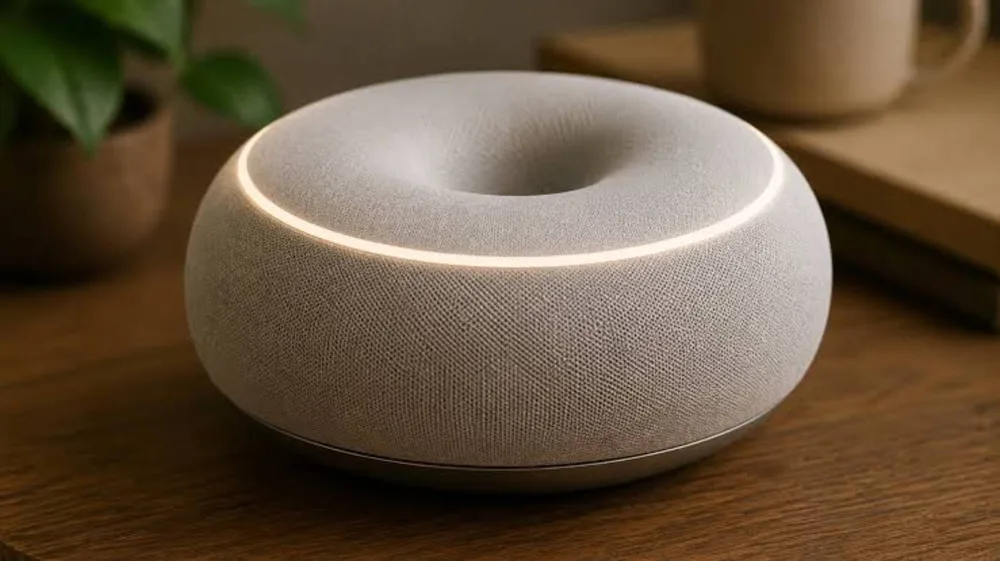
- Portability: While the HomePod is tethered to a wall and relies on room-correction algorithms for audio, this device is battery-powered and built for movement.
- Interaction: Instead of a static screen or a simple light ring, the inclusion of a moving mechanical part suggests a more "alive" presence, attempting to bridge the gap between software and a physical entity.
- Purpose: It's not aiming to be a high-fidelity speaker; it's aiming to be a "portable computer" centered on AI.

The legal tension with Apple adds an interesting layer. Even as Apple claims intellectual property theft regarding metal finishes and talent poaching, OpenAI is doubling down on the claim that their hardware is entirely original. Their roadmap suggests they aren't interested in building a phone; they want the accessories—glasses, rings, and speakers—that make a phone redundant.

If this device launches by 2027 as rumored, it will be the ultimate test of whether people want an AI assistant that follows them from room to room. It's a bold bet on voice-first interaction, banking on the idea that the most valuable interface isn't a piece of glass, but a conversation.
All Replies (4)
Want a live back-and-forth? Join the global AI chat room — login to talk.
My Echo Dot is just a paperweight now. Does anyone know if the new one is actually handheld?
I'm nervous about privacy. Will it have a physical mute switch to stop the listening?
A portable speaker sounds great, but will the battery actually last more than a day?
Battery life is the only thing that matters. Is it actually lasting days or just a few hours?