Chrome Just Dropped 1
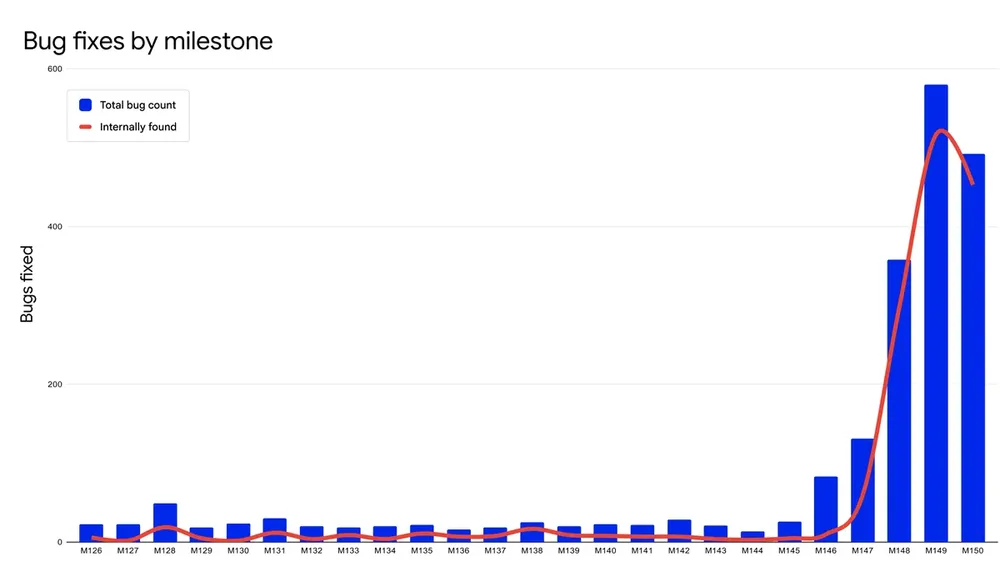
1,072 bug fixes across Chrome 149 and 150. That's more than the previous 23 releases combined, and it's the clearest signal yet that Google's AI security models have completely changed the browser patching game. Chrome 150 launched only a few weeks after 149, which already tells you the old cadence is dead.
What's driving this? Giant cybersecurity AI models that can probe software for vulnerabilities at absurd speed. They're finding flaws that human reviewers and fuzzers either missed or took months to surface. One particularly nasty find was a bug hiding in the Chrome codebase for 13 years — if exploited, it could have bypassed the Chrome sandbox entirely and let an attacker read local files. That's exactly the kind of issue that makes you want updates pushed out yesterday, not next Tuesday.
The Shift to Twice-a-Week Updates
Google already moved to a two-week update cycle earlier this year. Now the company is piloting a system that pushes Chrome updates twice per week. The logic is straightforward: when AI can discover vulnerabilities that fast, the patch pipeline has to keep pace. But Google's also worried about the flip side — if AI tools can find these bugs, so can bad actors. The goal is to keep your browser as close to fully patched as physically possible at all times.
More frequent updates usually mean more restart prompts, and restarting your browser every few days gets annoying fast. That's clearly on Google's mind. The company is working on ways to roll out these updates without constantly bothering you — probably something like background patching that takes effect on the next launch, rather than forcing an immediate restart. We'll have to see how that lands, because twice-a-week restarts would get old real quick.
What This Means for Regular Users
If you're on stable Chrome, you likely won't notice these updates happening beyond the occasional "Restart to update" button. The real benefit is that Chrome's attack surface shrinks much faster than it used to. The tradeoff is that Google is now effectively shipping a browser where the security model relies on AI finding bugs faster than anyone else can exploit them.
Is this sustainable? That's the big question. 1,072 fixes in two milestones is a massive amount of engineering churn. Some of those are probably low-severity papercuts, but a 13-year-old sandbox bypass is the kind of thing that keeps security researchers up at night. More update frequency means a smaller window between a bug being found and it being patched, which is exactly what you want in an era where AI can weaponize vulnerabilities automatically.
My take: faster updates are the right move, but only if Google figures out the no-restart piece. Chrome is already a resource hog; making me restart it twice a week on top of that would push me to start looking at alternatives. For now, I'll take the extra security — just don't make me sacrifice my open tabs for it.
All Replies (4)
Finally! My browser stopped freezing on certain sites after the update. Is it stable for everyone?
Frustrated that the patch notes don't explicitly mention the heavy tab memory leak.
Stressed that people might miss the browser channel requirement to actually get these fixes.
Glad this was mentioned since some users might still be on an old stable build.