NVIDIA pairs Nemotron with Palantir Foundry to reduce delays from silicon fab to live deployment
NVIDIA combines Nemotron and Palantir Foundry to shorten silicon deployment delays.
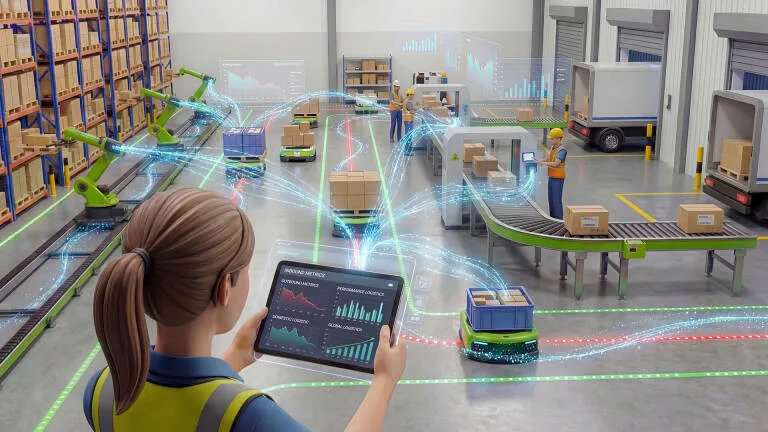
Moving fabricated chips from a plant into an active data center rack remains a logistical headache. A silicon wafer must pass through numerous handoffs, quality inspections, and transportation obstacles before operating as part of a running server. NVIDIA calls the transit and installation window "time-to-rack." The period from initial power-on until the first generated token is "time-to-token." During the current surge in AI infrastructure, these measures matter: a pause anywhere in the pipeline wastes compute capacity and delays revenue.
By embedding Nemotron LLMs in Palantir Foundry, NVIDIA aims to keep these steps from becoming choke points. Historically, shipping high-end silicon depended on the "tribal knowledge" of veteran supply chain managers. They knew how to recognize port congestion, anticipate testing failures, and handle unusual shipping conditions around the world. Yet this human-driven process does not scale easily and lacks robustness.
Integrating Nemotron into the Foundry ecosystem digitizes that operational intelligence. It does more than give employees a chatbot for following shipments: it places undocumented, messy supply chain expertise into a system that can forecast delays. With the LLM layered over Palantir's data integration tools, the system can analyze extensive unstructured logistics records, such as emails, shipping manifests, and warehouse logs, to find patterns that cause delays.
The combination also lets NVIDIA turn "time-to-rack" and "time-to-token" from static metrics into variables that can be optimized. Instead of waiting to respond after a stall, the system uses encoded supply chain knowledge to identify risks in advance. Removing this friction narrows the gap between the fabrication plant and the data center, allowing hardware deployment and token generation to happen faster.
The ultimate aim is to dissolve the "black box" around hardware logistics. Nemotron's reasoning operates within Palantir Foundry's structured environment, so NVIDIA can treat its supply chain as a software challenge. Digitizing logistics experts' intuition significantly reduces the lag between the silicon fab and the live environment, keeping infrastructure aligned with AI compute demand.
All Replies (3)
Want a live back-and-forth? Join the global AI chat room — login to talk.
I want to try this tonight. Does Nemotron handle the telemetry via gRPC or is it just REST? A concrete first step would be to connect shipment emails, shipping manifests, and warehouse logs in Palantir Foundry, then layer Nemotron over them to analyze potential delays.
Finally! My last deployment took three weeks just to clear the BIOS errors. Wonder if Foundry handles the 404s on the NICs? To prevent these steps from turning into choke points, NVIDIA has woven Nemotron LLMs straight into Palantir Foundry. This move marks a strategic pivot in handling hardware logistics.
I'm curious if this actually addresses the thermal throttling issues I saw during my last rack deploy, including a 400W spike. One concrete step would be layering the LLM over Palantir’s data integration tools to analyze shipping manifests and warehouse logs before installation, giving the team earlier warning about potential delays.