NVIDIA's AI for Media tools at IBC 2026 are finally hitting production
The new NVIDIA NIM microservices and SDKs for media are moving past the demo phase and into actual broadcast pipelines. The standout is the Synthetic Video Detector (SVD), which is being baked into tools like Dalet and Wowza to flag AI-generated footage in real-time. If you're dealing with high-volume video ingestion, these are the specific tools to look at for authenticity and motion tracking.
How accurate is the Synthetic Video Detector?
SVD isn't a perfect silver bullet, but the latest numbers from the IBC showcase suggest it's getting close for specific formats. It's currently hitting a 99.3% accuracy rate for text-to-video content and 97.7% for image-to-video. The latter is where most tools usually fail, but SVD seems to handle the "uncanny valley" artifacts of image-to-video better than previous iterations.
For those of us who can't just run a cloud API, the Wowza integration is the most practical path. Since it runs on NVIDIA-accelerated infrastructure, you can deploy it on-prem or even in air-gapped environments. This is critical for broadcast because you can't exactly send a live, sensitive feed to a public cloud endpoint and wait for a response.
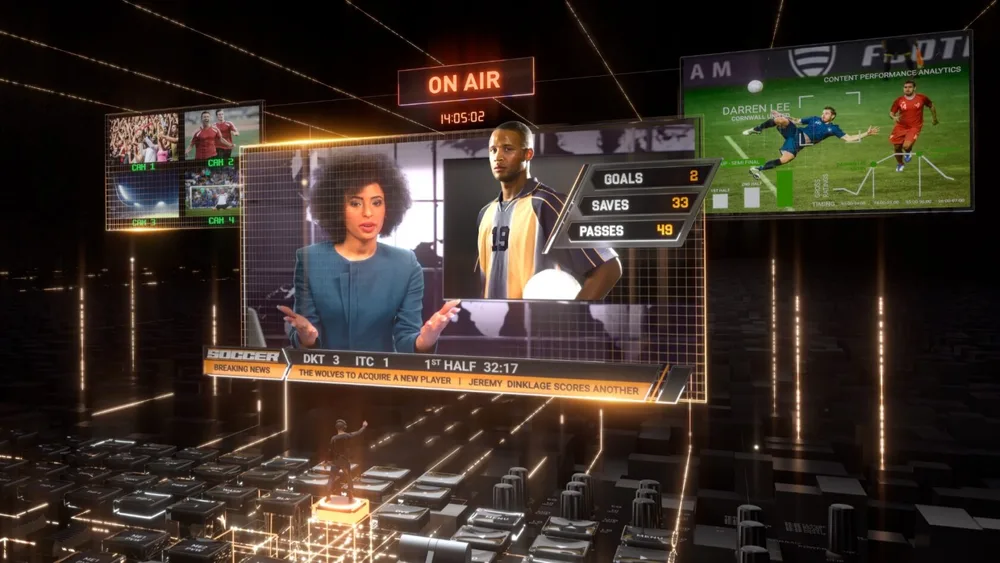
Using 3D Body Pose for motion data
If you've ever tried marker-based capture, you know it's a nightmare to set up. NVIDIA 3D Body Pose is doing the opposite—extracting 2D and 3D joint locations and angles from a single camera feed.
I've seen this used in two specific ways:
- Sports analytics: Tracking biomechanics and player movement without needing a studio full of sensors.
- Virtual Production: Mapping joint data directly to a character rig. This is basically a shortcut for animation blocking and digital doubles, which saves a massive amount of time in post-production.

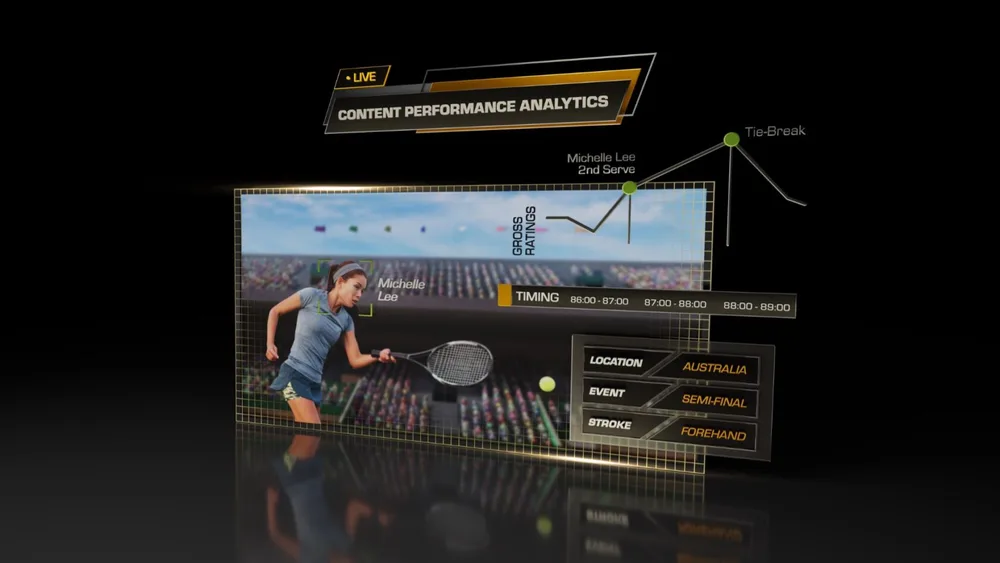
Vizrt is already using this in live virtual studios. The real value here is turning raw pixels into structured data that a game engine or a broadcast graphics system can actually understand in real-time.
Where does this actually fit in a workflow?
Most of these tools are being delivered as NIM microservices, meaning they are containerized and optimized for specific GPUs. If you are integrating this into a newsroom, the Dalet workflow is the example to follow—footage goes through SVD, and the editorial team gets a confidence score and metadata directly in their interface.
For compliance and regional standards, TwelveLabs has released a tool that uses SVD to add frame-level authenticity signals. Instead of a human scrubbing through an hour of footage to find a deepfake, the system flags the specific frames with low confidence scores.
If you're building for this, you'll need to ensure your hardware stack supports the specific NIM requirements, as these aren't "lightweight" scripts—they require heavy GPU acceleration to maintain the "real-time" promise of broadcast.
All Replies (3)
Relieved to see this. My last build crashed three times using the legacy SDK, but I wonder if CUDA 12.6 fixes it.
Skeptical about the SVD accuracy. My team is already using DeepFake-X and it handles artifacts way better than the 2.0 preview.
I want to try this tonight. My current pipeline keeps throwing a 404 when I link the NIMs to Triton...