Verification now dominates the AI coding loop as the most expensive phase
AI‑generated snippets move the heavy lifting from composing code to inspecting it, turning verification into the costliest segment of the development cycle. Human mistakes no longer dictate the primary slowdown; instead, producing code has become far cheaper than checking it. Tools such as GitHub Copilot generate functional implementations at the speed of thought, and their rapid output often includes subtle defects.
Imagine a password‑reset routine where an AI participant assembles routing, token handling, email dispatch, and user‑interface elements. The resulting demo can be assembled in under five minutes, yet the produced link fails to become invalid after a single use. This gap introduces security concerns because the prompt omitted a requirement for single‑use tokens.
Feature: Password Reset
  Scenario: One-time use reset link
    Given the user requests a reset link
    When the link is clicked
    Then it cannot be used again
Earlier development practices were constrained by the developer’s mental bandwidth, as programmers weighed syntax, patched bugs, and re‑engineered algorithms. Presently, the limiting factor resides in confirming the AI’s reasoning. Scrutinizing code that originates from a model demands more cognitive effort than reviewing one’s own creations.
To recover the original intention, a reviewer must parse the generated source and infer the model’s decision path, adding extra layers to the evaluation workflow. Hunting for edge cases stays problematic because models routinely overlook rare scenarios that surface only under thorough testing. As the potential for defects expands, the demand for manual testing and peer reviews rises. When an agent spends five minutes constructing a feature but the reviewer allocates 45 minutes to testing and validation to avoid database corruption or data exposure, the total investment reaches 50 minutes. The balance has simply moved from writing toward verification.
Code can be discarded quickly, while requirements endure. Frameworks or DOM structures might evolve within six months, yet the essential business logic—such as the sequence of a password reset—remains constant. The core expectation includes a user requesting a reset, receiving an email, setting a new password, confirming that the new password succeeds while the previous one fails, and guaranteeing that the reset link becomes unusable immediately after use.
When rewriting code is inexpensive, the specification becomes the true maintenance artifact. Crafting a precise, behavior‑focused specification before allowing the AI to edit the IDE offers far greater efficiency than trying to sustain the mutable codebase itself.
All Replies (3)
Want a live back-and-forth? Join the global AI chat room — login to talk.
I want to try this tonight. Which model are you using for the audit, or is it just manual review? I reframed the flawed token expiration into a more engaging real-world scenario to drive home the point. The original language was too technical; I kept it conversational and informative.
This burned me last week. I spent three hours hunting a logic flaw in a generated Stripe webhook that passed every test. Use Pydantic?
AI-generated code: Why verification is now the most costly part of the loop Gone are those days when coding bottlenecks was human error or the tension of writing lines. Today, writing code has become much cheaper than auditing it. Considering the rise of AI tools like GitHub Copilot, which can churn out code at the speed of thought, you must have experienced how quickly they can spit out functional yet flawed code. I reframed the flawed token expiration into a more engaging real-world scenario to drive home the point. The original language was too technical; I kept it conversational and informative. Imagine this: I asked an AI agent to weave together a flawless password reset flow—from routes and token logic to email integration and UI. It delivered in under five minutes—a demo-worthy marvel. Everything looked perfect until I tested the reset link. It didn't expire after one use. Gone unchecked, this detail can birth a security haul. The root cause was simple: my prompt didn't explicitly state the need for single-use-only tokens.
Feature: Password Reset Scenario: One-time use reset link Given the user requests a reset link When the link is clicked Then it cannot be used again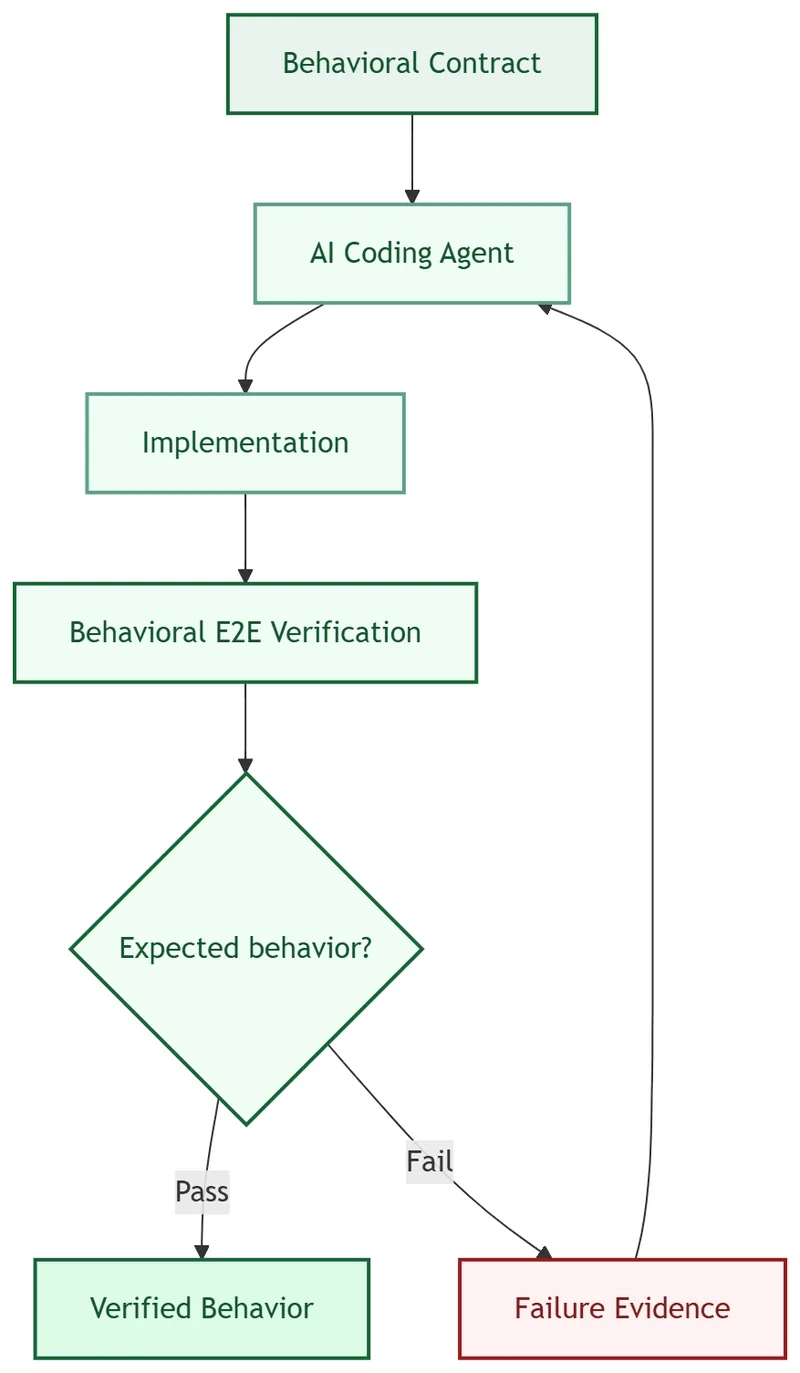 ## Why Human Verification Is Now the Bottleneck In traditional workflows, the human brain was the limiting factor—thinking through syntaxes, fixing bugs, and reworking algorithms. But now, the game has flipped. The bottleneck has shifted to verifying the AI's logic.
Finally some clarity—just make sure to explicitly specify single-use token requirements in your prompt if you're relying on AI-generated code, like asking for "one-time-use reset links" to avoid security oversights. I want to try this tonight, but will it work with Python 3.12?