FoodBridge is a real-world example of using Snowflake to solve
The goal was to move away from manual phone calls and create a sub-second rescue dispatch pipeline. I used Snowflake as the analytical engine to handle the matching logic between commercial surplus and shelter deficits.
The Technical Architecture
The system is designed around four core components to ensure food actually reaches people before it spoils.
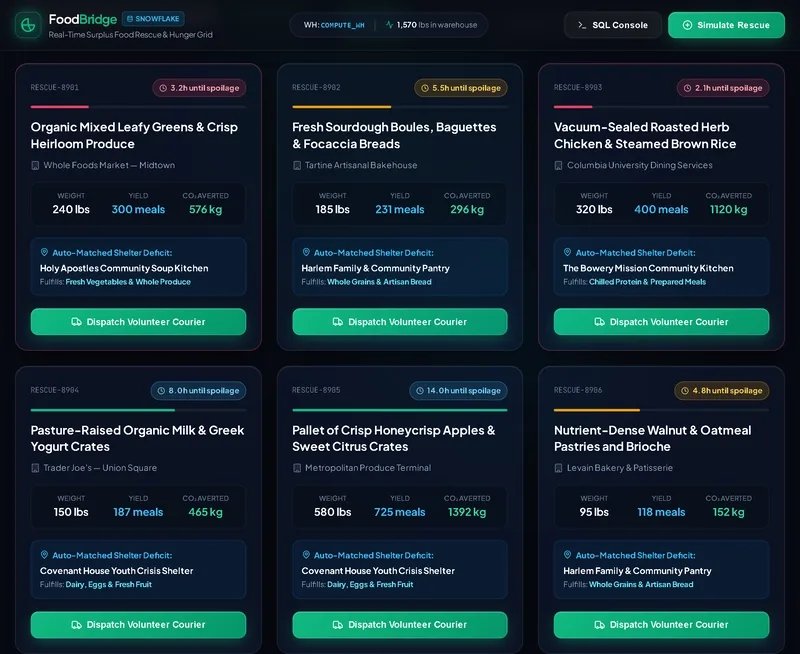
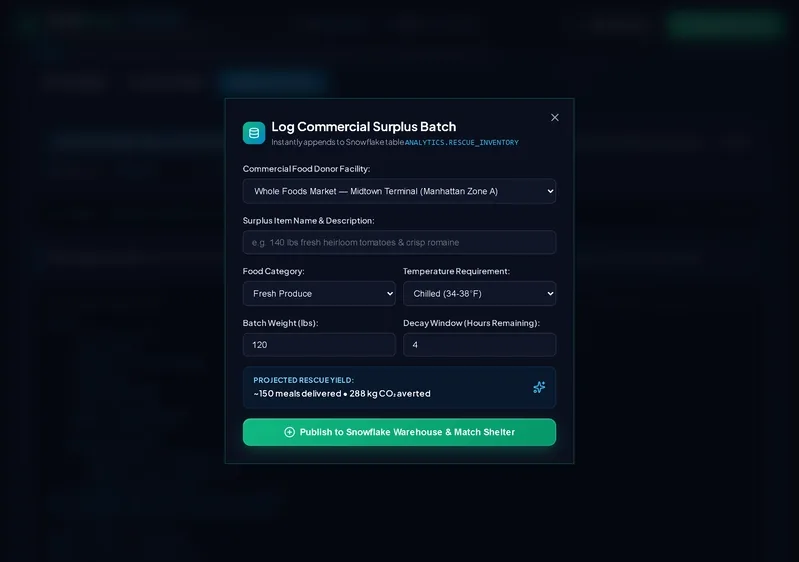
1. Surplus Ingestion: Donors (bakeries, supermarkets) log batches with weight, temperature requirements, and a dynamic shelf-life decay timer.
2. Demand Aggregation: The system tracks live headcount and specific nutritional gaps (e.g., protein vs. produce) across citywide shelters.
3. The Matching Engine: Snowflake processes these streams to rank deliveries based on the narrowest expiration windows and the highest nutritional need.
4. Carbon Accounting: I integrated EPA Waste Reduction Model formulas to audit the environmental impact. For every pound diverted, the system calculates the prevention of roughly 2.40 kg of CO2-equivalent methane emissions.
Implementation Details
To make this work, the data model has to be extremely precise about time. If a batch isn't routed within a 3 to 6 hour window, it's useless. I focused the schema on "Nutritional Equity," ensuring that small neighborhood shelters aren't ignored while larger centers get overwhelmed with bread.
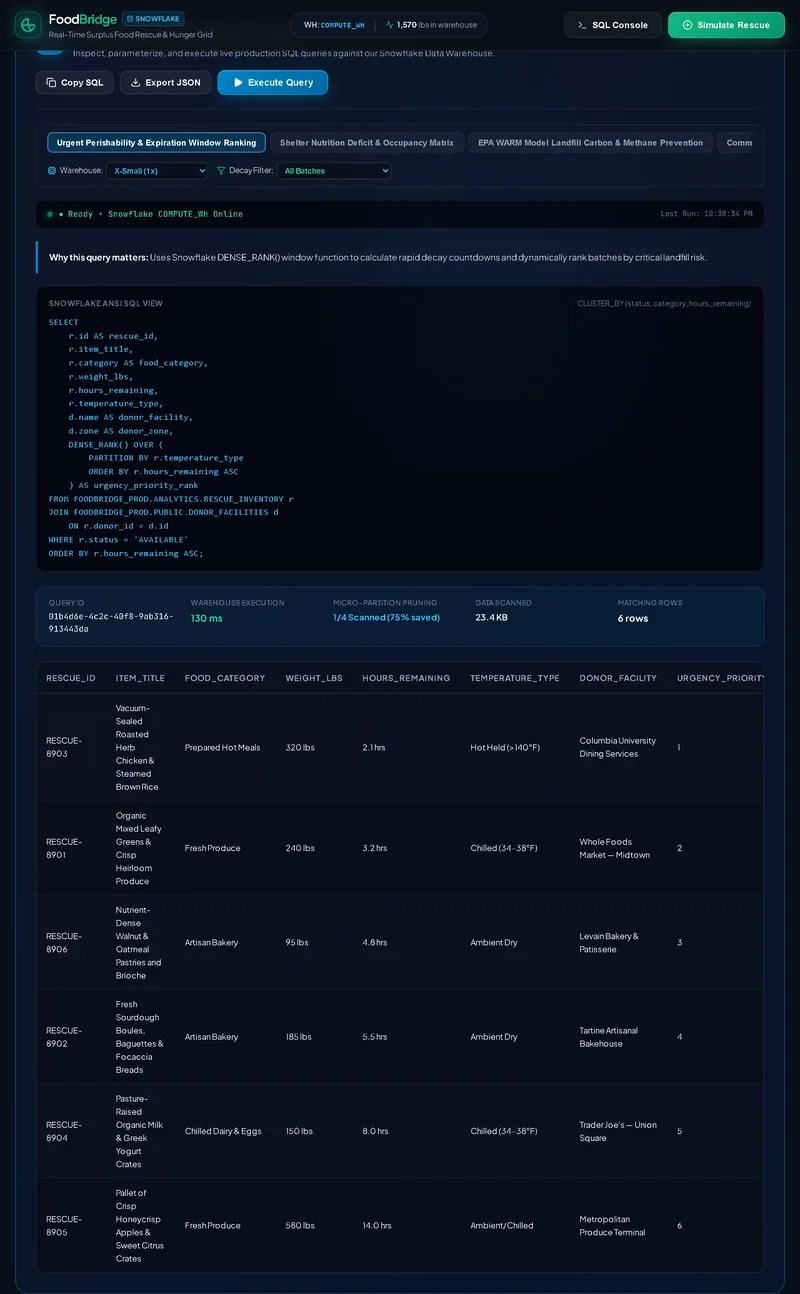
For those looking to build something similar, here is a simplified version of how the matching logic handles the urgency priority in the backend:
SELECT
    batch_id,
    shelter_id,
    (expiration_timestamp - CURRENT_TIMESTAMP()) as window_remaining
FROM
    surplus_inventory
JOIN
    shelter_needs ON surplus_inventory.category = shelter_needs.deficit_category
WHERE
    surplus_inventory.status = 'AVAILABLE'
    AND shelter_needs.urgency_level = 'CRITICAL'
ORDER BY
    window_remaining ASC
LIMIT 10;
Performance Constraints
Building this required accounting for a few harsh physical realities:
- The Spoilage Clock: The system must prioritize "hot meals" and "fresh produce" over "dry goods" because the decay rate is exponential.
- Nutritional Gaps: A shelter might have 100 loaves of bread but zero protein. The matching engine filters by category to prevent "donation dumping" where one type of food floods a center.
- Scale: By using a cloud data warehouse, the system can scale to city-wide grids without lagging during peak donation windows (usually late evening for bakeries).
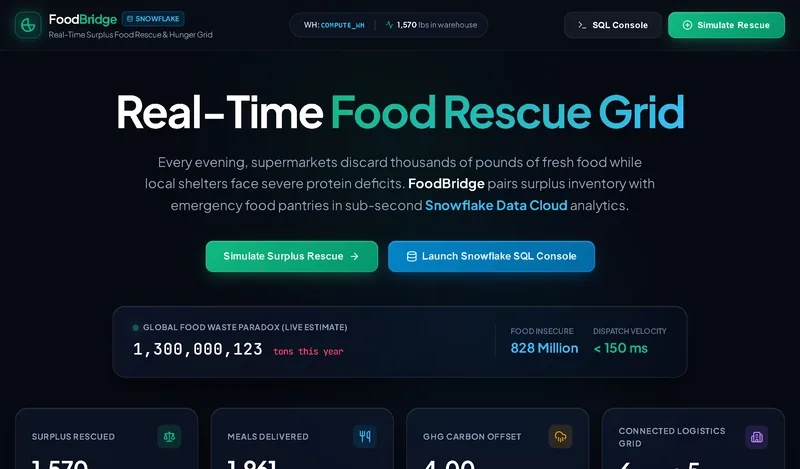
This isn't just a CRUD app; it's a deployment of a real-time logistics grid. By automating the "who needs what and where" part of the equation, we remove the administrative friction that usually leads to food being thrown away.