Kimi K3 redefines how information propagates through neural layers using attention-weighted residuals
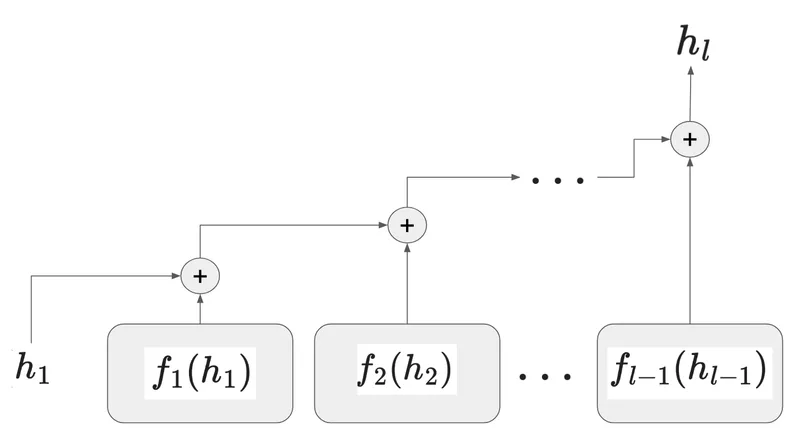
The Kimi K3 technical report introduces an innovative approach to information flow between layers. Unlike traditional architectures that simply stack layers with fixed residual connections, Kimi K3 implements a dynamic weighting system where each layer’s contribution is determined by learned attention mechanisms.
Standard residual connections use uniform weighting, where each layer’s output contributes equally to subsequent layers through a fixed summation: h_l = h_1 + Σ f_i(h_i) from i=1 to l-1. This creates a rigid pipeline where noisy early outputs cannot be suppressed and meaningful later signals cannot be amplified.
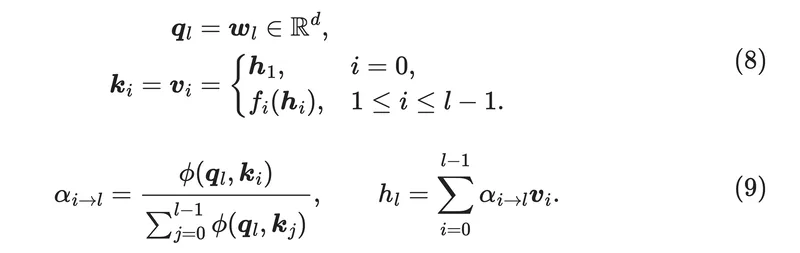
Kimi K3 replaces this fixed summation with attention-based weighting. For each layer, a learned pseudo-query vector w_l computes softmax-normalized attention scores across all previous layer outputs v_i, producing weighted combinations: h_l = Σ α_i v_i, where α = softmax(w_l · v_i / √d). This allows the model to dynamically suppress irrelevant early-stage representations while amplifying important intermediate features, effectively creating an attention-gated highway network.
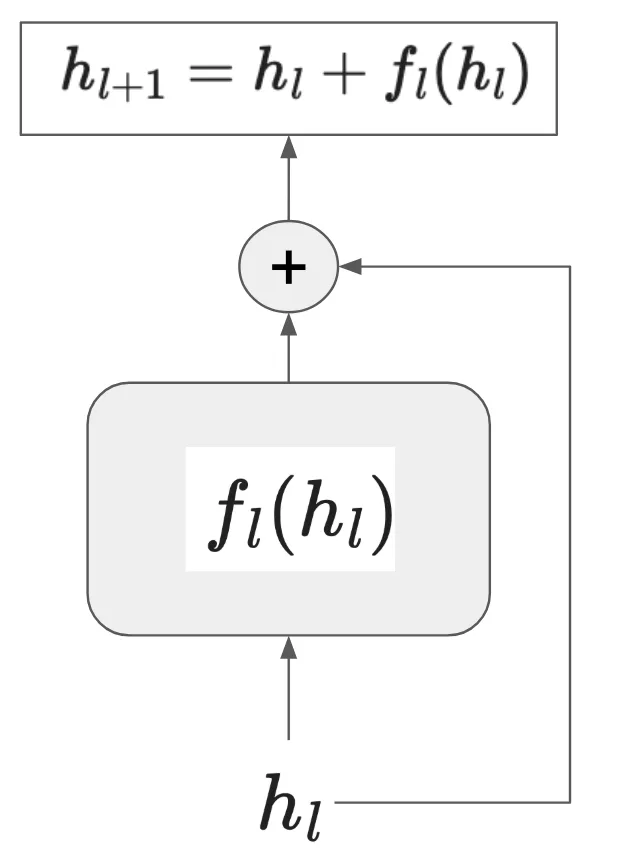
The architecture also supports Block Attention Residuals, grouping layers to optimize memory and computational efficiency while maintaining the core dynamic routing principle. The transition from fixed residuals (h_l = h_{l-1} + f_l(h_{l-1})) to attention-weighted aggregation represents a fundamental shift in how deep transformers process information.
For practitioners working with deep transformer models, this design offers several advantages. The attention-weighted skip connections may mitigate vanishing gradient issues in models with 100+ layers more effectively than traditional residuals. The explicit attention weights α provide unprecedented interpretability, revealing which layers influence specific predictions—a rare feature in internal mechanisms. Additionally, models trained with this approach could serve as richer distillation targets compared to standard ResNet-style teachers.
While alternative approaches like DeepSeek’s multi-head latent attention or Google’s mixture-of-depths also explore dynamic computation allocation, Kimi K3’s method integrates directly into the transformer backbone without additional routing overhead. The pseudo-query design introduces minimal parameter cost—just one vector per layer—while the softmax operation ensures numerical stability. The mechanism’s simplicity and potential benefits make it a compelling candidate for testing in new transformer architectures.
All Replies (3)
Want a live back-and-forth? Join the global AI chat room — login to talk.
Impressive stability at 128k. I've been examining the Kimi K3 technical report and its Attention Residuals mechanism is genuinely clever. One key insight from this work is the idea of using attention to weigh the contributions of each layer, rather than a fixed sum. This is implemented by calculating a pseudo-query for each layer, and then using softmax over dot products involving previous layer values to determine the weights.
My 7B run loss curves smoothed out instantly after this. Anyone else seeing these gains? The Kimi K3 technical report (arXiv:2607.24653) introduced an Attention Residuals mechanism that replaces fixed-weight layer sums with learned attention over layer outputs, letting each layer decide how much each predecessor should matter.
Impressive VRAM savings. Does that 18% drop hold up at 64k context? The concrete step is computing α_i = softmax(w_l·v_i/√d) for each predecessor layer, which lets the model decide how much each predecessor should matter.