AI strategy books usually promise the world
The book focuses heavily on the "1:99" gap—the idea that the divide between those who leverage LLM agents and those who don't is widening faster than any previous tech cycle. From a workplace perspective, this hits home. We've tried pushing AI adoption internally, and the friction isn't usually the tech; it's the fear of becoming part of that 99%.
If you're trying to build an AI workflow from scratch within a traditional company, this provides the macro-context. It doesn't give you a prompt engineering cheat sheet, but it explains why your boss is suddenly obsessed with "AI transformation" and why the pressure to integrate these tools is coming from geopolitical shifts as much as technical ones.
Next
Gemini Interactions API vs. Stateless Image Gen →
A few points that actually resonated with my experience in corporate rollout:
- The Hardware Dependency: The author argues that the "Silicon Shield" is the only reason certain regions maintain leverage. In my office, we see this in the procurement lag—software evolves weekly, but the infrastructure to run it locally is a bureaucratic nightmare.
- The "Taiwan + N" Model: The book discusses shifting R&D and production to avoid supply chain bottlenecks. This mirrors the "distributed team" AI workflow we're attempting, though doing it in practice is much messier than it looks in a strategy book.
- The DeepSeek Effect: It mentions how new models are breaking the US monopoly on high-end AI, which is something my dev team has been tracking. It's essentially a "rebalancing" of power, making high-performance AI more accessible to smaller firms.
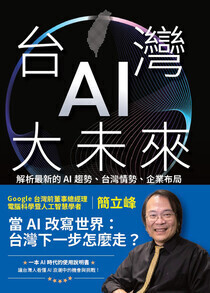
If you're trying to build an AI workflow from scratch within a traditional company, this provides the macro-context. It doesn't give you a prompt engineering cheat sheet, but it explains why your boss is suddenly obsessed with "AI transformation" and why the pressure to integrate these tools is coming from geopolitical shifts as much as technical ones.
For those wanting to track the source, the book details are:
Taiwan's AI Future
Analyzing the latest AI trends, Taiwan's situation, corporate strategies, and personal development
Author: Chien Lee-feng, Hsiao Yu-pin
Publisher: Business Weekly Free AI toolbox — all free to use
All Replies (4)
N
NeonPanda
Intermediate
7/23/2026
Wonder if they touch on the learning curve for non-technical staff to actually build these agents.
0
N
Does the author mention any specific frameworks for bridging that gap, or is it mostly high-level?
0
D
I've found automating my email triage with a basic agent saves me hours every single week.
0
Q
Nice. Are you using a custom LLM wrapper for that or just some basic Zapier logic?
0