Construction Estimation: Why Bids Fail
The real bottleneck for most firms is bandwidth. It is nearly impossible to accurately measure every slab, fixture, and finish from a full set of MEP drawings while simultaneously managing an active job site. When you're rushing to hit a deadline, "close enough" becomes the standard, and that's where the margin disappears.
The Anatomy of a Precise Estimate
A professional-grade estimate isn't just a spreadsheet of guesses. To avoid mid-project budget crashes, a deep dive into the following is mandatory:
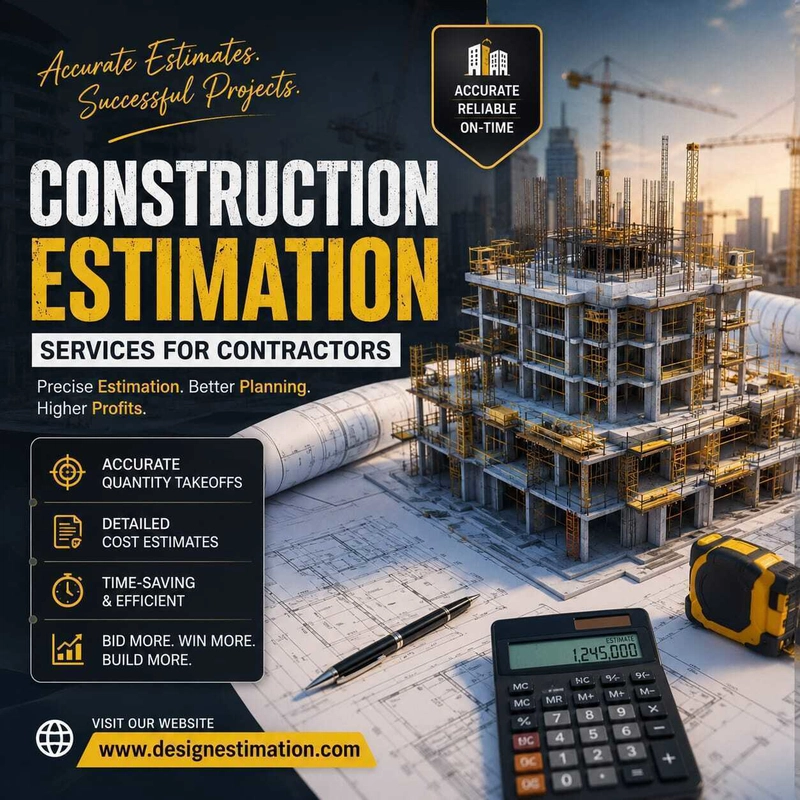
- Quantity Takeoffs: Precise measurements pulled directly from structural and architectural plans.
- Localized Pricing: Current labor and material costs specific to the region, not last year's averages.
- Trade Breakdowns: Granular cost distribution so you know exactly where the spend is allocated.
- Value Engineering: Identifying cheaper material alternatives that maintain structural integrity.
Why Outsourcing the Workflow Works
Moving estimating out of the internal "to-do" list and into a dedicated workflow solves a few specific operational pains:
1. Velocity: External teams don't have to step away from a pour or a framing crew to run numbers, meaning faster turnarounds on bids.
2. Overhead: You get expert-level output without the fixed cost of a full-time estimator's salary.
3. Scalability: You can increase your bid volume to fill the pipeline without the estimator becoming a bottleneck.
The biggest mistake is treating estimation as a standalone number rather than part of a pre-construction strategy. The most dangerous project failures stem from design conflicts that were ignored during the bidding phase. Catching a constructability issue in the drawings is exponentially cheaper than fixing it during installation.
If you've ever won a contract only to see the profit vanish by the time the project wraps, the error was likely baked into the initial estimate.