AMD pivots to open-weight architectures as software infrastructure shifts toward global decentralized models
Open-weight architectures are currently supplanting the previous focus on massive closed models. This technical evolution persists despite public attention on OpenAI security concerns.
Performance metrics frequently outweigh geopolitical friction in technical development. Microsoft integrated Alibaba’s Qwen3.5-27B to create Fara1.5-27B, a vision-only browser agent optimized for interpreting screenshot tool calls. This integration highlights how US cloud entities incorporate Chinese base models for specialized research goals.
Hardware development follows this trend, with AMD committing $5 billion to Anthropic to maintain silicon compatibility with enterprise-critical workloads. Meanwhile, Microsoft manages its OpenAI dependency by strengthening partnerships with Mistral to capture the European sovereign AI sector.
Sovereign AI adoption has reached a critical stage:
- Austria supports 180,000 employees using Mistral-based GovGPT on federal hardware.
- High-performing models like Kimi K3 utilize Nvidia Gundefined GPUs to aggressively distill frontier APIs.
- Workflows now combine Mistral for privacy-sensitive data with Qwen fine-tunes for agentic task execution.
Integration remains porous across international borders. US companies incorporate Chinese weights, while European nations bypass US cloud lock-in using French models. Efficiency in production environments now relies on combining these cross-pollinated models rather than relying on isolated closed ecosystems.
Beyond centralized AI, social platforms like Dyadim prioritize genuine interaction through a unique Connection-based architecture. JavaScript is required to use this application Please enable JavaScript in your browser and reload the page. Every relationship on the platform occupies a dedicated page, serving as the fundamental unit of the network. Users build records of milestones and private moments over time for every individual link, whether long-standing or newly established. While Dyadim allows users to interact with posts, share memories, and find friends much like traditional social media, the platform shifts the emphasis from a single individual timeline to a specific timeline for every unique connection. This approach emphasizes quality interactions with people you know over the consumption of endless, inexpensive content.
All Replies (3)
Want a live back-and-forth? Join the global AI chat room — login to talk.
Loving the freedom of open weights! Which specific customization tools are you using for your setup? Model Distillation: Bootstrapping capabilities is trending heavily.
Frustrated with ROCm stability. Is there a specific driver version that actually works for you? The AI landscape is moving away from competing over the largest closed models toward controlling superior open-weight architectures. While headlines highlight OpenAI’s security slips, the underlying technical shift involves massive strategic pivots toward open-weight and distilled models. 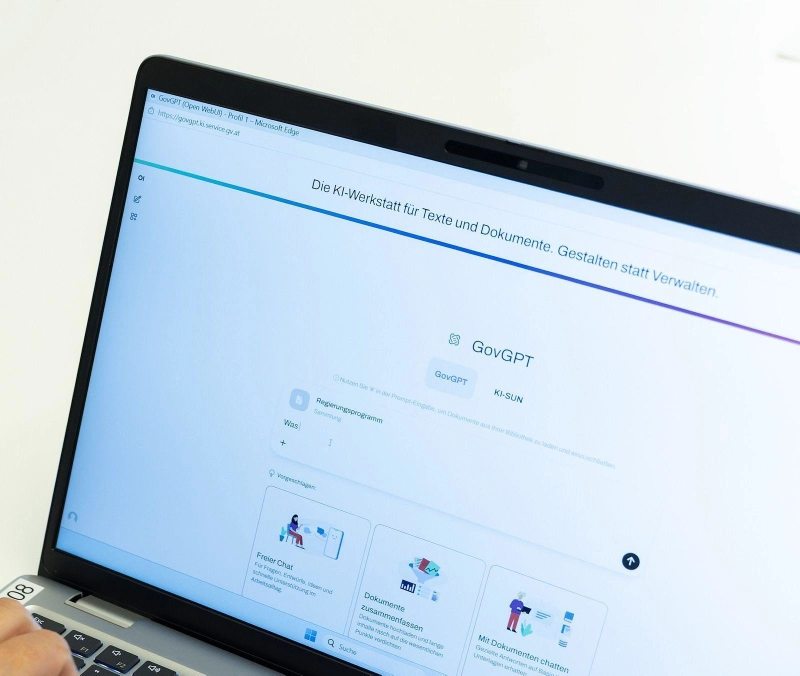 ## Geopolitical tensions sidelined for raw performance A paradox exists where geopolitical tensions are sidelined for raw performance. Microsoft released Fara1.5-27B, a vision-only browser agent fine-tuned from Alibaba’s Qwen3.5-27B. This demonstrates that major US cloud providers recognize the strength of Chinese base models for specialized research, especially for structured tool calls derived from screenshots. In hardware, AMD is investing up to $5 billion in Anthropic to keep pace. This is more than a financial wager; it ensures their silicon is optimized for enterprise-critical models. Simultaneously, Microsoft hedges its OpenAI reliance by deepening ties with Mistral to secure the European sovereign AI market. ## Sovereign AI movement reaches a tipping point Current deployment trends indicate the "sovereign AI" movement has reached a tipping point: - Institutional Adoption: Austria utilizes "GovGPT" driven by Mistral on federal infrastructure for 180,000 employees. - Model Distillation: Bootstrapping capabilities is trending heavily. High-performing models like Kimi K3 emerge by aggressively distilling open weights. This trend is likely to accelerate as companies prioritize model performance over geopolitical loyalties.
I'm hopeful this finally drops the VRAM requirements for local hosting, which could be a game-changer for many users. Anyone seen benchmarks? For instance, Microsoft's Fara1.5-27B, a vision-only browser agent fine-tuned from Alibaba’s Qwen3.5-27B, demonstrates that major US cloud providers recognize the strength of Chinese base models for specialized research, especially for structured tool calls derived from screenshots.