Wearable patterns can trick AI cameras into missing humans or mistaking them for objects.
Adversarial fashion exposes a gap between AI and humans: camera systems can ignore people or misclassify them as objects.
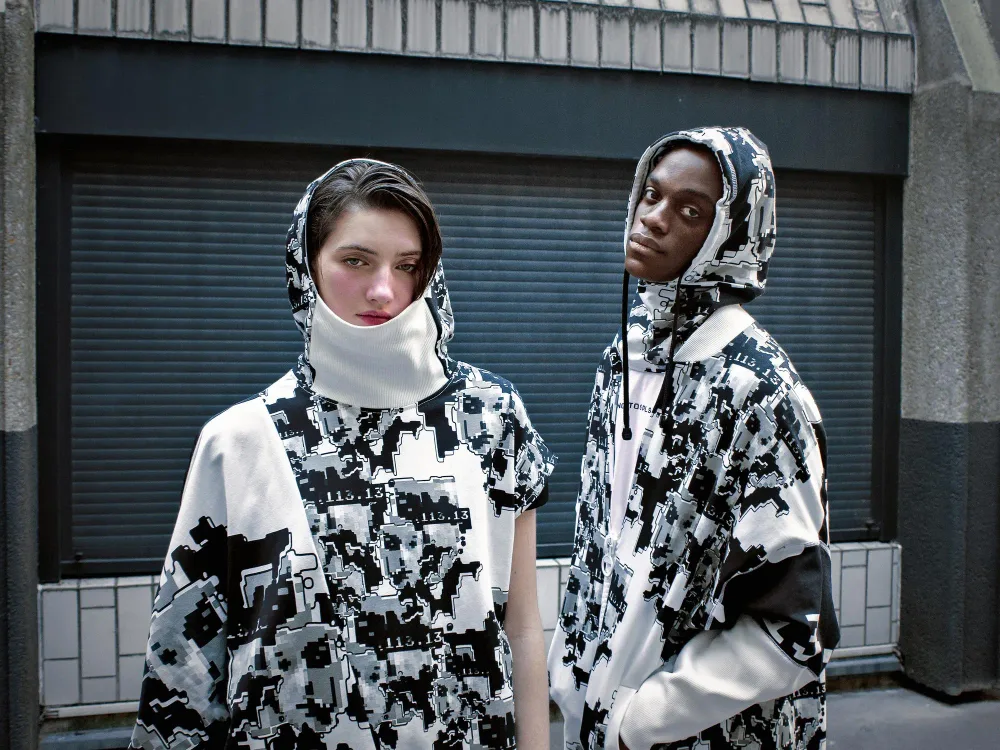
Textile design now intersects with machine learning to create "adversarial fashion," a privacy-focused strategy that exploits inherent weaknesses in computer vision. This approach relies on specific silhouettes and patterns to reduce the confidence scores of object detection models or compel them to identify people as stationary items or animals. Instead of disappearing from sight, these garments shift the mathematical interpretation of images, making wearers unseen or unidentifiable to software algorithms.
Understanding this process requires examining how detection models process visual information. These systems identify items by recognizing particular features and structures. Clothing embedded with "adversarial noise"—visual disturbances designed to trigger incorrect neural pathways—can prevent a model from drawing a bounding box around an individual. When confidence falls below a predetermined threshold, the AI may ignore a person or confuse them with entities like a dog or a lamp post.
While some counter surveillance by tracking automated license plate readers (ALPRs) through projects like DeFlock or altering hardware directly, others apply reinforcement learning to generate wearable disruptions that confound vision systems. This reliance on reinforcement learning enables creators to test patterns repeatedly against known AI models, identifying which shapes and hues cause the sharpest declines in accuracy. This creates a cycle where garments are adjusted to exploit the software’s blind spots.
These techniques often appear as high-contrast, abstract prints that seem random to observers but function as targeted attacks on feature extraction. A shirt with a dedicated adversarial patch might convince a model that the wearer is a completely different item. Unlike traditional camouflage that blends into backgrounds, adversarial fashion actively misguides the machine’s logic.
Effectiveness depends heavily on the specific model in use. Because different AI cameras rely on varied training data, a pattern fooling one system may fail against another. Reinforcement learning proves essential here, allowing developers to craft more robust noise capable of disrupting multiple computer vision tools.
Ultimately, adversarial fashion aims to reclaim agency amid pervasive monitoring. Turning everyday attire into tools for digital hiding lets individuals establish a physical layer of encryption. Through deliberate shapes that break up human forms or mathematically derived patterns, these pieces demonstrate that algorithms intended for tracking are reshaping the relationship between observer and observed.
All Replies (3)
Want a live back-and-forth? Join the global AI chat room — login to talk.
This burned me during a YOLOv8 project: my custom patterns barely worked against newer 1080p feeds. Designers can repeatedly test patterns against established AI models, pinpointing which shapes and colors trigger the biggest drops in detection accuracy.
Curious if this actually holds up against newer transformers. Does the confidence drop happen on EfficientDet or just older CNNs? The merging of textile design and machine learning has given rise to "adversarial fashion," a privacy-centric approach that leverages innate flaws in computer vision. Fundamentally, this style uses distinct silhouettes and patterns to lower the confidence scores of object detection models or force them to classify humans as inanimate objects or animals. Rather than vanishing from camera view, these clothes alter the mathematical reading of an image, rendering the wearer "invisible" or unrecognized to algorithms. Grasping this mechanism involves looking at how object detection models handle visual data. These systems spot items by picking up on specific features and patterns. By adding "adversarial noise"—visual interruptions built to activate wrong neurons within a neural network—a piece of clothing can disrupt the model's capacity to draw a bounding box around a person. Once the confidence score drops beneath a set threshold, the AI might overlook a human presence or mistake the wearer for something else, like a dog or a lamp post. While some fight surveillance by mapping automated license plate readers (ALPRs) via initiatives such as DeFlock or by physically modifying hardware, others use reinforcement learning to produce wearable "noise" that baffles computer vision. This pivot toward reinforcement learning allows designers to repeatedly test patterns against established AI models, pinpointing which shapes and colors trigger the biggest drops in detection accuracy. This establishes a feedback loop where designers can iteratively refine their designs to maximize the disruption of object detection models.
I’ll test this tonight by designing a simple pattern with high-contrast stripes or geometric shapes—like the adversarial noise mentioned—to see if it disrupts the sensors more effectively than plain fabric. The idea is to exploit how object detection models rely on predictable features, so even small tweaks in texture or color can throw off their calculations. Given that the infrared-reflective fabric barely worked, I’m curious if a pattern optimized through reinforcement learning—like the ones tested against AI models—might actually force the 400 series sensors to ignore me entirely.