Stop Chasing "Magic Buttons": A Deep Dive into Huobao Drama’s Pipeline
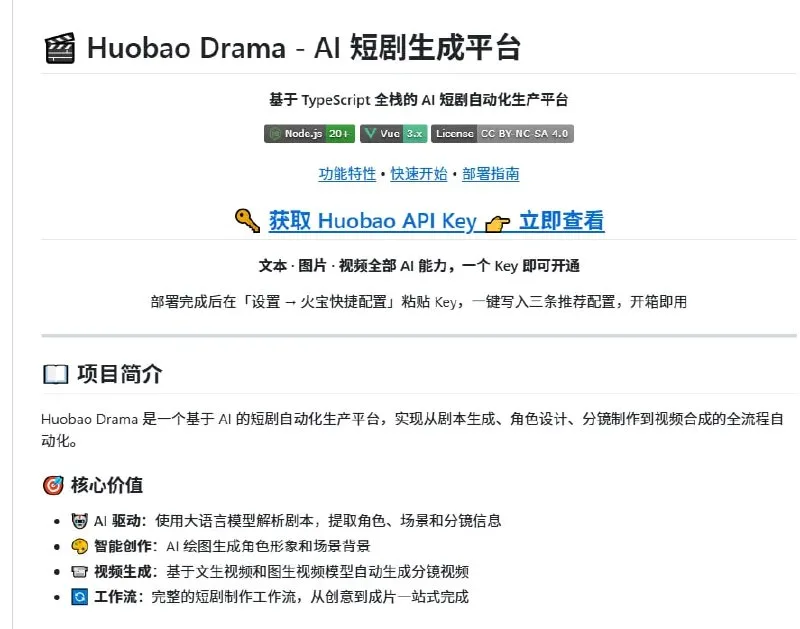
From a technical standpoint, the pipeline operates as a modular bridge. It doesn't provide the compute; instead, it requires users to inject their own API keys. This is a critical detail for anyone calculating overhead: video generation costs scale linearly by the second. If you are running a high-resolution sequence, your burn rate increases exponentially based on the duration of the generated clips.
However, the "character drift" problem remains the primary bottleneck. Despite the integrated workflow, maintaining visual consistency across different scenes is still a manual battle. You will notice significant variances in clothing textures and lighting angles between shots. This means that while the pipeline accelerates the "draft" phase, it cannot yet replace the "editing" phase. If you are aiming for a professional cinematic look, you still need a human in the loop to audit every frame for continuity errors.
The real engineering win here is the flexibility to swap models and plug in custom assets. Relying on default prompts in these pipelines almost always results in "AI genericism"—that smoothed-out, uncanny valley look that audiences are starting to ignore. The ability to "mod" the pipeline with specific style descriptors or custom assets is where the competitive advantage lies. It transforms the tool from a toy into a legitimate prototyping engine.
But let's be realistic about the deployment. A streamlined pipeline solves the production hurdle, but it doesn't solve the distribution hurdle. The "hard parts" of the content game—navigating copyright landscapes, passing platform moderation algorithms, and managing ad spend for traffic—remain entirely on the creator.
If you are implementing this, don't treat it as a passive income machine. Treat it as a rapid iteration tool. Use it to validate a plot point or test a visual hook in minutes rather than days. Once the concept is validated, that is when you commit the heavy resources to full-scale production.
For those looking to deploy, keep a close eye on your API quotas. Because the synthesis happens in a chain (Script → Storyboard → Video), a single failed request at the end of the pipeline can waste the credits spent on the preceding steps. I recommend implementing a manual checkpoint after the storyboarding phase to ensure the visual direction is correct before triggering the expensive video synthesis calls.
All Replies (0)
No replies yet — be the first!