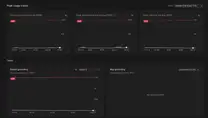
The big three LLM providers went down at the exact same time
While we wait for definitive post-mortems from the engineering teams, we can look at the technical reality of how these services are hosted. Most of these giants aren't just running on isolated "magic boxes"; they rely on a massive, interconnected web of cloud infrastructure, content delivery networks (CDNs), and specialized hardware providers.
Potential failure points in the AI stack
When a triple outage occurs, it is rarely a coincidence of three separate software bugs. Instead, it usually points to a shared dependency. Here are the most likely culprits from a deployment perspective:
- Cloud Infrastructure Providers: Even though companies like OpenAI and Anthropic have their own massive compute clusters, they still rely on major cloud backbone providers (like Azure or AWS) for certain networking, API gateways, or global edge distribution. A routing error at the ISP or backbone level can make it look like the models are "down" when it is actually a connectivity issue.
- CDN and Edge Computing: Services like Cloudflare or Akamai sit in front of almost every major LLM interface. If there is a configuration error or a massive DDoS mitigation event at the edge, the API requests never even reach the model servers.
- Data Center Interconnects: The physical layer—the fiber optics and routing protocols that connect different regions—is a single point of failure. A major routing loop or a BGP (Border Gateway Protocol) error can effectively "orphan" entire clusters of GPUs from the public internet.
How to build a more resilient AI workflow
This incident is a perfect real-world lesson in why we shouldn't build single-point-of-failure systems. If your entire business or development process relies on a single API key, you are vulnerable. A professional-grade deployment should incorporate a few "failover" strategies:
1. Multi-Model Redundancy: Use a routing layer in your code. If your primary call to Claude 3.5 Sonnet returns a 503 error, your script should automatically catch that exception and retry the request using GPT-4o or a local Llama 3 instance via Ollama.
2. Local Fallbacks: For mission-critical tasks, keep a smaller, quantized model running on your own hardware. It might not be as smart, but it keeps the lights on during a global outage.
3. Monitor the status pages directly: Instead of checking Twitter/X, integrate the status endpoints into your own monitoring dashboard.
# Example: A simple bash check to see if your primary provider is reachable
curl -Is https://api.openai.com | head -n 1It’s a reminder that as much as we talk about the intelligence of these models, the "intelligence" is only as good as the network it lives on. Seeing this happen across the board is a massive wake-up call for anyone building production-ready AI agents.