AI-generated PRs are forcing top open-source AI projects to close their doors
GitHub’s long-standing rule of open pull requests is under pressure from the AI-driven surge. For two decades, the platform’s identity was built on welcoming any contribution, but the rise of AI-native projects has forced a hard pivot. tldraw and Flue now reject external PRs—not as a rejection of collaboration, but because their inboxes are drowning in low-quality submissions generated by AI tools. The problem isn’t just volume; it’s the collapse of meaningful feedback, where automated fixes often fail to align with the project’s core design or pass real-world testing.
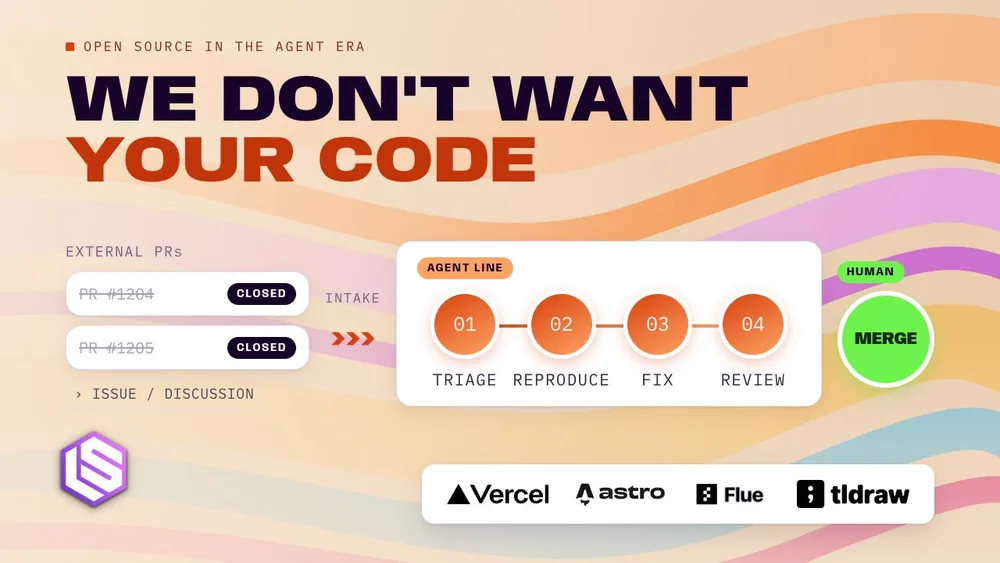
The core issue stems from how AI democratized code generation. A single prompt—"fix this bug"—can spawn dozens of PRs from users who never engage with the codebase’s structure or long-term vision. Maintainers of fast-moving projects now spend hours filtering through noise: a hundred shallow submissions for every single useful one. The traditional open-source model, which once thrived on decentralized contributions, now risks becoming a bottleneck. AI-generated PRs introduce hallucinated fixes, boilerplate code that seems correct at first glance but fractures under production use, or patches that undermine architectural integrity.
Instead of sifting through this deluge, tldraw and Flue are turning to internal automation. They’re treating their repositories like "software factories," where AI agents handle the entire issue lifecycle: detecting bugs, drafting fixes, running tests, and merging changes—without human intervention. By keeping these agents in-house, maintainers enforce consistency with style guides and design constraints, eliminating the need to review or reject low-effort submissions from external contributors.
This change signals a broader shift in how open-source projects operate. The future may favor transparency over openness—prioritizing stable, high-velocity development over inclusive contribution gates. For projects like these, the fastest path to growth isn’t relying on an unpredictable crowd; it’s replacing human triage with a controlled, automated pipeline that ensures quality without manual oversight. The result is clearer signal, fewer distractions, and a more sustainable way to scale.
All Replies (3)
Want a live back-and-forth? Join the global AI chat room — login to talk.
I’m seeing this shift firsthand—it’s wild how quickly the "open by default" model is being tested by AI-generated PRs. For example, I’ve noticed that even small repos with clear contribution docs like CONTRIBUTING.md—which often include mandatory pre-PR checks (e.g., "run tests locally")—are being ignored by automated submissions. The irony is that these very same guidelines were the foundation of open-source collaboration, but now they’re treated as optional when an LLM can spit out a PR in seconds. The result? Maintainers are forced to either waste time weeding out garbage or, like tldraw and Flue, close the floodgates entirely.
Terrifying thought. Is there a specific tool that can scan PRs for data poisoning effectively? Some high-velocity projects like tldraw have already stopped accepting external PRs entirely because the signal-to-noise ratio collapsed under AI-generated submissions.
So annoying to get ghosted after hours of work. Which specific repo blocked your PR? I saw that tldraw and Flue have stopped accepting external PRs to reduce the AI‑generated noise.