DoorDash Air Got FAA Certification — But Your Dinner Won't Fly
Forget self-driving cars and delivery robots — the sky is the new last mile. DoorDash just became the eighth U.S. company to land FAA Part 135 certification, launching DoorDash Air, its own drone delivery arm. On paper, this looks like the moment food delivery finally leaves the ground. But peel back the hype, and you’ll find that drones aren’t about to replace your favorite rider anytime soon.
What DoorDash Air Actually Means
Let’s start with what happened: DoorDash secured FAA Part 135 certification — the same license required for paid cargo flights beyond visual line of sight. That means they’re now cleared to operate drones commercially, design their own aircraft, build ground infrastructure, and manage end-to-end logistics.
But here’s the catch most headlines miss — getting certified isn’t the same as flying packages. The FAA still requires separate approvals for each aircraft type, airspace zone, and operational procedure. So while DoorDash can technically fly, every delivery route needs explicit permission first.
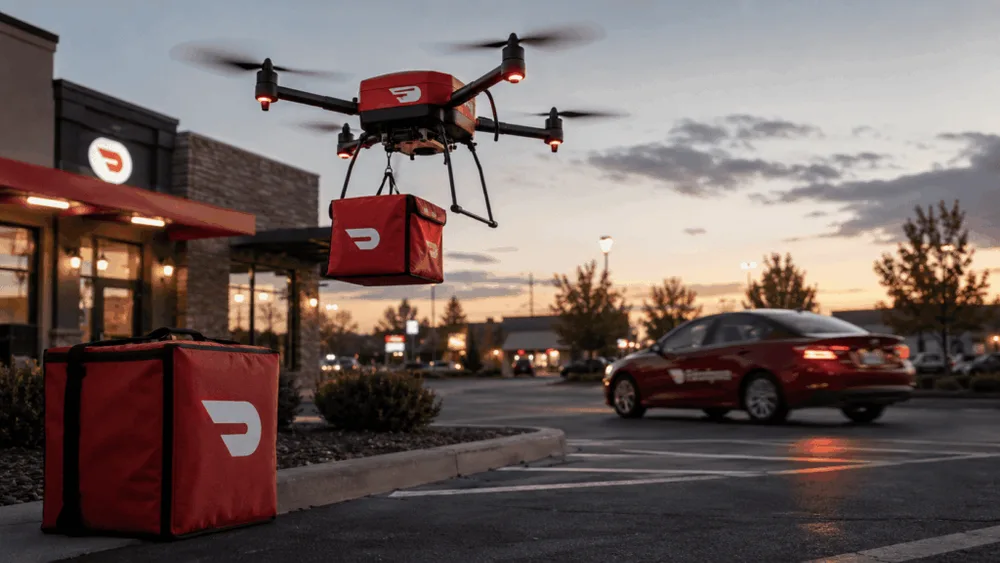
That’s why, despite the announcement, current drone deliveries in Dallas-Fort Worth and Charlotte rely on partners like Wing and Flytrex. DoorDash hasn’t even released specs on its own drones — payload, range, or production timeline.
So what’s the real win?
It’s not “food flies now.” It’s that DoorDash is shifting from buyer to builder. Instead of leasing third-party drones, they’re designing, owning, and controlling flight capacity — just like they did when they launched Dot, their sidewalk robot, and their broader Autonomous Delivery Platform.
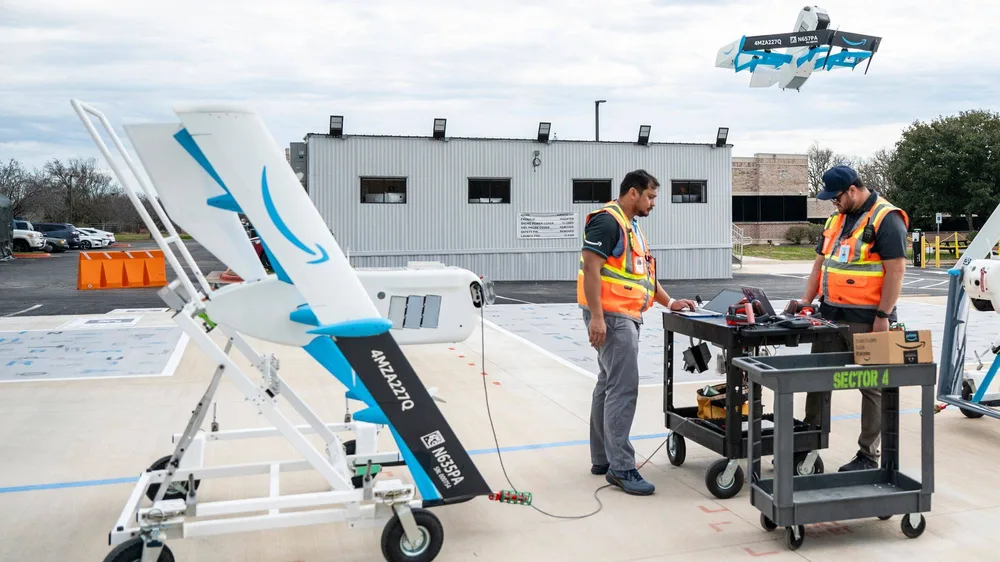
These systems work together: an algorithm decides whether your order goes to a cyclist, a drone, a rooftop robot, or a van based on cost, speed, and location.
Why No Single Tech Wins Them All
Across the globe, companies are betting big on autonomous delivery — but no one solution fits every scenario.
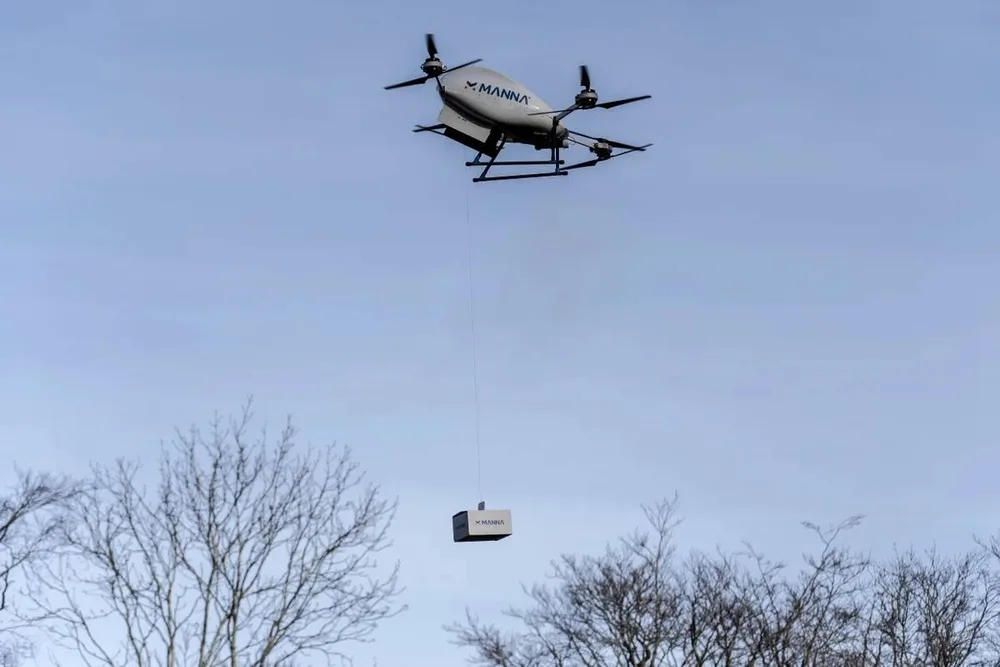
Take Wing, which has partnered with Walmart for over a million drone deliveries and plans to expand to 270 sites covering 40 million people by 2027. Their drones avoid traffic, navigate fixed airspace autonomously, and excel at lightweight, time-sensitive payloads — think meds, meals, or last-minute gifts.
Amazon doubled down with full vertical integration. Its latest MK30 drone handles autonomous obstacle avoidance, flies in light rain, and cuts noise nearly in half compared to earlier models. Everything — from warehouse to doorstep — runs through Amazon’s internal network.
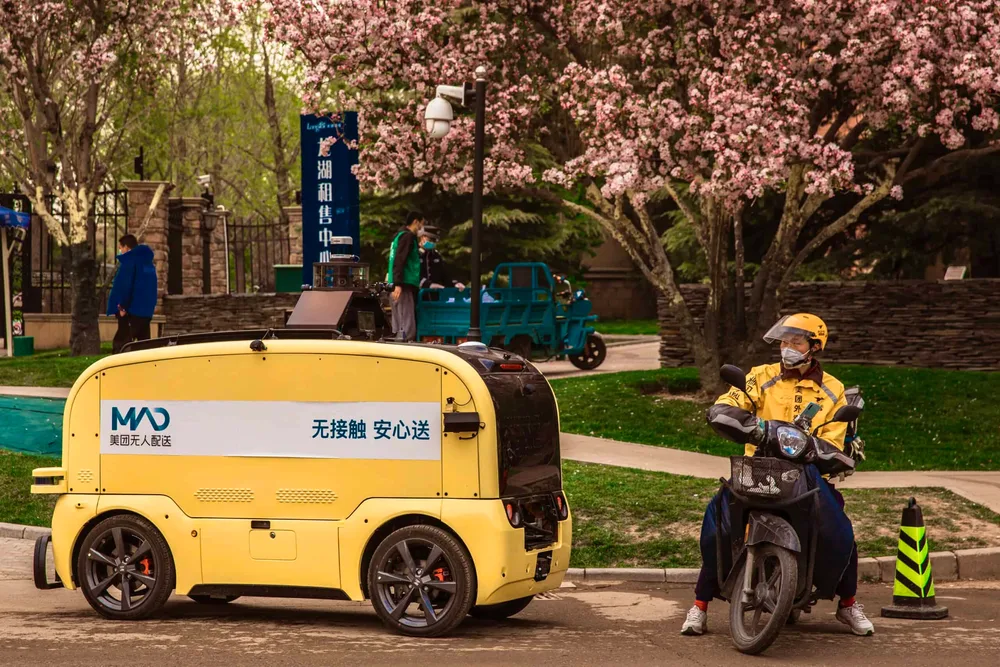
In China, Meituan took a different approach: building a structured urban low-altitude airspace using drones, automated terminals, and cloud-based dispatch systems. Over a million drone deliveries later, they’ve mapped more than 65 routes across cities like Shenzhen, Beijing, and Dubai.
Yet none of these solve the “last hundred meters” problem.
Drones can’t land on skyscraper windowsills or drop off inside apartment buildings. Users still need to walk to designated pickup points. For denser areas, ground robots shine — especially something like DoorDash’s Dot. Smaller than sidewalk bots, faster than walking, and agile enough to share bike lanes and sidewalks.
But navigating mixed pedestrian and vehicular environments? That’s where complexity spikes. Suddenly, perception algorithms must handle everything from jaywalkers to jay-bikes.
Meanwhile, larger autonomous delivery vans carry bulk orders efficiently but struggle with tight parking, narrow streets, and unpredictable human behavior.
The takeaway? Each tool excels in specific contexts:
- Drones: Light, small, urgent deliveries where vertical access matters less than speed.
- Ground bots/vans: Higher volume, better weather adaptability, closer proximity to final destinations.
- Human couriers: Still unmatched at handling exceptions — bad addresses, security protocols, special instructions (“leave at back gate”).
The Human Element Remains Irreplaceable
Despite all the buzz around automation, user feedback paints a nuanced picture.
Some love the novelty. Kids run outside to watch drones land. Restaurants report higher order volumes since adoption. Many appreciate the consistency — fewer missed deliveries due to fatigue or navigation errors.
Others complain about noise pollution (“sounds like giant mosquitoes”), privacy concerns from cameras, and limited coverage zones blocked by trees, walls, or HOA restrictions.
Indoors-only delivery remains elusive. Apartments, offices, gated communities — all barriers until someone figures out how to safely descend 25 stories into a random window.
And then there’s the psychological aspect.
People don’t just want convenience; they want reliability under uncertainty. A missed call? A wrong turn? A stubborn package locker? Humans adapt instantly. Machines lag behind.
So yes, DoorDash got its wings. But the sky won’t empty the streets.
The Real Future Isn’t About Replacing Riders — It’s About Choosing Them Smartly
The irony is clear: the smarter we get at automation, the more we realize it doesn’t replace humans — it complements them.
DoorDash Air’s biggest asset isn’t a drone; it’s data. Knowing exactly when a restaurant finishes prepping, predicting traffic chokepoints, calculating optimal handoffs between modes — that’s the secret sauce.
Future success won’t come from choosing one dominant delivery method. It’ll come from orchestrating them seamlessly.
When you place an order tomorrow, you shouldn't care if it arrives via wing, wheel, or wristbag. You just expect it to show up fast, cheap, and flawlessly.
That’s when autonomous delivery truly becomes infrastructure — invisible, reliable, and everywhere.
Until then, your local rider might be getting some backup — but they’re not going anywhere.
All Replies (3)
This is hilarious. Why does the app still say 30 minutes when the drone is literally hovering above my house?
Frustrated after my local trial last month. Are these regulatory hurdles actually solvable?
Confused about whether Part 135 handles the drones or the carrier ops. Who knows the regulatory split?