How China space-tech fibers ended up in Olympic podium kits
While everyone focuses on the race-day kit, the podium suit often gets overlooked — until now. China's sportswear brands have matured enough that even the medal ceremony uniform must showcase homegrown tech, not just look polished.
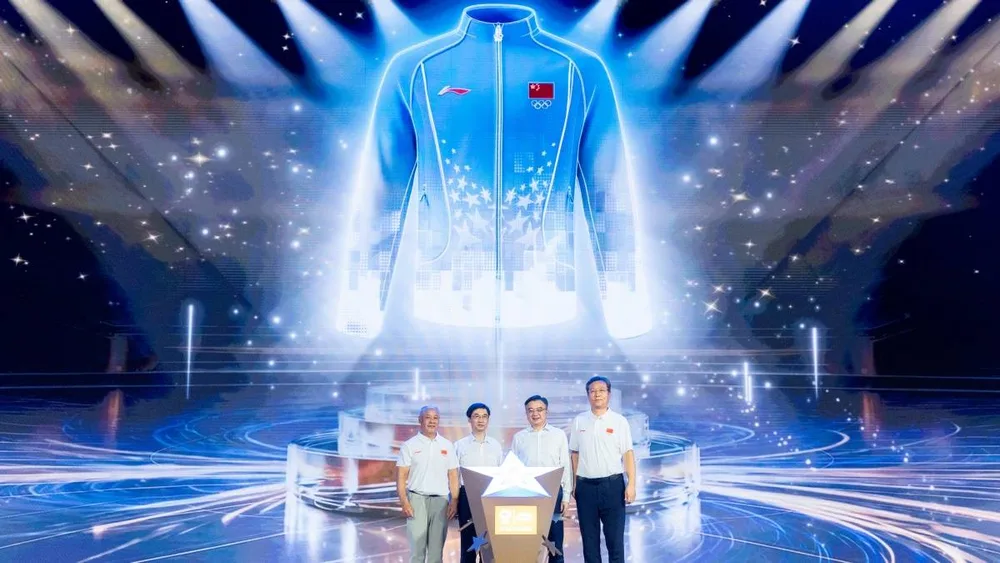
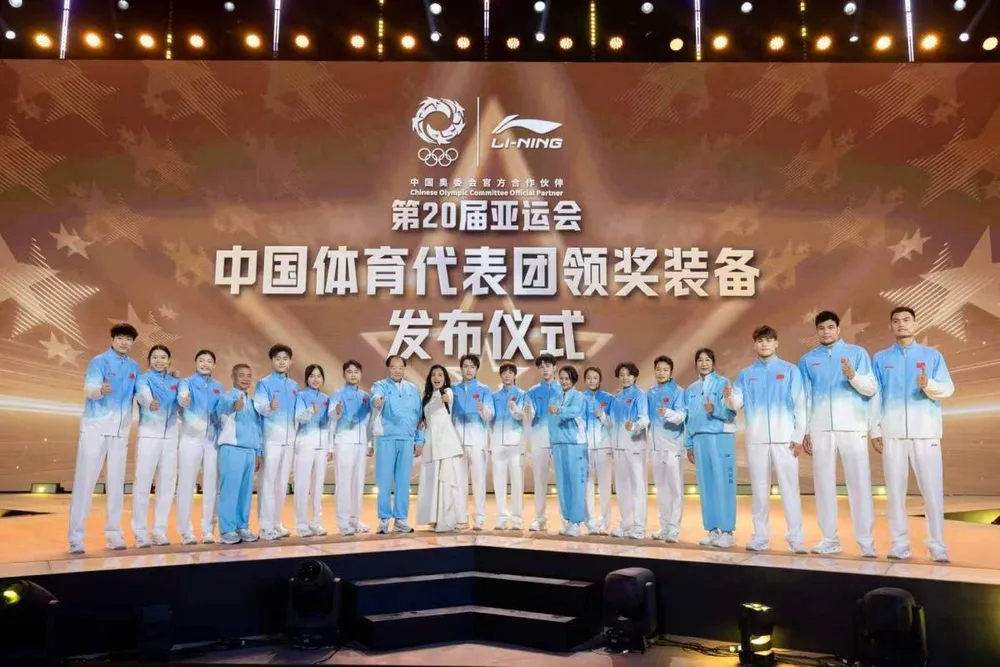
On August 3rd, the Chinese Olympic Committee and Li-Ning unveiled the podium uniforms for China's team at the 2026 Asian Games, with athletes from shooting, diving, table tennis, fencing, and water polo in attendance. The visuals are striking — a “starlight” theme with blue as the base, accented by cyan, red, and the traditional Chinese hue “Baijiu Blue,” blending star motifs with clean Eastern design. But the real innovation lives in the fabric and sole structure, not the surface.
The tech behind it? Phase-change fibers developed with input from the China National Space Administration. Li-Ning partnered with an aerospace innovation platform to launch a “space-tech lab” aimed at transferring orbital materials into elite athletic gear.
Here’s how it works: the fiber contains microencapsulated phase-change material — essentially a tiny thermal buffer. When body temperature rises, whether from exertion or a sudden shift in ambient heat, the material melts from solid to liquid, absorbing excess warmth. As temps drop, it solidifies again. It won’t cool you like AC, but it flattens the spikes and dips, keeping athletes comfortable during those awkward transitions from post-match sweat to air-conditioned ceremonies.
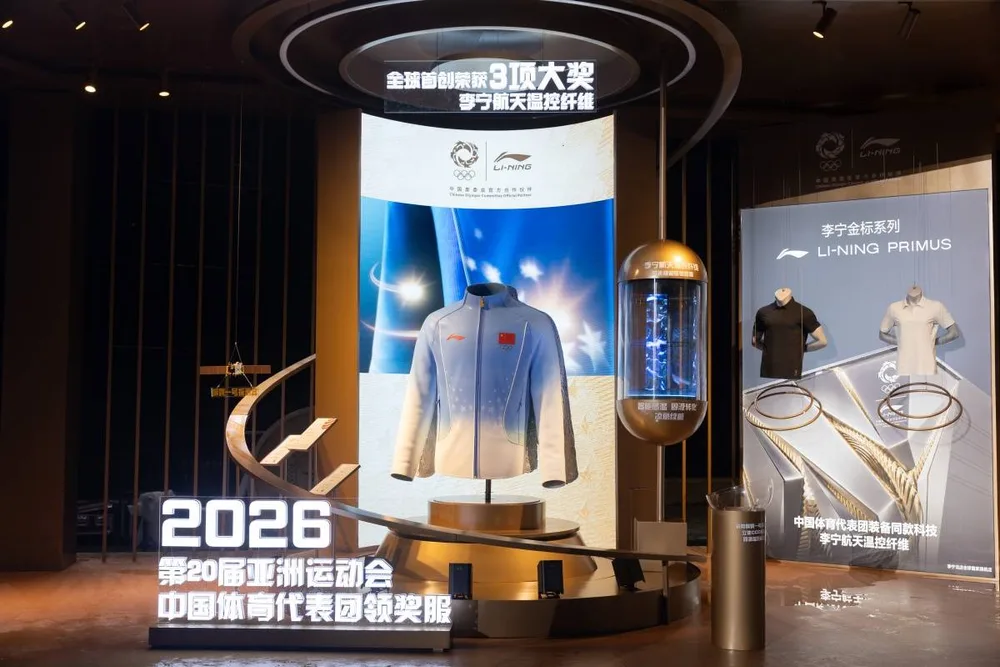
This matters because multi-sport events span dozens of venues and conditions. An athlete finishes a race still burning calories, rushes through corridors, waits under harsh lights, then steps into chilled rooms — all before climbing the podium. Traditional podium suits offer coverage, yes, but now they manage microclimate too.
Shoes tell a similar story of evolution, just more visibly.
Over the last decade, Chinese sneaker midsoles went from chasing softness to syncing material science with structural engineering. Enter the Li-Ning Jump MAX SE — a nod to their 1996 Atlanta Olympics “Beyond” line — featuring a hybrid dome-and-carbon-core midsole system called Dino Arc.
Rather than slapping on a blob of cushion, Dino Arc uses high-rebound foam as a base, inserting rigid support rods in a segmented lattice. Think of it like architectural trusses: flexible zones absorb impact, while fixed beams direct force and maintain shape. The result? According to Li-Ning’s motion lab, the shoe delivers 8.9% better shock absorption and 6.6% improved rebound vs. benchmarks.
The journey reflects a broader shift in Chinese sports tech — from reactive fixes to proactive platform-building. What started in 2011 with early arc-shaped midsoles evolved alongside the 2019 launch of Dino foam tech. When foam alone plateaued, Li-Ning revisited older structural data, merging it with newer materials. That fusion is Dino Arc: a cross-cycle integration that signals maturity.
Podium shoes aren’t built for speed or grip — they’re designed for dignity. Too soft, and legs tire after standing; too firm, and discomfort shows. Getting that balance right — especially across varied body types and climates — proves how far domestic brands have come.
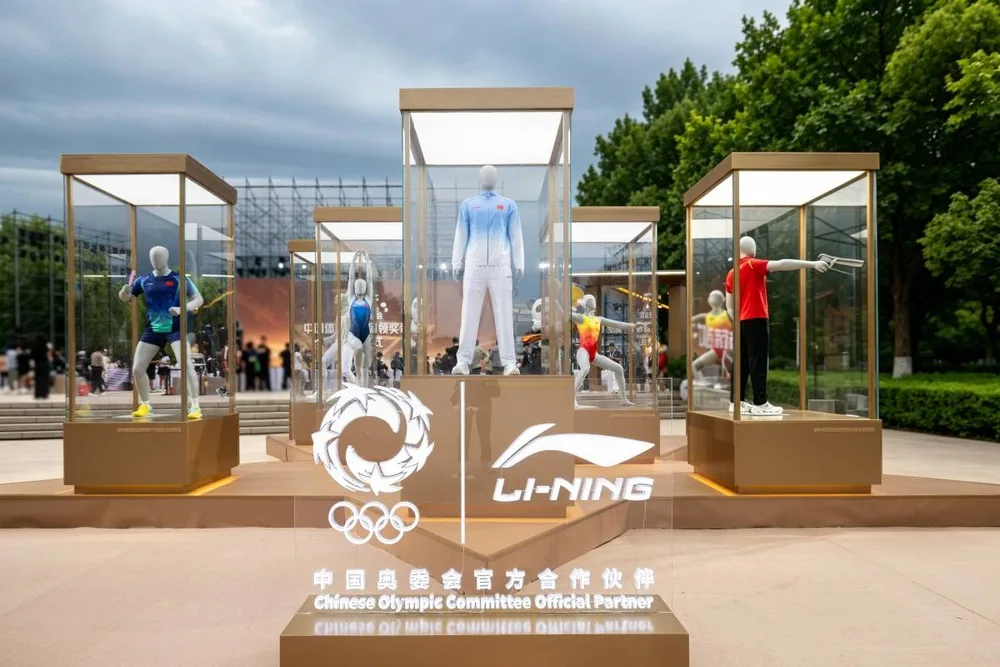
And there’s legacy here too. Back in 1990, Li-Ning first sponsored China’s Beijing Asian Games squad. Now, 36 years later, they’re back — supporting everything from the 2026 Asian Games to the 2028 LA Olympics. It’s more than sponsorship; it’s a narrative arc from survival to sovereignty.
Early days asked only: “Can we make enough?” Then came: “Can we stand out visually?” Today’s question is deeper: “Can we build our own systems — material platforms, biomechanical models, thermal mapping?”
That’s the new frontier. Not flashy launches or viral moments. Just quiet precision: a fiber spun just right, a midsole tuned to millimeter specs, a shirt washed a hundred times and still regulating heat. These unsung details carry athletes higher — even when the cameras stop rolling.
All Replies (4)
Loved my heated jacket last winter, but did the battery actually last through the whole ceremony?
Wild that smart threads track posture during ceremonies. Which specific biofeedback sensors are they using?