Superposition: How Models Cheat the Neuron Limit
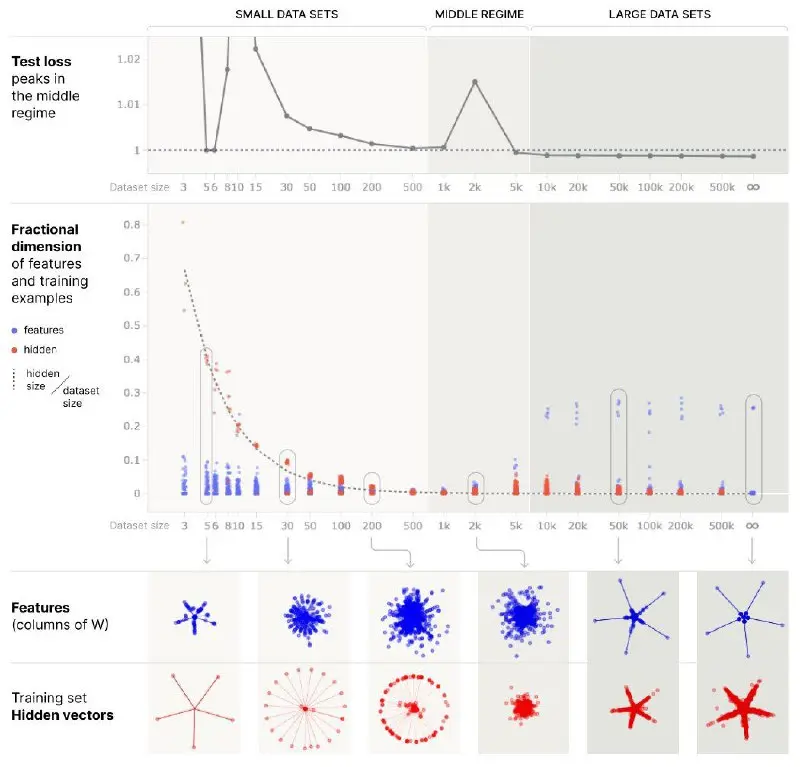
This is a fascinating glimpse into the "black box" of neural networks. Essentially, the model is performing a kind of dimensional compression, packing more information into its hidden layers than the raw neuron count should technically allow.
What's most interesting here is the transition from memorization to generalization. It suggests that superposition isn't just a shortcut for small-scale learning, but a fundamental way that models organize complex features when given enough data. Instead of assigning one neuron to one concept, the model creates a distributed representation that maximizes efficiency. This explains why scaling data often leads to emergent capabilities—the model isn't just seeing more examples, it's getting better at utilizing its internal geometry to represent a massive array of features.
All Replies (0)
No replies yet — be the first!