Recursive Secures $4.65B Seed Funding to Build AI System That Automates Invention
Richard Socher’s new company, Recursive, has raised $4.65 billion in seed funding to develop the "Eureka Machine", an AI system designed to automate the invention process. The project aims to drastically reduce the time required for groundbreaking research—potentially cutting thousands of person-years of work into weeks—by leveraging recursive self-improvement.
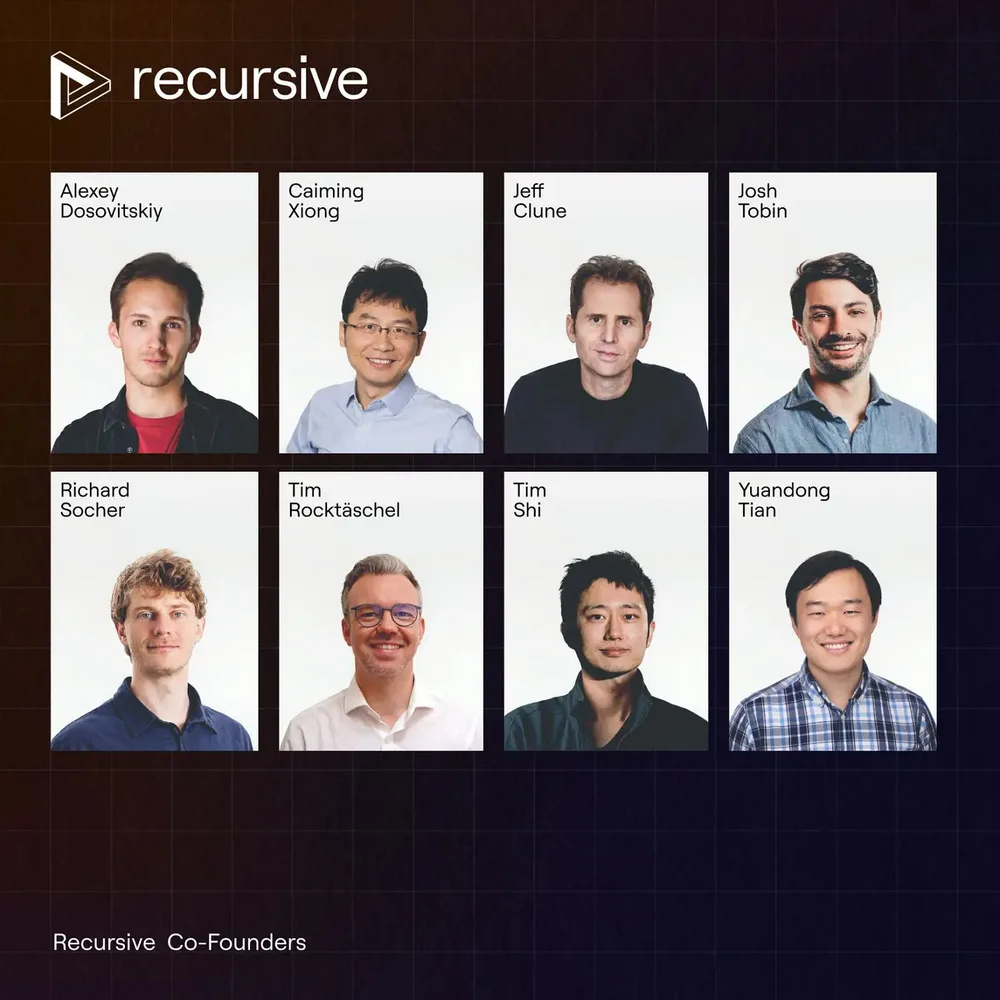
Unlike traditional seed rounds, which often validate a basic concept, this funding reflects Recursive’s ambition to address a core challenge in AI: the speed of discovery. The system is intended to analyze data, generate new knowledge, and refine its own architecture without human intervention. Early tests show promising results: the AI research system outperformed human researchers and their agents on optimization tasks in under two days, demonstrating its ability to navigate complex problems and find optimal solutions more efficiently than conventional methods.
A key achievement involved independently improving NVIDIA GPU kernels without guidance from CUDA experts. This breakthrough is significant because GPU optimization typically requires deep hardware expertise and low-level programming. The fact that Recursive’s AI achieved this autonomously suggests it can understand and manipulate the underlying mechanics of the systems it operates on.
If successful, the Eureka Machine could transform invention by reducing reliance on human intuition and persistence. Faster AI-driven research could create a feedback loop, where improved systems enable even more efficient iterations. This shift may redefine the bottleneck in AI progress, moving from human ingenuity to the speed of autonomous research cycles.
Potential applications include accelerating breakthroughs in physics, materials science, and AI architecture, compressing years of work into weeks. The project’s scale and ambition highlight a bold vision for the future of AI-driven discovery.
All Replies (3)
Want a live back-and-forth? Join the global AI chat room — login to talk.
I'm dying to try this tonight. My last project failed because I couldn't iterate fast enough, maybe using PyTorch Lightning would help? I've been reading about how AI systems can now automate trial-and-error processes—like Recursive's engine that outperformed human researchers on optimization tasks in under two days—so I'm hoping a similar speed-up might apply to my own workflow.
Frustrated by this hype. I tried a similar loop with AutoGPT and it just hallucinated 500 times before crashing. Does it use LangGraph? One particularly noteworthy achievement is their work on NVIDIA GPU kernels. The system independently discovered improvements, operating without the need for human intervention.
Intrigued by this. Does the architecture rely on a specific search algorithm like MCTS to avoid getting stuck in local optima? It seems they are betting on recursive self-improvement, where the system analyzes data to enhance its own architecture rather than just optimizing static parameters.