Gemini Robotics 2: Whole-Body Humanoid Control
Google DeepMind’s latest Gemini Robotics model does what the first version couldn’t: control a humanoid robot from head to toe. The initial release focused on upper body manipulation, but Gemini Robotics 2 extends that reach to full motion coordination—walking, crouching, stretching, and fine fingertip actions. Seeing the Apollo 2 robot from Apptronik bend over to grab a watering can or pick specific items off a shelf makes the leap tangible. That’s not just incremental improvement; it’s a practical step toward robots that can navigate and operate in spaces designed for humans.
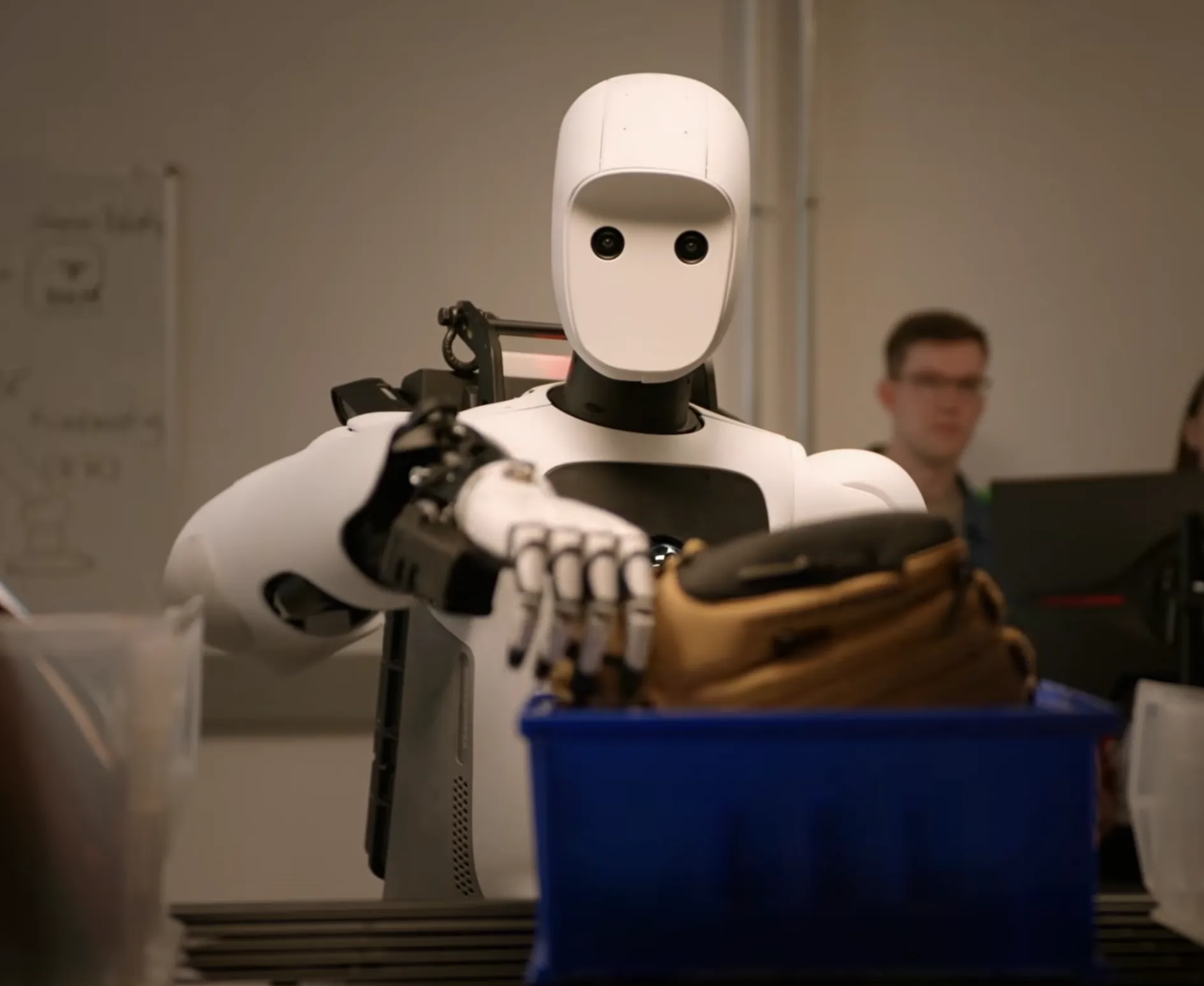
What impresses me is the integration of perception and control across the entire kinematic chain. Whole-body coordination is notoriously hard in robotics because every joint angle affects the others—balance, torque, and end-effector accuracy all interact. If Gemini Robotics 2 can handle that in a model-driven way, it sidesteps a lot of hand-tuned optimization. For those of us who follow AI workflow in real-world deployment, this feels like a shift from scripted policies to learned, adaptable behaviors.
I do wonder about the training data pipeline here. DeepMind typically uses simulation at scale for reinforcement learning, but translating that to a robust whole-body policy for a real humanoid like Apollo 2 requires careful sim-to-real transfer. The videos look fluid, but I’d want to see stress tests—cluttered spaces, uneven terrain, or continuous operation without drift. Still, as a showcase, it pushes the envelope on what LLM agents can achieve when grounded in physical action.
From a prompt engineering angle, the interesting part is how the model interprets high-level commands into low-level motor primitives. Are they using a hierarchical approach where Gemini handles task planning and a separate controller handles joint trajectories? The announcement doesn’t dive into that, but for anyone building AI workflows for robotics, this is the key puzzle.
The Verge covered the announcement, and while the write-up is light on technical details, the core message holds: whole-body control is now on the table. For a community watching LLMs move from text to code to real-world interaction, this is a milestone worth tracking.
Impressive progress. The whole-body version should fix the balancing issues I had with the upper-body model.