Backpropagation Kernels: Latency vs. Occupancy
Writing custom kernels for backpropagation is essentially a constant battle between memory bandwidth and compute utilization. When you move past the high-level PyTorch or JAX abstractions, the real bottleneck isn't the math—it's how the hardware actually handles the data movement.
The core issue I've been analyzing is why certain layers hit a performance wall despite having low FLOPs. It usually comes down to occupancy. If the kernel doesn't keep enough warps active on the SM (Streaming Multiprocessor), the GPU spends more time waiting for global memory loads than actually calculating gradients.
In a typical backprop implementation, you're dealing with:
- Latency: The time it takes for a single thread to complete its operation.
- Occupancy: The ratio of active warps to the maximum possible warps.
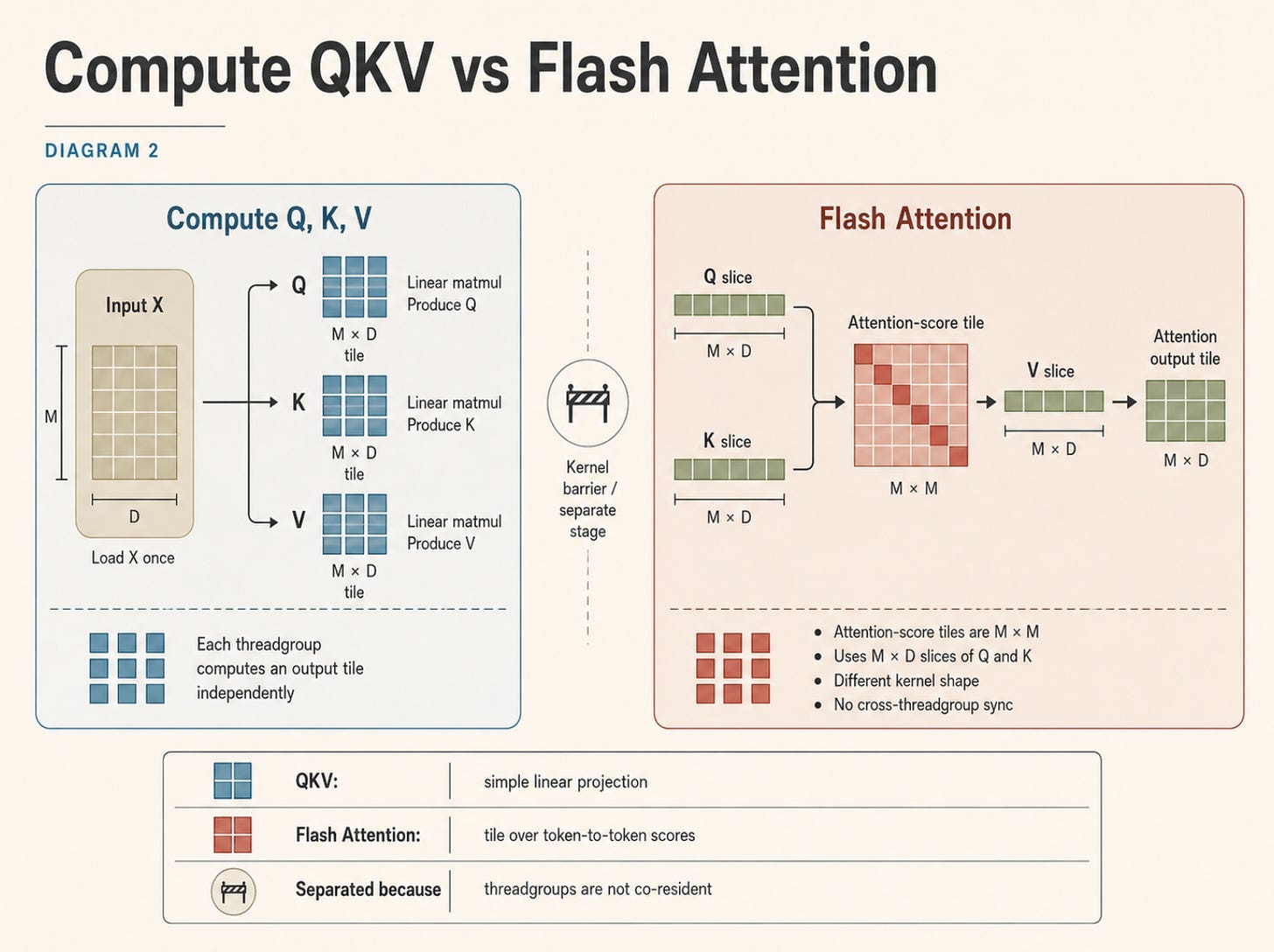
If you optimize for latency alone, you might end up with a kernel that is technically "fast" per thread but leaves 60% of the GPU idle because you've exhausted the shared memory or registers per block.
To diagnose this, I've been looking at the memory access patterns. Backprop is notoriously memory-bound because you're often pulling large tensors from the forward pass (activations) just to multiply them by the gradient of the loss. If the memory access isn't coalesced, the latency spikes, and the occupancy drops because threads are stalled.
For anyone doing a deep dive into LLM agent efficiency or custom AI workflow optimization, this is where the real gains are. You can't just rely on standard libraries if you're pushing for extreme throughput; you have to manually tune the tile sizes and shared memory usage to mask that latency.
All Replies (4)
Shared memory bank conflicts are a nightmare. How are you handling them in your kernels?
Fighting register pressure is brutal. Did tiling actually lower the latency or just improve occupancy?