Neptune: A Serverless Approach to Secure Messaging
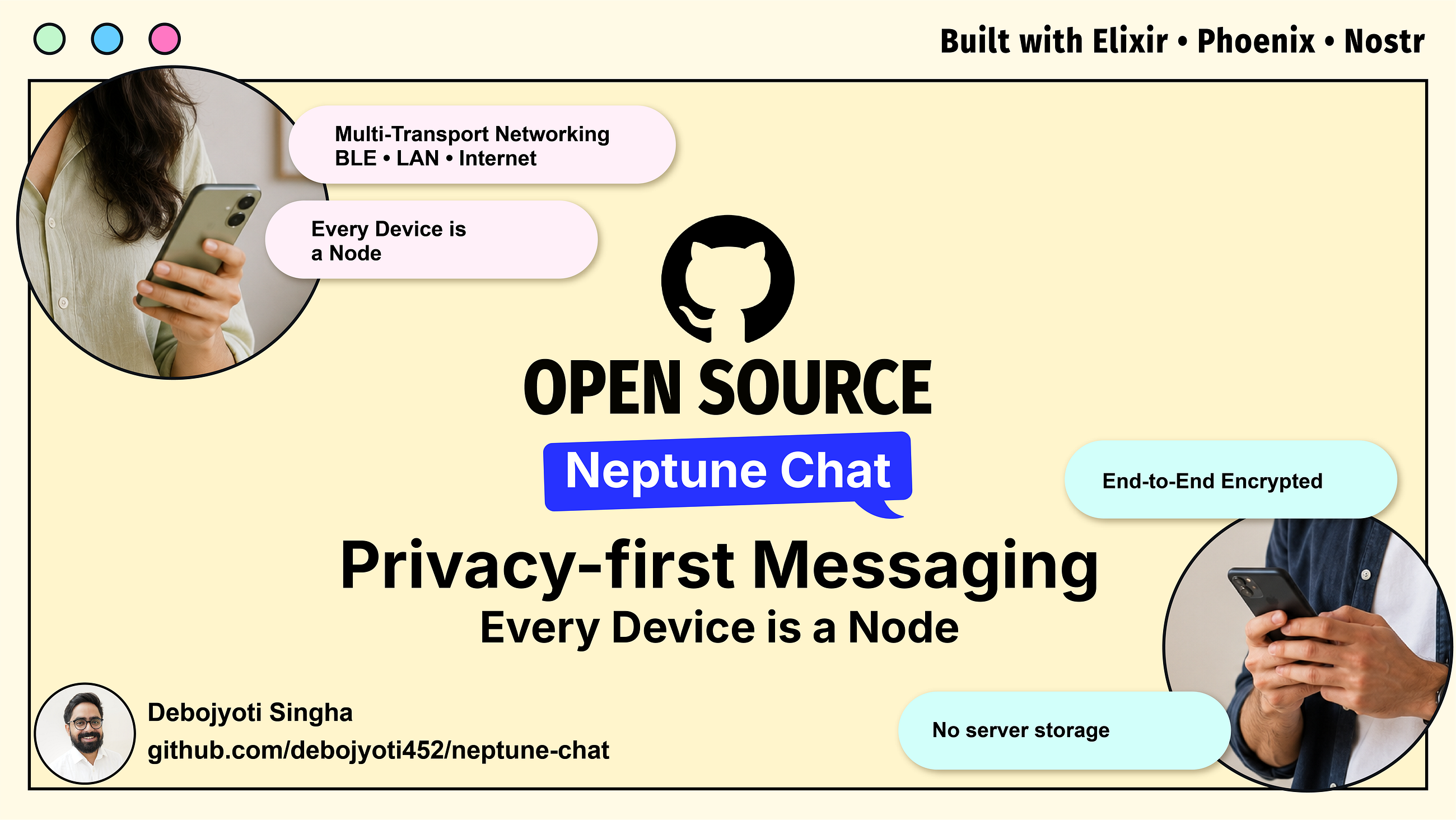
The core problem it solves is the "trust gap." In traditional setups, you trust the provider not to leak metadata or compromise keys. By eliminating the server's role as a permanent warehouse, the attack surface shrinks significantly.
If you want to get this running or understand the deployment, here is the basic logic:
1. Peer Discovery: The system uses a lightweight signaling layer just to help devices find each other.
2. Direct Handshake: Once connected, keys are exchanged without the server ever seeing the plaintext or holding the session.
3. Client-Side Persistence: All message history lives on the local device. If you delete it, it's gone from the universe.
To implement a similar flow from scratch, you'd likely start with a WebSocket signaling server and a library like libp2p for the peer-to-peer layer:
// Conceptual peer connection logic
const peer = await createPeerConnection(remoteId);
await peer.establishSecureChannel();
peer.send('Hello, this is a serverless message');
Is it actually worth it? For 90% of users, probably not—the lack of seamless multi-device sync is a huge friction point. But for anyone obsessed with a true AI workflow where data privacy is non-negotiable, this is the right direction. It trades convenience for absolute sovereignty. If you can handle the risk of losing your data when you lose your phone, the security trade-off is a win.