Nephtys on Raspberry Pi: Massive Memory Savings
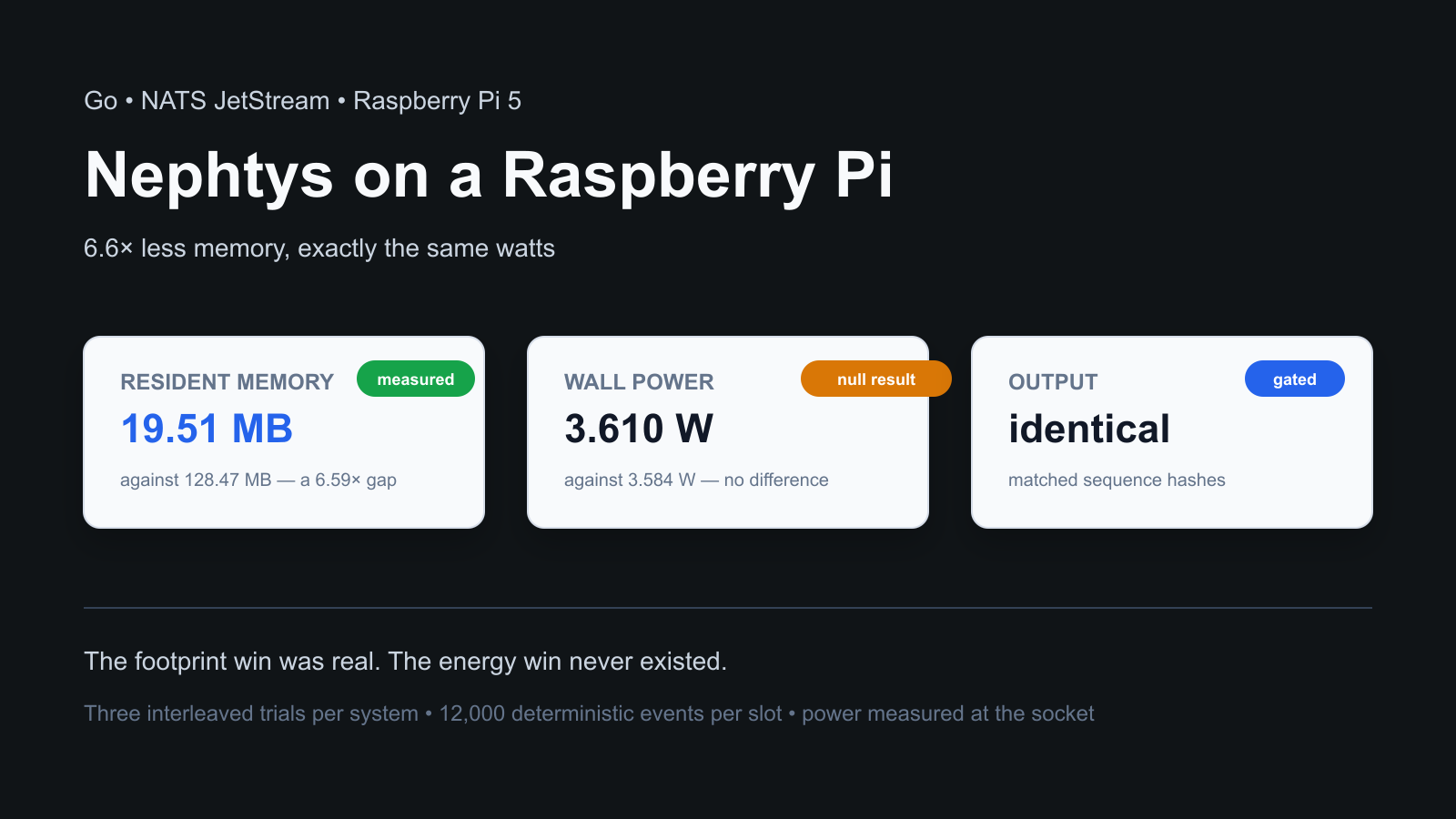
The core value here is the efficiency gain. Usually, when you optimize for memory, you either sacrifice performance or hit a wall with power spikes. Nephtys manages to maintain the exact same wattage while drastically reducing the RAM footprint, making it actually viable for low-power, small-form-factor setups.
If you're looking for a real-world deployment on a Pi, here is the general approach to get it running:
Deployment Steps
1. Environment Prep: Ensure your Raspberry Pi OS is updated and you have the necessary dependencies for Python and C++ compilation.
2. Build Process: Clone the Nephtys repository and compile the binaries specifically for the ARM architecture to ensure the memory optimizations are active.
3. Configuration: Adjust the memory allocation settings in the config file to align with the Pi's available RAM (4GB or 8GB models recommended).
4. Validation: Monitor the system resources using htop to verify the 6.6x memory reduction compared to standard x86 deployments.
This isn't just a theoretical benchmark; it's a practical tutorial in how to squeeze high-performance AI logic into constrained environments. If you've been avoiding edge deployment because of RAM bottlenecks, this architecture is definitely worth a deep dive.