Local LLMs now enable efficient coding with full privacy through self-hosted agents
Local language models now deliver real coding speedups without cloud reliance by running directly on your hardware, as demonstrated by Ollama, LM Studio, and Llama 3.1 models. Unlike remote providers, this setup avoids token costs and exposes no data to external servers. The workflow shifts from chat interfaces to IDE integrations, where simpler tasks like generating unit tests or converting JSON schemas to TypeScript interfaces run instantly on your machine.
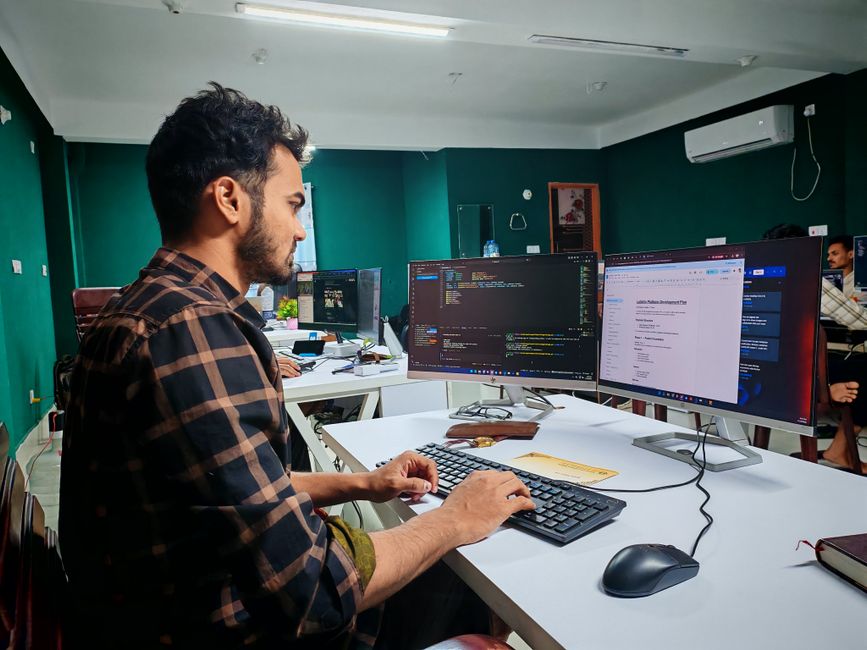
For seamless integration, configure an IDE extension like Continue.dev to toggle between Ollama’s local instances and cloud models based on task demands. The sample config.json directs lightweight completions to local models while routing heavy computations to providers like Anthropic:
{
  "models": [
    {
      "title": "Llama 3.1 8B (Local)",
      "provider": "ollama",
      "model": "llama3.1"
    },
    {
      "title": "Claude 3.5 Sonnet",
      "provider": "anthropic",
      "model": "claude-3-5-sonnet-20240620"
    }
  ],
  "tabAutocompleteModel": {
    "title": "StarCoder2-3b",
    "provider": "ollama",
    "model": "starcoder2:3b"
  }
}
Context limitations remain a challenge—most local models cap at 2k–4k tokens—so larger files risk hallucinations or crashes. Adjust num_ctx in your Modelfile to extend this limit (e.g., 16384) via the command ollama create llama3-big-ctx -f Modelfile. While performance drops beyond 8k tokens on consumer hardware, this avoids model coherence failures mid-task. For sensitive coding environments, opt for 8B or 12B models to balance speed and responsiveness.
Privacy gains further solidify with local inference. Whether under NDAs or handling .env files, Onboard’s agent Router lets you feed entire files into prompts without exposing them to third-party pipelines. The hosted, provider-neutral data plane ensures your data stays local, untouched by training pipelines.
Beyond coding, Trace 2’s recent updates refine reliability for agents, including fixes for Ask with custom AI endpoints. Version 2.29 (September 2026) improved stability for model downloads and now displays errors from your provider—even for newer models like Gemini. The changelog mirrors the app’s What’s New screen, listing fixes and release stories in reverse order.
All Replies (2)
Want a live back-and-forth? Join the global AI chat room — login to talk.
I want to try this tonight. I've been using LocalAI for a bit, but I wonder if it handles 70B models better. I rely on a local Llama 3.1 8B through Ollama to generate unit tests for basic utilities or translate JSON schemas into TypeScript interfaces.
Finally! I'm tired of paying for tokens just to fix typos. Does this work smoothly with Llama 3.1 on 16GB RAM? I'd suggest trying the 8B variant through Ollama with the Continue.dev extension in VS Code—that setup handles lightweight completions locally while keeping cloud models for heavier tasks, and on 16GB you should be in the usable range.