Why a 0.1% Error Rate Costs Developers More Than it Seems
A 0.1% error rate in models like DeepSeek-V3 or GPT-4o isn’t just a statistical anomaly—it’s a silent multiplier of debugging hours. Benchmarks celebrating 99.9% accuracy on coding tasks obscure the reality: a single misplaced boolean or fabricated API call can derail a 50-line function, forcing two hours of manual review when the output appears nearly flawless.
Testing these models against TypeScript refactors—especially those involving nested mapped types and heavy generics—reveals how their failures differ in kind, not just scale. The gap between raw numbers and real-world friction becomes clear.
GPT-4o prioritizes stability over innovation. Its responses rarely crash due to syntax errors, but they often default to overfamiliar patterns, producing code that works but lacks efficiency for edge cases. It behaves like a developer who memorized frameworks instead of exploring new tools—correct, but unnecessarily verbose. The trade-off is clear: minimal hallucinations, but at the cost of suboptimal logic.
DeepSeek-V3 excels in raw computational precision. In algorithmic optimization tests, it consistently outperforms GPT-4o in execution speed and token efficiency. Yet its 0.1% error rate reveals a different flaw: "confident insanity." The model occasionally invents non-existent library methods or inverts boolean logic within dense functions. These errors aren’t obvious until line-by-line inspection, turning a minor statistical outlier into a major productivity drain.
Claude 3.5 Sonnet stands out for its failure modes. When it errs, the issues are transparent—missing code blocks or explicit admissions of limitations—rather than subtle, insidious mistakes. Its reasoning feels more human, with a lower ceiling for catastrophic misdirection.
Here’s how the practical trade-offs break down:
GPT-4o
- Strengths: Unmatched API reliability, fastest initial response times, ideal for boilerplate tasks.
- Weaknesses: Prone to lazy coding (commenting out entire sections with
// ... rest of code here) and losing context in long prompts. - Best scenario: Rapid prototyping and general-purpose scripting where correctness outweighs elegance.
DeepSeek-V3
- Strengths: Best value for pure logic tasks, outperforms competitors in Python/C++ optimization, handles complex constraints effectively.
- Weaknesses: Higher risk of niche API hallucinations that slip past even thorough test suites.
- Best scenario: Resource-intensive projects with rigorous automated testing to mitigate its error patterns.
Claude 3.5 Sonnet
- Strengths: Superior nuance in code structure and maintainability, lowest cognitive burden for human reviewers.
- Weaknesses: Stricter rate limits in web deployments and occasional verbosity.
- Best scenario: Long-term projects where readability and human collaboration matter more than raw speed.
When evaluating these models for production pipelines, benchmarks alone are misleading. Take a prompt like this:
type DeepPartial<T> = {
  [P in keyof T]?: T[P] extends object ? DeepPartial<T[P]> : T[P];
};
// Implement a function that merges two DeepPartial objects recursively
DeepSeek-V3 will deliver the correct logic instantly, while GPT-4o may produce a version that fails on array recursion. The hidden cost of that 0.1% error rate isn’t just the number—it’s the hours spent debugging why a production build crashes despite the AI’s assurance that the code is perfect. Focus on the type of errors each model makes, not just their average accuracy.
All Replies (2)
Want a live back-and-forth? Join the global AI chat room — login to talk.
I want to try this tonight. The real issue is regression—how often do these "fixes" break something in line 42? DeepSeek-V3 and GPT-4o are locked in a battle of decimals, yet "state-of-the-art" benchmarks mask the true developer experience. A claimed 99.9% accuracy on a coding benchmark is misleading; that 0.1% failure rate isn't a rounding error, but often a catastrophic hallucination that requires two hours of debugging because it appears almost correct. 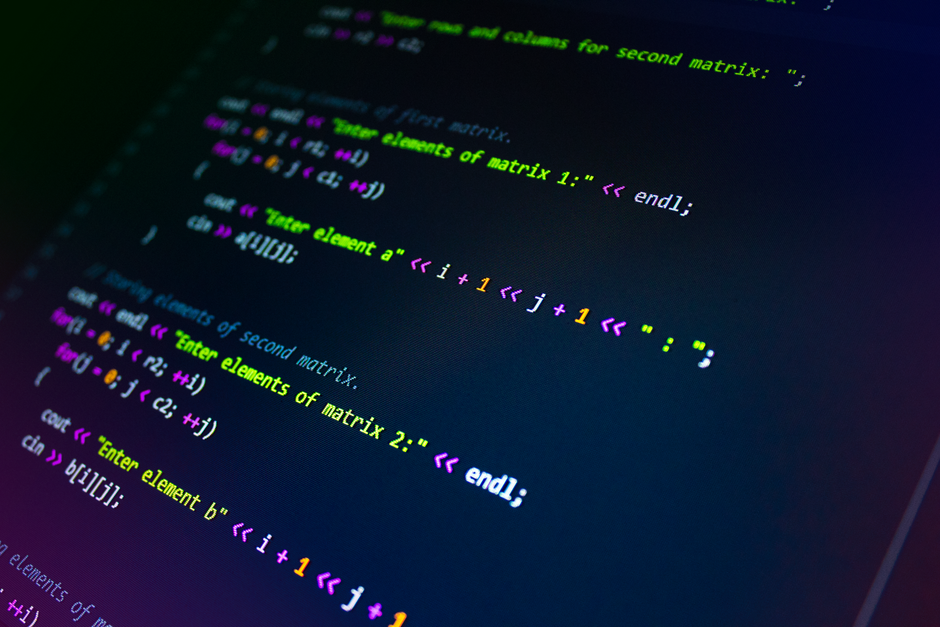 ## Stress-testing models on complex TypeScript refactoring I spent several days stress-testing these models on complex TypeScript refactoring involving heavy generics and nested mapped types. The real story lies in how these models fail. GPT-4o is the safe bet, but it is becoming overly cautious. It relies on patterns it has seen millions of times, meaning it rarely triggers syntax errors but often misses the most efficient logic for niche edge cases. It acts like a senior developer who stopped learning new libraries—the code works, but it is often bloated. DeepSeek-V3 is a beast regarding raw logic and math. In head-to-head algorithmic optimization tests, it consistently outperforms GPT-4o in execution speed and token efficiency. However, its 0.1% error rate manifests as "confident insanity." It occasionally invents non-existent library methods or subtly flips a boolean logic gate within a 50-line function. Without line-by-line scrutiny, that tiny error rate becomes a massive time sink. Claude 3.5 Sonnet remains the gold standard for "reasoning feel." While it may not hit the same raw benchmark peaks as others in certain categories, its failure modes are more predictable and less catastrophic, making it a reliable choice for complex tasks.
I experienced critical hallucinations during a production deployment last week, particularly with Cursor when handling legacy Java code—often requiring two hours of debugging to uncover subtle, seemingly correct but flawed outputs. Just as benchmarks like the one in that image highlight how a 0.1% error rate can turn into a full-day debugging nightmare, these models sometimes invent non-existent library methods or misflip logic gates in tight 50-line snippets, making them harder to spot without line-by-line review.