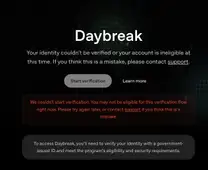
So, you actually managed to get Manus running?

I've spent the last few weeks breaking things, fixing them, and occasionally getting lucky with a prompt. Let's talk about the actual Manus agent tutorial stuff you need, minus the marketing fluff.
What is this Manus thing anyway?
Is it just another wrapper for GPT-4? Honestly, no.
If you treat it like a standard chatbot, you're going to be disappointed. A chatbot talks. An agent acts. The core difference is the loop. When you give a task to a standard LLM, it gives you text. When you use Manus, it’s supposed to navigate a browser, click buttons, parse data, and actually complete a workflow. It’s trying to bridge the gap between "tell me how to do this" and "just do it for me."
The wild part is how much it struggles when you give it vague instructions. You can't just say "go find me some data." You have to be the boss.
How do I actually start a Manus agent tutorial without breaking everything?
Most people fail at the first step because they treat the prompt like a Google search.
Don't do that.
If you want to see the agent actually perform, you need to structure your initial command as a mission. I tried "find the price of Nvidia stock" once. It worked, but it was boring. Then I tried "Go to the NASDAQ website, find the current price of NVDA, check the 52-week high, and give me a summary of the volatility in a markdown table."
That's the difference. You're giving it a clear path.
The setup phase
Before you get deep into the weeds, make sure your environment is clean. If you're running the open-source versions or interacting via an API, your credentials need to be tight. I've seen people lose hours simply because their API keys didn't have the right permissions to access the web-browsing module.
If you get stuck on the technical configuration, I usually suggest checking out the AI Playbook on our site. They have some deep dives into agentic workflows that make this much clearer.
Why does my agent keep getting stuck in a loop?
This is the big one. You run a command, and the agent just... spins. It clicks a button, waits, clicks again, and nothing happens.
It’s usually one of three things:
1. The CAPTCHA wall: The agent hits a site that thinks it's a bot (because it is) and just stares at the screen.
2. Lazy reasoning: The model decides it's "close enough" and stops searching.
3. Context drift: The agent forgets what the original goal was halfway through the task because the browser history got too long.
To fix the loop, you have to intervene. If you're using a version that allows for human-in-the-loop (HITL), jump in. Tell it: "You are stuck on the login screen. Try to bypass it by using the search bar instead."
Be blunt. The agent doesn't have feelings.

Can I actually use this for real work?
I used to think agents were just a toy. Then I used one to scrape a specific set of real estate listings while I was making coffee.
It isn't perfect. It won't replace a human analyst, but it replaces the "grunt work" part of being an analyst. If you can define a repeatable, digital workflow—like "Check these five websites every morning at 9 AM for changes in these specific keywords"—then you've basically won.
But fair warning: don't expect it to handle complex, multi-step logic without some hand-holding. You can't just set it and forget it. You have to monitor it.
Making it smarter: The "Prompting" part of the tutorial
If you're looking for a "Manus agent tutorial" that promises magic, forget it. The magic is in how you write the instructions.
I’ve found that using "Chain of Thought" prompting within the agent's task window works best. Instead of just giving the goal, give it the logic.
"First, navigate to X. Second, look for the element Y. Third, if Y is not found, try searching for Z. Finally, output the results."
It feels tedious, sure. But it turns a stumbling toddler into a disciplined worker.
If you want to see how the pros are structuring these complex prompts, you should probably join us at PromptCube. We're constantly sharing what works and, more importantly, what's a complete waste of time.
What are the limitations I should know about?
Let's be real: the tech is still a bit messy.
The memory usage is insane. If you let an agent run a long task, your RAM will start screaming. Also, the "hallucination" problem doesn't go away just because the agent can click buttons. An agent can hallucinate a successful outcome just as easily as a chatbot can hallucinate a fact.
Always verify the final output. Especially if it involves numbers or money.
My personal "Golden Rules" for agents:
Ctrl+C and start over.Should you bother learning this now?
Yeah. Absolutely.
We're moving away from the era of "chatting" and into the era of "delegating." If you only know how to talk to an AI, you're going to be left behind when everyone else is managing a fleet of agents.
It's a weird, slightly frustrating, but incredibly rewarding transition. Whether you're a dev or just someone who hates repetitive browser tasks, getting a handle on how these agents actually function is going to be the most valuable skill of the next two years.
If you find yourself hitting a wall with your specific setup, don't just suffer in silence. Just hop into the PromptCube community. We've all been there, staring at a broken terminal, wondering why the "future of work" is being so difficult.
All Replies (0)
No replies yet — be the first!