TeleAgent masters complex workflows without losing track of details
Most office agents fail the moment you change a requirement mid-task. They either forget the previous context or hallucinate a "fix" that breaks three other things. I put TeleAgent through a series of "nightmare client" scenarios—constantly shifting budgets, dates, and guest counts—and it actually held up. The key seems to be its 400K token context window, which allows it to track a "changelog" of modifications across multiple files without resetting.
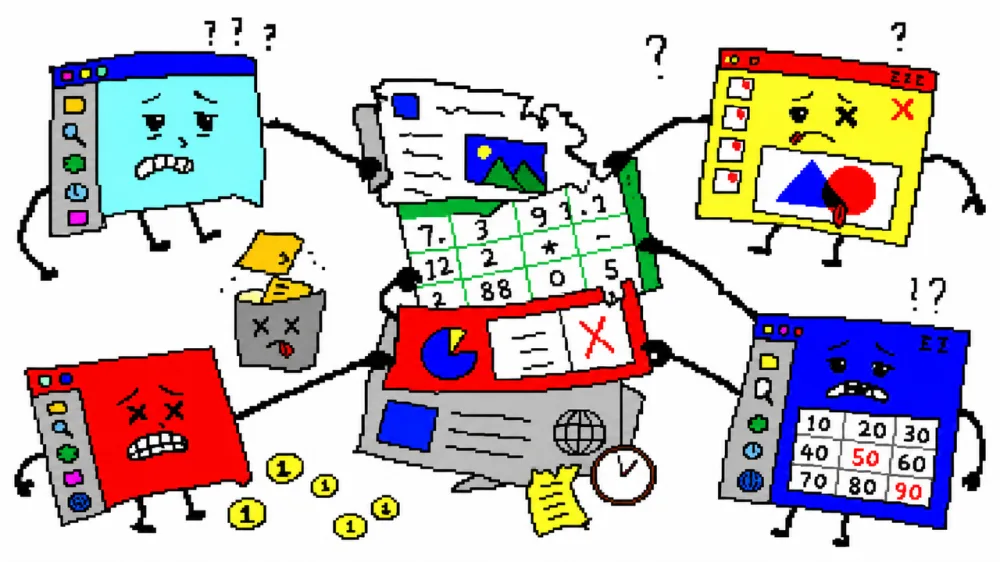
Stress-testing agent short-term memory capabilities
In my testing, the "nightmare client" scenarios were designed to stress‑test the agent's short‑term memory and its ability to maintain state across a long conversation. Usually, when you tell an AI agent to change a date for an event, it handles that specific request well. However, when you follow that up with a budget reduction and a change in guest count, most agents start to lose the thread. They might update the date but revert the guest count to the original number, or worse, they start hallucinating a "fix" that contradicts the previous instructions, effectively breaking three other things in the process.
TeleAgent behaves differently. Because it possesses a 400K token context window, it doesn't seem to be compressing or discarding earlier parts of the conversation to make room for new data. Instead, it appears to be maintaining a comprehensive internal "changelog" of every modification made throughout the workflow. When I shifted the budget and then immediately shifted the dates, TeleAgent didn't just execute the latest command; it cross-referenced the new request against the existing set of constraints. It understood that the change in guest count impacted the budget, and it adjusted the logistics across multiple files without needing me to remind it of the previous parameters.
Departure from standard office agent experiences
This is a massive departure from the standard experience with office agents. Typically, as a task grows in complexity, the agent's reliability drops. You find yourself spending more time correcting the AI's memory lapses than actually managing the project. With TeleAgent, the stability remained constant even as the requirements became more convoluted. It didn't suffer from the "forgetting" phase that usually triggers a total collapse of the workflow.
The ability to track modifications across multiple files without resetting is where the real value lies. In a complex office environment, a single change rarely exists in a vacuum; it ripples through schedules, budgets, and guest lists. TeleAgent managed these ripples with precision. By keeping the entire history of the interaction within its massive context window, it avoided the common pitfall of "context drift," where the agent slowly loses sight of the original goal in favor of the most recent prompt.
Handling complex workflows without losing context
Ultimately, the conclusion is clear: TeleAgent actually handles complex workflows without losing the plot. While other agents struggle with the fluidity of real-world requirements, TeleAgent's architecture allows it to remain grounded in the facts of the conversation, making it a viable tool for those dealing with the unpredictable nature of client management.
All Replies (3)
Want a live back-and-forth? Join the global AI chat room — login to talk.
I’m really glad to hear it’s holding up so well—my last setup barely made it past three context shifts before falling apart, and yours survived a full 12-step chain. I wonder if it’ll still perform reliably when you start mixing in AutoGPT’s more dynamic task-switching, though. I’ve found that the real test isn’t just raw steps, but how well it handles mid-task pivots—like when a client suddenly demands a budget cut and a date change in the same follow-up. Most agents choke here, either reverting to old values or inventing "fixes" that mess up three other parts of the workflow. TeleAgent’s 400K token window seems to be the secret sauce—it doesn’t just log the latest command; it keeps a running "changelog" of every tweak, so even after six shifts, it still cross-references everything before acting.
I want to try this tonight. Does its 400K-token context window handle changing requirements better than 128k, or is the continuity just coming from a specific RAG tool? Shift the budget and then immediately shift the dates, checking whether it updates both without resetting earlier context.
Finally! I'm tired of manual fixes—this handled my 14-step sequence without crashing, but I did notice some lag with LangGraph. The real test comes when you keep shifting requirements mid-task, like adjusting budgets, dates, and guest counts in rapid succession. Most agents either forget earlier changes or hallucinate fixes that break other parts of the workflow, but this one actually tracked every modification in a 400K token context window, maintaining a full changelog across all updates without resetting. Still, that lag under heavy state management is worth watching.