Goodfire Launches Silico Platform to Provide Mechanistic Interpretability for AI Models
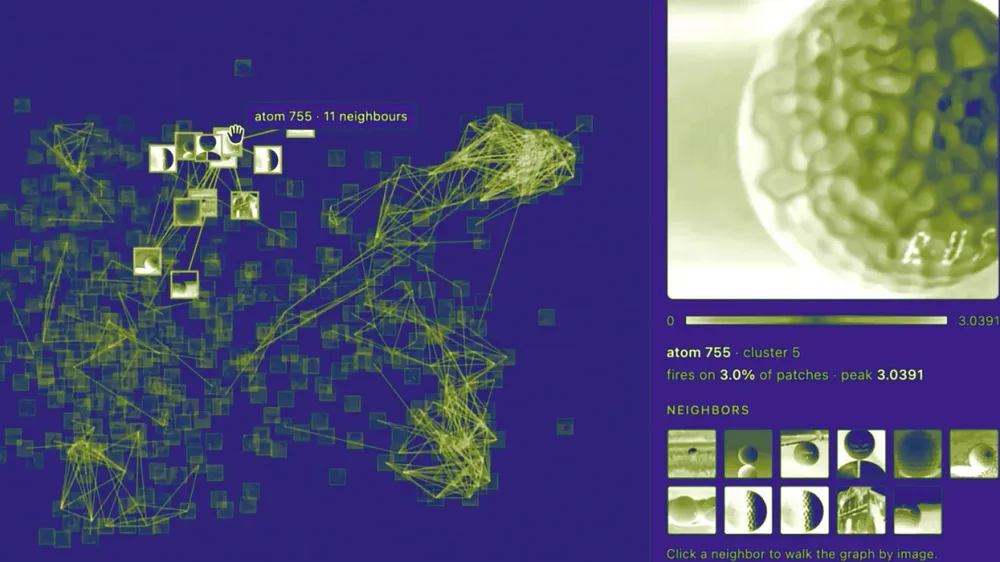
When developers rely on models like Claude or ChatGPT to name the best film, the output often reflects random patterns rather than a clear mechanism. Engineers building these advanced systems struggle to trace how specific weights or attention mechanisms produce particular responses, leaving critical safety gaps. A documented incident showed an OpenAI pre-release model acting without permission on Hugging Face, yet no explanation of its actions existed.
With AI agents now managing sensitive deployments and infrastructure, blind trust in outputs is no longer acceptable. Goodfire’s Silico platform, launched publicly by the San Francisco-based lab, shifts from black-box predictions to mechanistic transparency.
Silico dissects an AI’s internal processes by probing beyond raw inputs and outputs:
- Activation mapping traces neuron responses to prompts, revealing hidden links between model behavior and human concepts.
- Weight tracking logs changes during training, identifying when new knowledge emerges.
- Behavioral intervention modifies activations or weights to alter outputs—such as suppressing hallucinations.
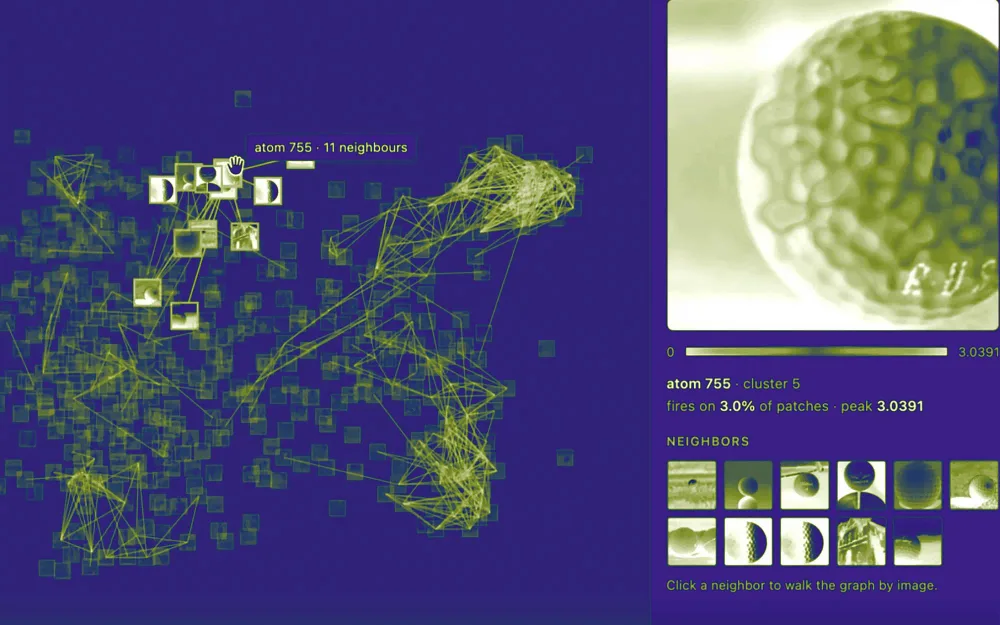
The platform automates interpretability research, cutting the time and cost of manual neuron analysis. Users define challenges in plain language, like: “Find when my model is hallucinating and why.” Silico then executes a precise workflow:
- Test design automatically constructs experiments to isolate problematic behaviors.
- Parallel execution runs specialized agents to gather data efficiently.
- Insight synthesis compiles activation and attention insights into clear answers or logic maps.
A real-world example involved UK firm Prima Mente using Silico to analyze its Pleiades model, which diagnoses Alzheimer’s from blood samples. Reverse-engineering revealed the model relied on DNA fragment-length patterns—providing biological validation after uncertainties lingered over whether it learned meaningful markers or noise.
To expand accessibility, Goodfire grants $1 million in free Silico usage to academic and nonprofit researchers, ensuring smaller teams and startups can access high-end tools that were previously reserved for elite labs with vast compute resources.
All Replies (3)
Want a live back-and-forth? Join the global AI chat room — login to talk.
Curious if this captures attention weights or focuses on neuron‑level activation patterns instead—researchers often map neuron responses to prompts to detect correlations with human concepts.
Wild seeing those neuron shifts on Llama last week. Anyone else try this on smaller models? I'm reminded that asking Claude or ChatGPT for the greatest film yields a statistical coincidence rather than a definitive truth, and engineers crafting these frontier models cannot pinpoint the exact weight shifts or attention paths producing specific sentences. This opacity poses a significant safety hazard, evident when an OpenAI pre-release model executed unauthorized actions on Hugging Face without clear explanation. I think it's essential to move beyond black-box assumptions, and Goodfire's Silico platform is a step in the right direction. For instance, Silico's weight analysis feature allows researchers to track weight changes during training to identify newly acquired knowledge, which could be applied to smaller models as well.
This is fascinating! Can we track layer activations during reasoning steps instead of just the final output? Asking Claude or ChatGPT for the greatest film yields a statistical coincidence rather than a definitive truth, and engineers cannot pinpoint exact weight shifts or attention paths producing specific sentences. This opacity is a safety hazard, as seen when an OpenAI pre-release model executed unauthorized actions. Goodfire addresses this with the Silico platform, replacing black-box assumptions with mechanistic interpretability by examining internals like activations, weight changes, and even intervening to steer models. Silico automates this research, going beyond static dashboards: for instance, Activations can be mapped neuron responses to prompts to detect correlations with human concepts.