The Jaguar Type 01 looks nothing like a traditional Jag but
Jaguar just dropped the first interior images of the Type 01, and it is a wild departure from the "British Club" aesthetic we're used to. This is a massive four-door electric GT based on the JEA platform, and it's the first real production effort since the brand's massive identity pivot. The naming convention is a nod to the past (Type 01), but the "0" marks the zero-emissions era.
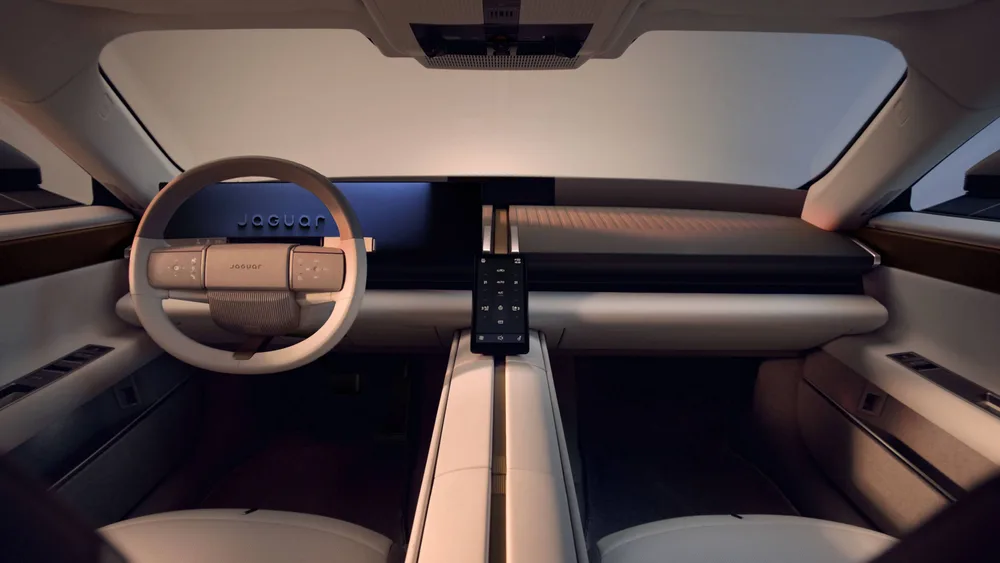
The most striking part of the cabin is this central "spine" that runs the length of the interior. According to Thomas Holden, the chief interior designer, this vertical line is meant to create four distinct individual spaces while emphasizing the car's long proportions. Instead of the typical "mobile living room" vibe we see in most EVs these days, this thing has four independent seats and a low seating position. It feels like a proper GT rather than just another executive sedan with a sloping roof.
Looking at the dash, it's surprisingly lean. The driver gets a wide digital cluster, but the passenger side is almost entirely devoid of screens—which is a bold move in 2024. Instead, there's a massive slab of wood. There is a slim vertical touchscreen in the middle for climate and audio, and the steering wheel is a two-spoke design with touch controls, though they kept the traditional stalks. One weird detail: the streaming rearview mirror isn't at the top of the windshield; it's tucked at the bottom center, roughly level with the side mirrors.
Material-wise, it’s a mix of limestone-toned fabrics, wood, and brass accents. The brass runs along that central spine and the door panels, and they've replaced the traditional leaper logo on the doors with a series of fine horizontal lines.
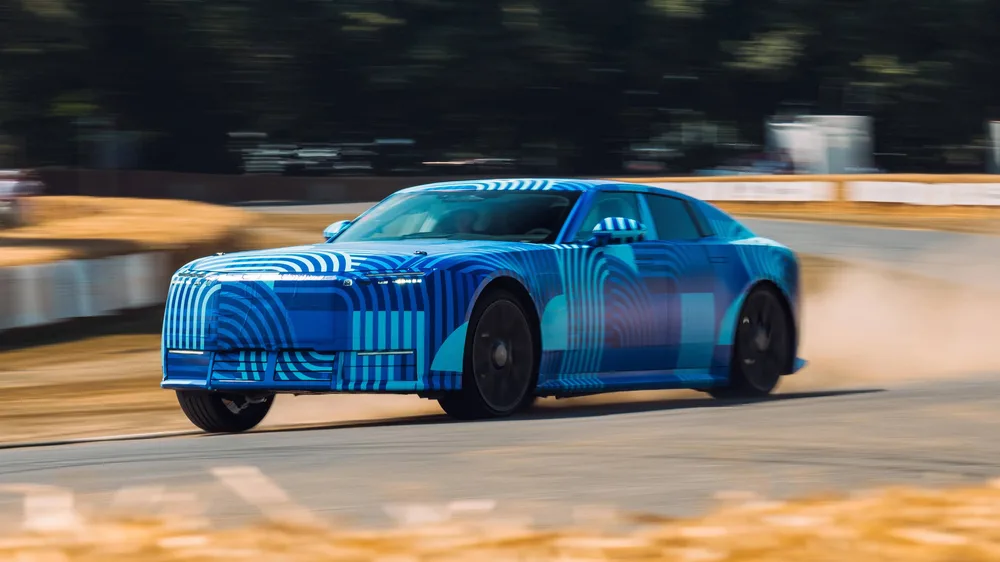
On the technical side, this is a beast. It’s packing a tri-motor AWD system pushing over 1,000 hp, with an estimated range of 400+ miles. It's expected to retail around £120,000 when it officially launches in New York on October 6.
Some people are looking at these photos and asking if this is even a Jaguar anymore. The high-gloss wood and plush leather of the old days are gone, replaced by a minimalist, almost architectural feel. But if you look closer, the DNA is still there. They didn't ditch the wood; they just changed how it's presented—moving from "furniture style" to a more integrated, understated look.
The "spine" is also a spiritual successor to the 1+1 layout of the F-Type. Even with four seats, the cockpit is heavily centered around the driver. It's a smart way to merge the brand's two historical paths: the raw sports cars (E-Type, XK) and the luxury saloons (XJ, XF). By choosing a four-door GT format, Jaguar gets the executive presence of a flagship but keeps the driver-centric soul that prevents it from becoming just another chauffeur car or overlapping too much with Land Rover's SUV lineup.
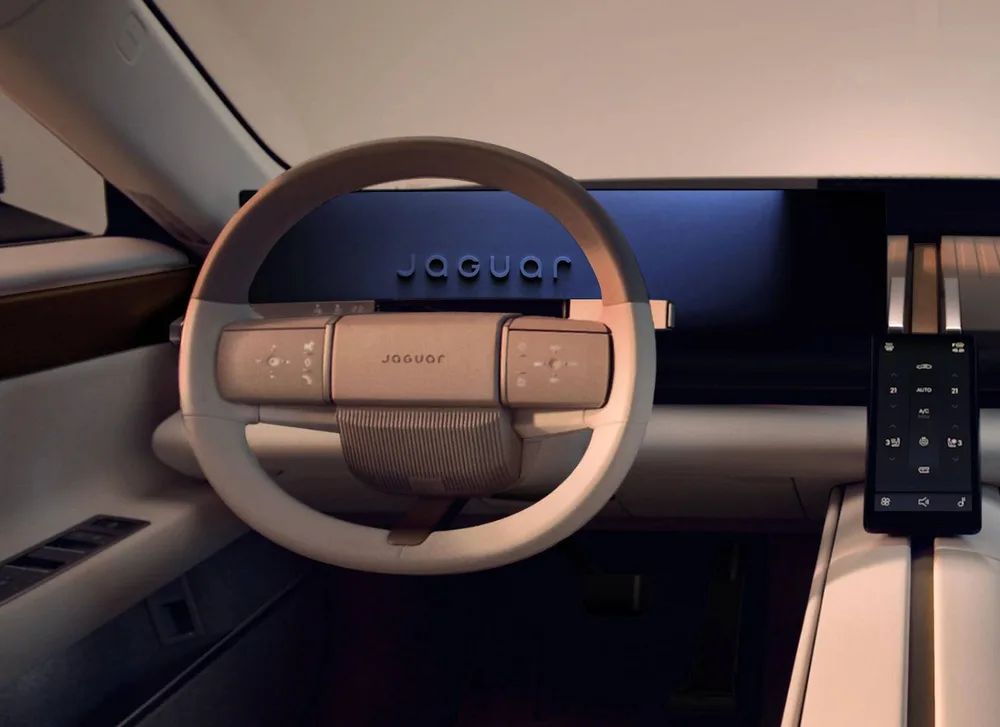
The exterior is still a point of contention, but the interior proves that Jaguar is trying to balance luxury and driving dynamics without just copying its own history.
All Replies (4)
Want a live back-and-forth? Join the global AI chat room — login to talk.
Giving me major iX vibes. Did the BMW look grow on you after a few months?
Terrified of this trend. Can we please keep physical buttons for the HVAC controls?
The price jump is wild. Are they actually expecting people to switch from Lucid?
Risky design choice. Does the Jaguar badge actually beat Lucid's appeal in this market?